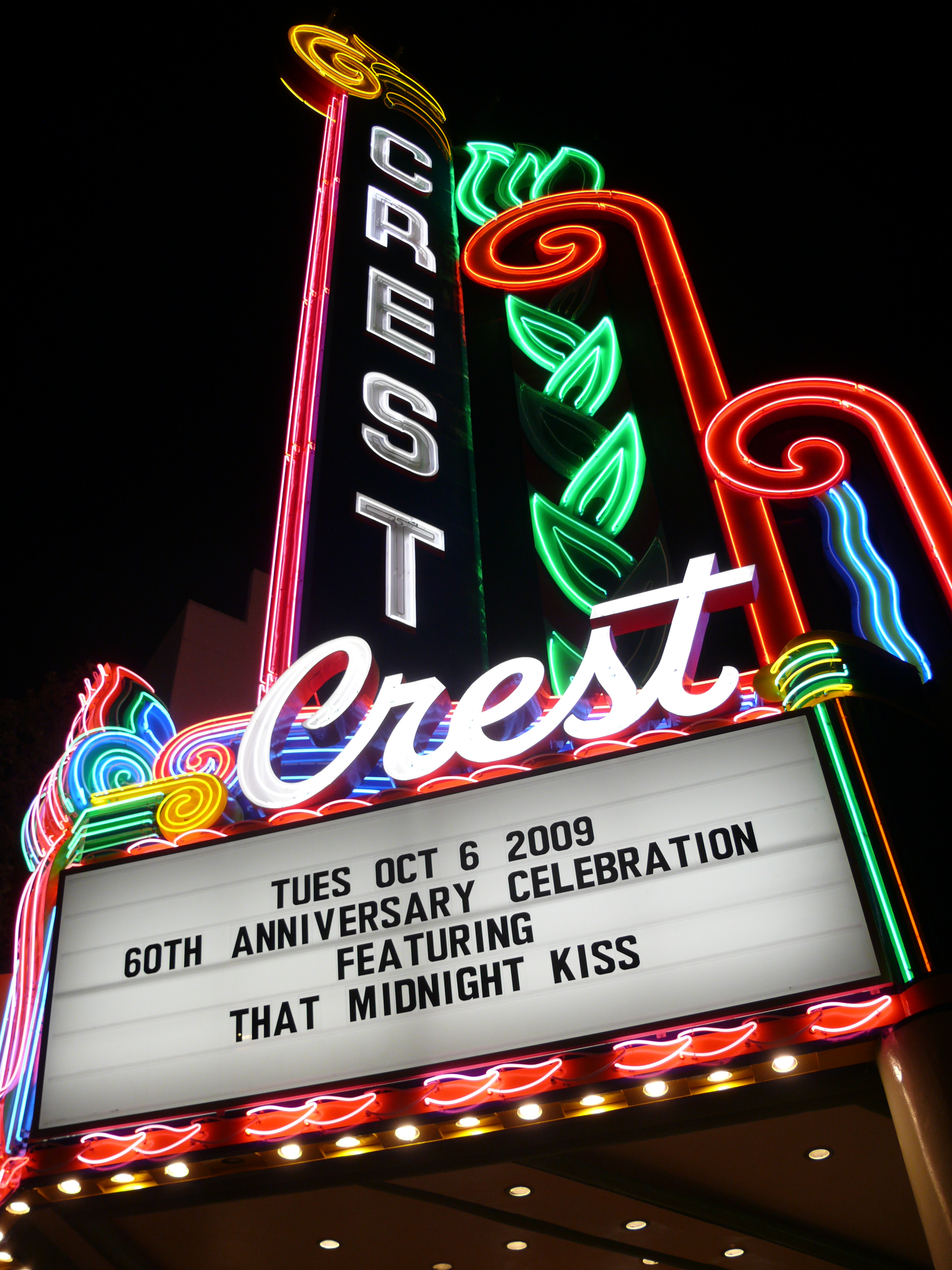
The Marquee That Fell
On September 14, 1946, the marquee of the Hippodrome Theatre tore free from the building and crashed onto the sidewalk below. Jessie Shirley Potter, a 41-year-old woman from Alta, was crushed beneath it. Joseph Brady, struck a glancing blow, suffered a skull fracture, a broken collarbone, and permanent brain injury. The tragedy would have been the end of most theatres. Instead, the Hippodrome's owners gutted the building, rebuilt it, and reopened it three years later under a new name: the Crest. Sacramento's most resilient venue had survived its worst day, and the century that followed would test it again and again.
From Vaudeville Palace to Movie House
The building opened in 1912 as the Empress Theatre, one of Sacramento's vaudeville palaces catering to audiences hungry for live variety entertainment. Vaudeville acts cycled through -- comedians, acrobats, singers, magicians -- in the era before motion pictures dominated American leisure. As film grew into the country's preferred entertainment, the Empress adapted, eventually rebranding as the Hippodrome. It was the Hippodrome's name on the marquee that killed Jessie Potter in 1946. By 1949, the building had been completely remodeled into the Crest Theatre, its Art Deco auditorium a fresh start layered over a grim history. Through the 1950s and 1960s, the Crest thrived as one of Sacramento's premier first-run movie palaces, the kind of place where opening nights felt like events and the screen commanded genuine reverence.
The Long Decline and the Stubborn Revival
The 1970s were not kind to downtown movie palaces. Suburban multiplexes drained audiences, and the Crest descended into sub-run fare -- second-chance screenings of films that had already played everywhere else. By the early 1980s, the theatre went dark entirely. Several revival attempts flickered and died, including an ill-fated dinner theatre concept. But Sacramento refused to let the building go. In 1995, after a complete refurbishment, the Crest reopened with its post-1946 auditorium preserved in its original state. Two smaller subterranean cinemas were added adjacent to the main hall. Those underground screens eventually closed in the 2010s, their space transformed into the Empress Tavern -- a nod to the building's original 1912 identity, now serving cocktails where projectors once hummed.
Where Nirvana Played and Trash Films Reigned
The Crest's concert history reads like a who's who of acts caught just before -- or just after -- their moment of fame. Guns N' Roses, Nirvana, Sonic Youth, the Smashing Pumpkins, Pixies, Slayer, and Dinosaur Jr. all played the Crest's stage, alongside legacy acts like Cab Calloway and Cyndi Lauper. For years, the theatre hosted the Artists Fashion Show, where Sacramento's most creative minds built elaborate handmade costumes around a different theme each year, with all ticket proceeds going to fight AIDS. But perhaps the Crest's most distinctive tradition was the Trash Film Orgy -- six weeks of summer screenings featuring cult cinema, live bands, carnival games, and raucous audience participation. Filmmaker Ray Dennis Steckler and actor Sid Haig appeared as guests before the event was eventually discontinued under new ownership.
A Festival House for Every Community
The Crest became Sacramento's default home for film communities that needed a venue with personality. The Sacramento French Film Festival, founded in 2001, made the theatre the only destination for French cinema in Northern California, screening new releases alongside rarely seen classics each July. The Sacramento Jewish Film Festival, co-founded by Margi Park-Landau and Crest manager Sid Heberger, brought two days of films exploring the Jewish experience, accompanied by guest speakers, live music, and communal food. The Sacramento Film and Music Festival grew from a modest local showcase into an international submission-based event, eventually splitting into WinterFEST and SummerFEST programs. Each festival found in the Crest something the multiplexes could not offer: a room where movies still felt communal, where the architecture itself argued that what happened on screen mattered.
The Room That Refuses to Die
Walk into the Crest today and you are standing in essentially the same auditorium that opened in 1949, its post-remodel architecture preserved through every subsequent reinvention. The building has been a vaudeville hall, a movie palace, a concert venue, a dinner theatre, and a festival house. Its basement has been a cinema and a tavern. Its marquee once killed a woman, and the theatre survived even that. Sacramento's downtown has transformed around it -- the railyards redeveloped, the arena built, K Street reimagined -- but the Crest endures at the same address, still showing films, still hosting live shows, still insisting that a single room with good bones and the right audience can outlast every trend that threatens to make it obsolete.
From the Air
Located at 38.58N, 121.49W on K Street in downtown Sacramento. The theatre sits within the downtown grid, identifiable from the air by its marquee signage along the K Street corridor. Sacramento Executive Airport (KSAC) is 3nm south; Sacramento International (KSMF) is 10nm northwest. The Capitol Mall provides a strong east-west visual reference. Best viewed at 2,000-3,000 feet AGL.