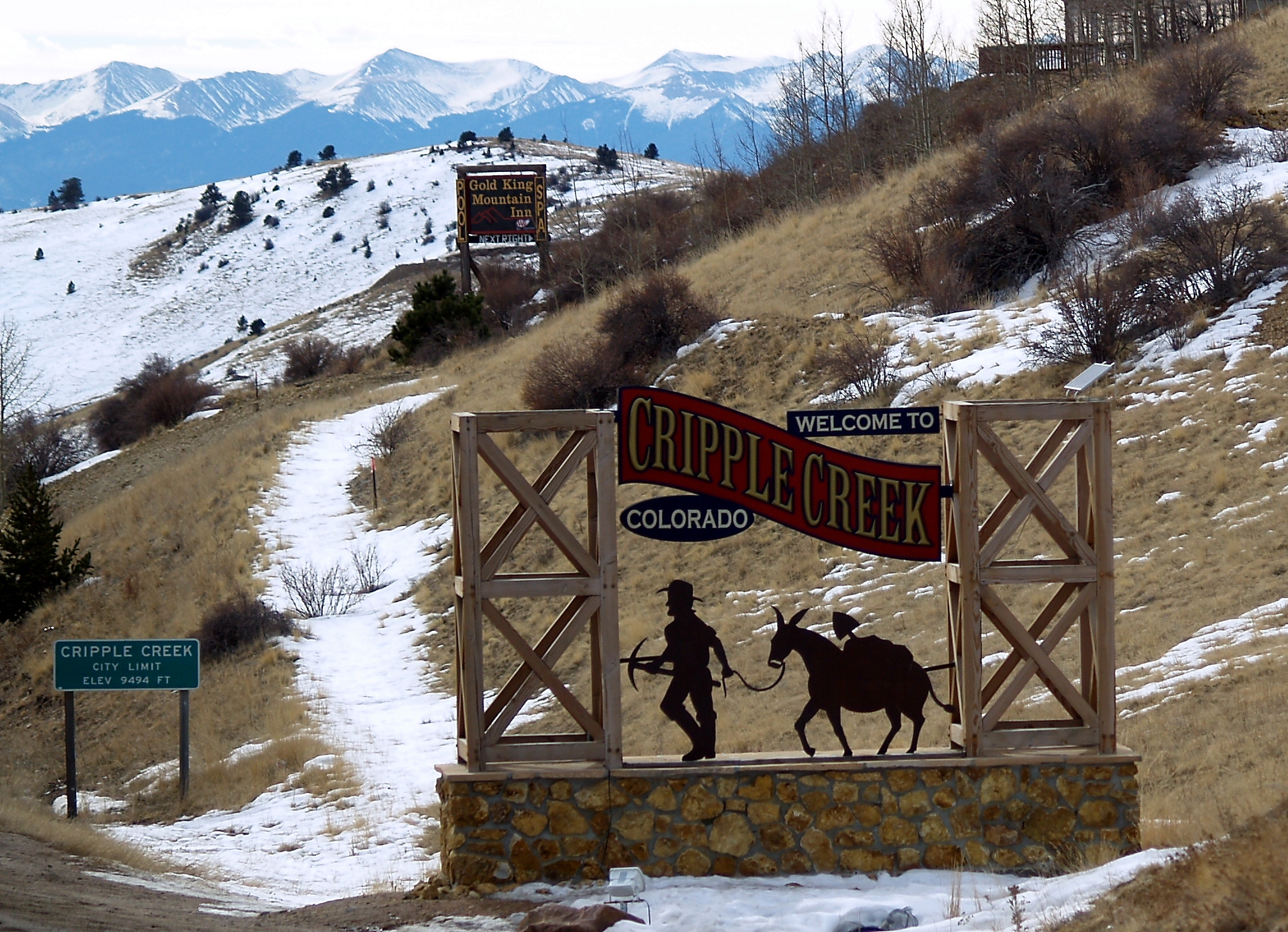
Cripple Creek Mining District
Bob Womack was a drunk and a dreamer who spent twenty years insisting there was gold in the cattle pastures west of Pikes Peak. Everyone laughed. The area had been prospected and abandoned; geologists said the volcanic rock couldn't hold gold. But in 1890, Womack finally proved them wrong, finding ore in Poverty Gulch. He sold his claim for $300 and drank himself to death. Others made fortunes. By 1900, Cripple Creek was producing more gold than any district in the world - $20 million annually from a volcanic caldera that had concentrated gold in ways geology textbooks said was impossible. The district yielded over $500 million in gold (billions in today's dollars) and created more millionaires per capita than anywhere on Earth. It also created some of America's most violent labor conflicts, as mine owners and the Western Federation of Miners fought literal battles for control of the camps.
The Discovery
Cripple Creek's geology was unique. The district sits in an ancient volcanic caldera where gold-bearing fluids had percolated through fractured rock, creating rich but irregular deposits. Traditional prospecting methods missed it because the gold didn't behave like gold was supposed to. Womack's discovery triggered a rush, but the real bonanza came when Winfield Scott Stratton, a carpenter who had educated himself in geology, found the Independence Mine on July 4, 1891. Within a decade, Stratton was worth $10 million. He eventually sold the mine for $11 million and spent his remaining years giving money away to strangers.
The Boomtown
Cripple Creek exploded from nothing to 50,000 people by 1900. The city had electricity, telephones, three newspapers, seventy-three saloons, and a stock exchange. Millionaires built mansions; prostitutes worked Myers Avenue. Two great fires in 1896 destroyed much of the town, but it was rebuilt in brick within months. The train brought supplies up and ore down. Neighboring Victor, built directly on top of the mines, was nearly as large. The district produced more gold than California's Mother Lode and Colorado's earlier strikes combined. At its peak, 475 mines employed 10,000 men.
The Labor Wars
Cripple Creek's wealth was built on brutal working conditions. Miners worked ten-hour shifts in suffocating tunnels for $3 a day while owners became millionaires. The Western Federation of Miners organized the camps, winning an eight-hour day after a strike in 1894. But a decade later, conflict erupted again. When mine owners refused to recognize the union, violence escalated. In June 1904, a bomb at the Independence depot killed thirteen strikebreakers. The governor sent in the National Guard, which rounded up union members at gunpoint and deported them from the district. The labor wars broke the WFM in Colorado and contributed to the formation of the Industrial Workers of the World.
The Decline
Gold production peaked around 1900 and declined steadily as the richest veins were exhausted. World War I and the fixed price of gold made mining marginal. By 1920, most mines had closed; the population had dropped to a few thousand. Cripple Creek survived on tourism and, after 1991, on legalized gambling. The casinos brought economic revival but changed the town's character. Some historic buildings became slot parlors; others were torn down. The mining heritage competes with neon signs. But the surrounding district still contains abandoned mines, ghost towns, and the remains of an industrial landscape that once produced more wealth than anywhere on Earth.
Visiting Cripple Creek
Cripple Creek is located 45 miles west of Colorado Springs, at 9,494 feet elevation in the shadow of Pikes Peak. The historic downtown is compact and walkable, though dominated by casinos. The Cripple Creek District Museum tells the mining story. The Mollie Kathleen Mine offers underground tours of an actual gold mine, descending 1,000 feet by cage elevator. The narrow-gauge Cripple Creek & Victor Railroad runs scenic excursions through the mining district. Victor, four miles south, is less touristy and retains more of its mining-era atmosphere, including the Lowell Thomas Museum. The district's elevation means cool summers and harsh winters. Colorado Springs Airport (COS) is the closest major airport.
From the Air
Located at 38.75°N, 105.18°W in a volcanic basin west of Pikes Peak, Colorado, at 9,494 feet elevation. From altitude, Cripple Creek appears as a small town in a bowl-shaped caldera surrounded by mine dumps and tailings. The scars of historic mining are visible across the landscape - waste rock piles, collapsed buildings, and the geometry of old railroad grades. Victor is visible four miles south. Pikes Peak dominates the eastern horizon.