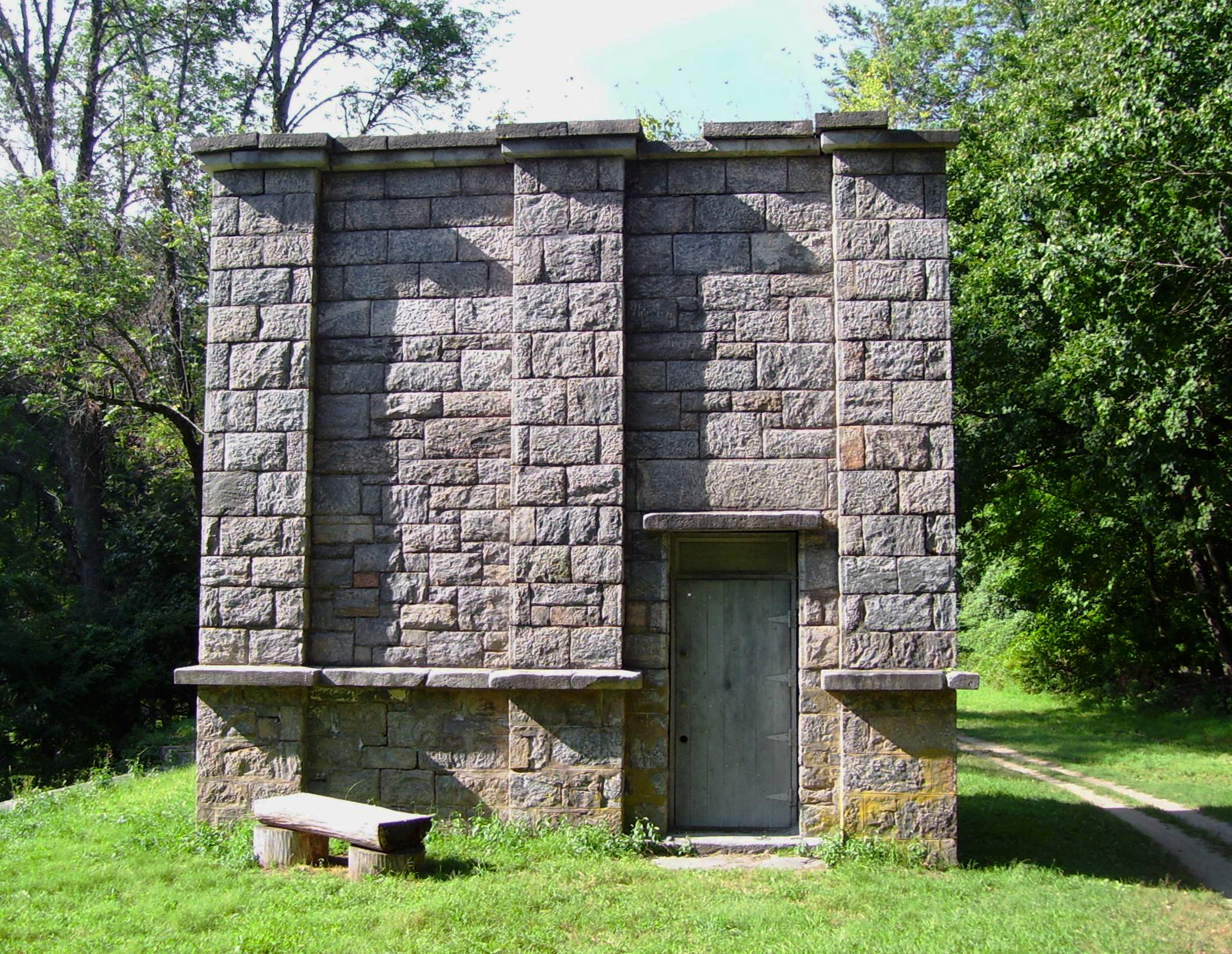
Croton Aqueduct
Before the Croton Aqueduct, New Yorkers drank poison and called it water. The island of Manhattan, hemmed by brackish tidal rivers, had always struggled for fresh water. By the 1830s, the situation was catastrophic. Wells were contaminated by the effluent of a city growing faster than its sanitation. The Manhattan Company -- chartered to provide water but actually more interested in banking (it would become Chase Manhattan) -- served only a small number of wealthy customers below Grand Street. Everyone else relied on well water so foul that adding whiskey or gin was the standard method of making it drinkable. Temperance advocates, in one of history's more unexpected alliances, became some of the loudest voices demanding a public water supply.
A City Dying of Thirst
The consequences of bad water were measured in bodies. Yellow fever epidemics ravaged New York repeatedly. Polluted aquifers, overcrowded housing, the absence of sewers, and industries operating next to residential wells pushed the city's mortality rate to 2.6 percent in 1830 -- one death for every 39 inhabitants. Then in 1832, cholera arrived in New York for the first time, killing thousands in the deadliest epidemic the city had yet experienced. The crisis was no longer debatable. New York needed clean water from somewhere beyond its own poisoned ground, and it needed it on a scale no American city had yet attempted.
Forty-One Miles by Gravity
In March 1833, Major David Bates Douglass of West Point was appointed to survey a route from the Croton River in northern Westchester County to Manhattan. Construction began in 1837 under Chief Engineer John B. Jervis, who maintained exacting standards and banned liquor from construction sites. The engineering was elegant in its simplicity: the aqueduct dropped just 13 inches per mile, allowing gravity alone to carry water 41 miles through an elliptical brick-and-iron tube measuring 8.5 feet high by 7.5 feet wide. Conical ventilating towers rose every mile or so to relieve pressure and keep the water fresh. The route crossed rivers on masonry viaducts sealed with hydraulic cement and entered Manhattan via the High Bridge at 173rd Street -- a structure that still stands. Water flowed first into a Receiving Reservoir between 79th and 86th Streets, a fortress-like rectangular tank holding 180 million gallons. From there it continued south to the Croton Distributing Reservoir, an imposing Egyptian-revival structure on Fifth Avenue between 40th and 42nd Streets -- the site where the New York Public Library's main branch stands today.
The Day the Fountains Ran
On October 14, 1842, New York threw a party. Water had entered the aqueduct on June 22, traveling at 1.86 miles per hour and taking 22 hours to cover the full 41-mile journey by gravity alone. The day-long celebration of the aqueduct's public opening culminated at City Hall Park, where a cast-iron fountain shot water 50 feet into the air from the ornately decorated Croton Fountain. New Yorkers who had spent their lives drinking from contaminated wells watched clean water arc against the sky. The Bethesda Fountain in Central Park, unveiled in 1873, stands as another tribute to the Croton system. The aqueduct did more than deliver water -- it made the modern city possible, enabling the sanitation, fire suppression, and population growth that would transform New York over the next half century.
Outgrown but Not Forgotten
Even the Croton Aqueduct could not keep pace with the city it had saved. By the 1880s, demand overwhelmed supply, and construction on a New Croton Aqueduct began in 1885 a few miles east of the original route. The new aqueduct, buried much deeper, entered service in 1890 with three times the capacity and still supplies about 10 percent of New York City's water today. The Croton Receiving Reservoir served the city until 1940, when Parks Commissioner Robert Moses ordered it drained and filled to create Central Park's Great Lawn and Turtle Pond. The old aqueduct itself remained in service until 1955. Today, the 26.2-mile Old Croton Trail follows the aqueduct's route through Westchester County, and Aqueduct Walk in the Bronx -- a designated scenic landmark -- traces the path where clean water once flowed south toward a desperate city.
From the Air
The Croton Aqueduct runs approximately 41 miles from the Croton River in northern Westchester County (approximately 41.21N, 73.85W) south to Manhattan. The aqueduct's Manhattan terminus and former reservoir site is at approximately 40.753N, 73.982W, where the New York Public Library and Bryant Park now stand. The High Bridge at 173rd Street, where the aqueduct crossed the Harlem River, is visible from altitude. The Old Croton Trail is traceable as a linear green corridor through Westchester. Nearby airports: KJFK, KLGA, KEWR. Best viewed by following the trail from 3,000-5,000 ft AGL.