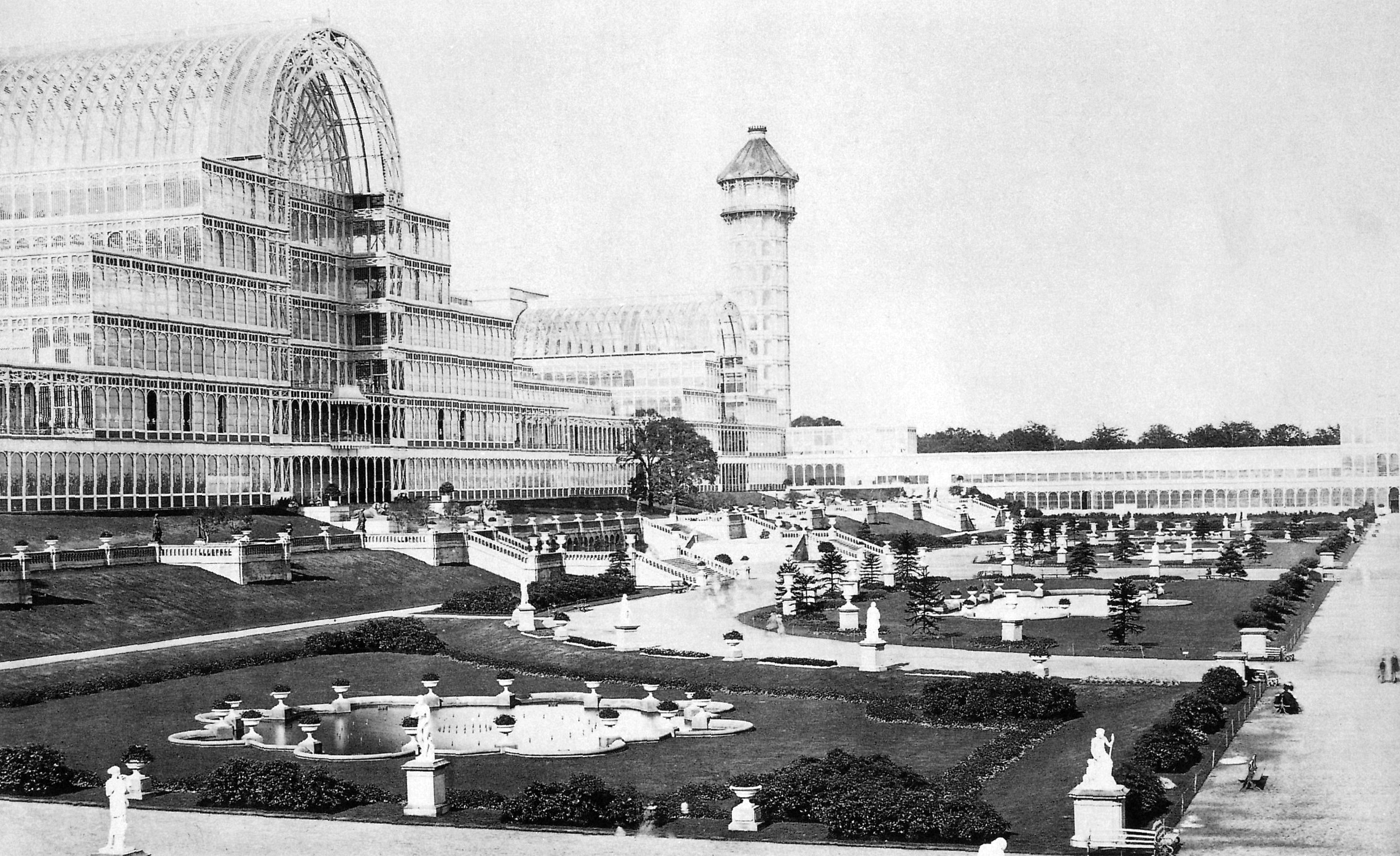
The Crystal Palace Fire: When London's Glass Wonder Burned
On the night of November 30, 1936, the Crystal Palace burned. The enormous glass and iron structure - originally built to house the Great Exhibition of 1851, then moved to Sydenham Hill in south London - was consumed by flames so massive they were visible from eight counties. Winston Churchill, watching from the House of Commons eight miles away, reportedly said, 'This is the end of an age.' The fire destroyed one of Victorian Britain's most iconic structures in a single night, leaving only the brick bases of its towers. The Crystal Palace had been a symbol of innovation, empire, and ambition. Its destruction marked the end of an era.
The Palace
The Crystal Palace was designed by Joseph Paxton for the Great Exhibition of 1851, the first world's fair, held in Hyde Park. The structure was revolutionary - a prefabricated iron frame supporting over a million square feet of glass. It covered 19 acres and contained living trees within its nave.
After the exhibition, the Crystal Palace was dismantled and rebuilt on a larger scale at Sydenham Hill in south London. It became a venue for concerts, exhibitions, fireworks displays, and recreations of prehistoric life. The 'Crystal Palace Dinosaurs' - life-sized sculptures of extinct creatures - became famous attractions. For 82 years, the Palace was a south London landmark.
The Fire
The fire was discovered around 7:00 PM on November 30, 1936, in the central transept. The cause was never definitively established - theories included electrical faults, gas leaks, or a discarded cigarette. The fire spread with terrifying speed through the wooden floors and exhibits.
Within an hour, the entire structure was engulfed. The glass panels, superheated, exploded outward. The iron frame twisted and collapsed. Firefighters from across London converged on the scene but could do nothing to save the building. The flames shot 300 feet into the air. The glow lit up the night sky for miles.
The Spectators
The fire drew enormous crowds - an estimated 100,000 people came to watch. Traffic choked the roads for miles. The scale of the fire was unprecedented. Some witnesses compared it to watching a volcano. The heat was so intense that nearby residents had to wet down their roofs.
Winston Churchill, then out of government but soon to be Prime Minister, watched from Westminster. 'This is the end of an age,' he supposedly said. The Crystal Palace had been built to celebrate British industry and empire at their peak. Its destruction came as that empire was beginning to fade.
The Loss
The fire destroyed everything. The glass and iron structure was reduced to twisted metal. The exhibits - including organs, statues, and historical displays - were lost. Only the two water towers at either end of the building survived the night. They were demolished during World War II to prevent them serving as landmarks for German bombers.
Some things survived. The Crystal Palace Dinosaurs, located in the park grounds away from the main building, remain today. The terraces and steps leading to the Palace's former site are still visible. But the great glass hall itself was gone forever.
The Legacy
The Crystal Palace was never rebuilt. The site remains a park - Crystal Palace Park - where the ghostly outlines of the building's foundations can still be traced. The dinosaurs still stand in their island enclosure, gradually decaying but periodically restored.
The fire marked the end of the Crystal Palace's improbable 85-year existence. A building designed to stand for six months had lasted nearly a century. It had hosted queens and exhibitions, concerts and fireworks. Its destruction in 1936 came at a moment of transition - the old Victorian world giving way to something harder and darker. The flames that consumed the Crystal Palace also consumed an era of confident optimism that would never quite return.
From the Air
Crystal Palace (51.42N, 0.08W) is in south London, in the borough of Bromley. London Gatwick (EGKK) is 35km south; London City (EGLC) is 15km northeast. The park where the Palace stood is visible from the air - the terraces mark the former building's footprint. The Crystal Palace transmitter tower, built later, now dominates the skyline. The dinosaur sculptures remain in the park.