Cumana
They had to found it three times before it stuck. In 1515, Franciscan friars established a settlement called Nueva Toledo on the Caribbean coast of what is now northeastern Venezuela. The Cumanagoto people, whose land this was, had other ideas. They attacked. The friars retreated. Others came, including Bartolome de las Casas, who attempted a peaceful colonization scheme, only to be undermined by Gonzalo de Ocampo's punitive raids in 1521 against the indigenous population. It was not until Diego Hernandez de Serpa's refoundation in 1569 that the settlement finally held, taking the name Cumana and beginning a tenure as the oldest continuously inhabited Hispanic-established city in South America.
The City the Earth Keeps Testing
Cumana sits at the mouth of the Manzanares River, where the Caribbean coast curves eastward through Sucre state. The location is beautiful and dangerous in equal measure. A hot semi-arid climate bakes the city under skies that rarely cloud over, and the El Pilar Fault runs just offshore, delivering earthquakes with a regularity that has shaped the city's architecture and temperament. Severe quakes struck in 1684, 1797, 1853, and 1929, each one erasing portions of the built environment and forcing reconstruction. Almost nothing from the 16th century survived. The oldest standing architecture dates to the late 17th and 18th centuries -- themselves patched and rebuilt after successive tremors. In 1537, the Province of New Andalusia was established with Cumana as its capital, a political status the city has maintained in various forms for nearly five centuries.
Birthplace of Liberators and Poets
For a city of modest size -- roughly 423,000 people in its metropolitan area -- Cumana has produced an outsized share of Venezuelan history. Antonio Jose de Sucre, the Gran Mariscal de Ayacucho, was born here in 1795. He would become one of the key generals of South American independence, serve as president of both Bolivia and Peru, and give his name to the state and the airport. Andres Eloy Blanco, born in 1897, became one of Latin America's most beloved poets before entering politics at the national level. Jose Antonio Ramos Sucre, another Cumaneso, distinguished himself as both poet and diplomat before his death in 1930. The city's contribution to Venezuelan culture extends beyond its famous sons; the Universidad de Oriente maintains its most important campus here, and the intellectual tradition runs deep.
Castles Above the Waterline
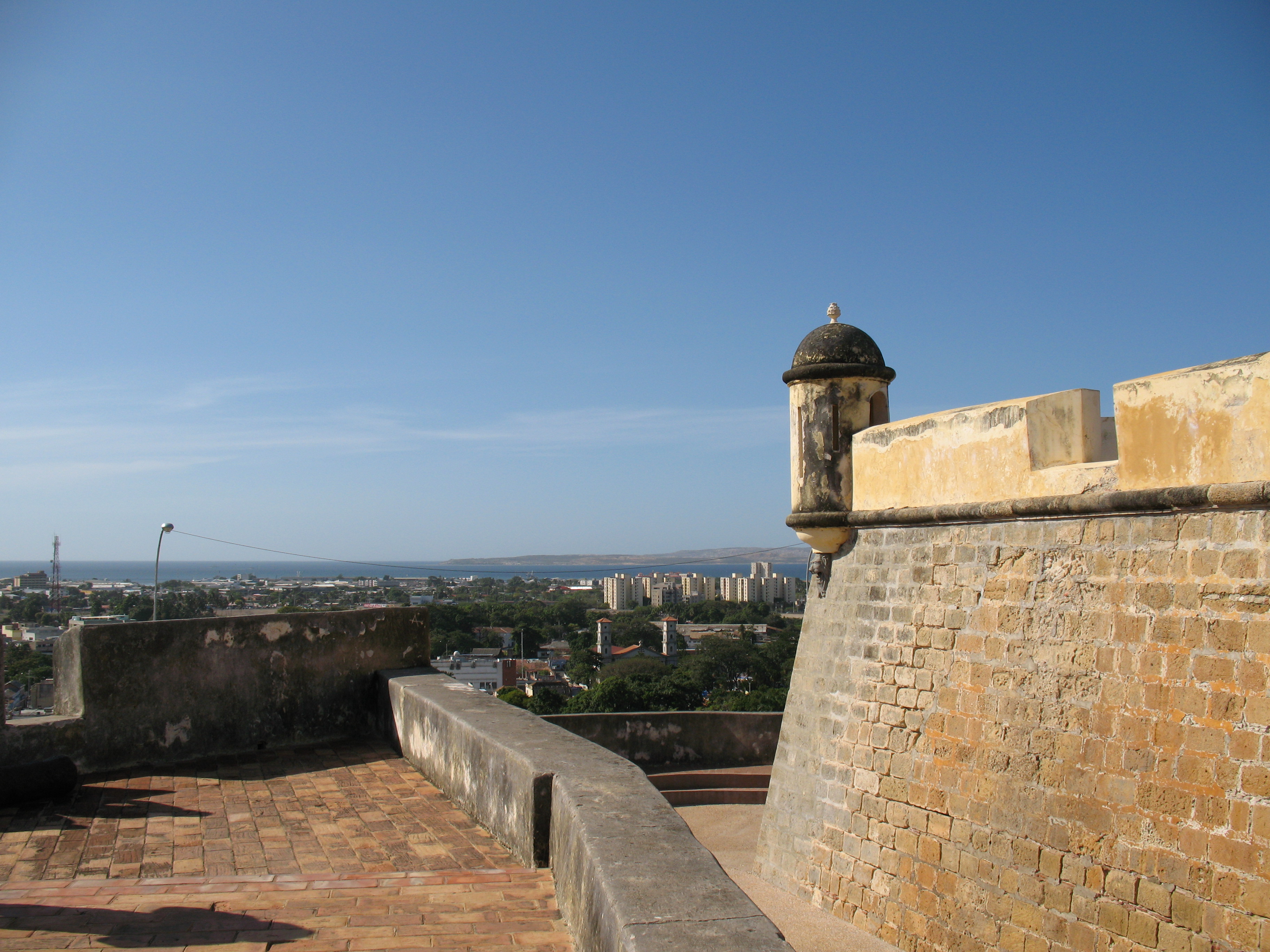
Two Spanish colonial fortifications still define Cumana's skyline. The San Antonio de la Eminencia castle sits on a hilltop visible from the beach, a large fort open to the public that has weathered centuries of earthquakes with varying degrees of structural integrity. Below it, closer to the city center, stands the Santa Maria de la Cabeza castle, built in 1669 as a replacement for San Antonio when the hilltop fort was deemed too far from the coast to be useful in a siege. The Museo del Mar, operated by the Universidad de Oriente, displays marine and maritime artifacts that reflect the city's identity as a port. Cumana remains home to one of Venezuela's largest tuna fleets, and the harbor activity connects the city to its 500-year history of maritime commerce.
Humboldt's Laboratory
In the 18th century, Cumana became an unlikely hub of scientific exploration. The Swedish botanist Pehr Lofling arrived to study the region's flora. Alexander von Humboldt and Aime Bonpland followed, using the city as a base for the expeditions that would produce some of the most influential scientific observations of the era. Humboldt was particularly taken with Cumana's earthquakes, its climate, and its position as a gateway to the interior of South America. The region also harbors its own biological curiosity: the Endler's livebearer, a vibrantly colored aquarium fish discovered by John Endler in the nearby Laguna de Los Patos. It is a tiny creature, easily overlooked, but it has become one of the most popular freshwater aquarium species in the world -- a small, bright ambassador from a city that has always been more interesting than its size would suggest.
From the Air
Located at 10.45N, 64.17W on the Caribbean coast of northeastern Venezuela, at the mouth of the Manzanares River. The San Antonio de la Eminencia castle is visible on its hilltop from the air, and the harbor area shows the city's continued maritime activity. Cumana sits 402 km east of Caracas. Served by Antonio Jose de Sucre Airport (SVCU). Mochima National Park begins just to the west, with its chain of 32 islands visible along the coast. Best viewed at 3,000-8,000 ft to see the relationship between the colonial center, the river mouth, the castles, and the harbor.