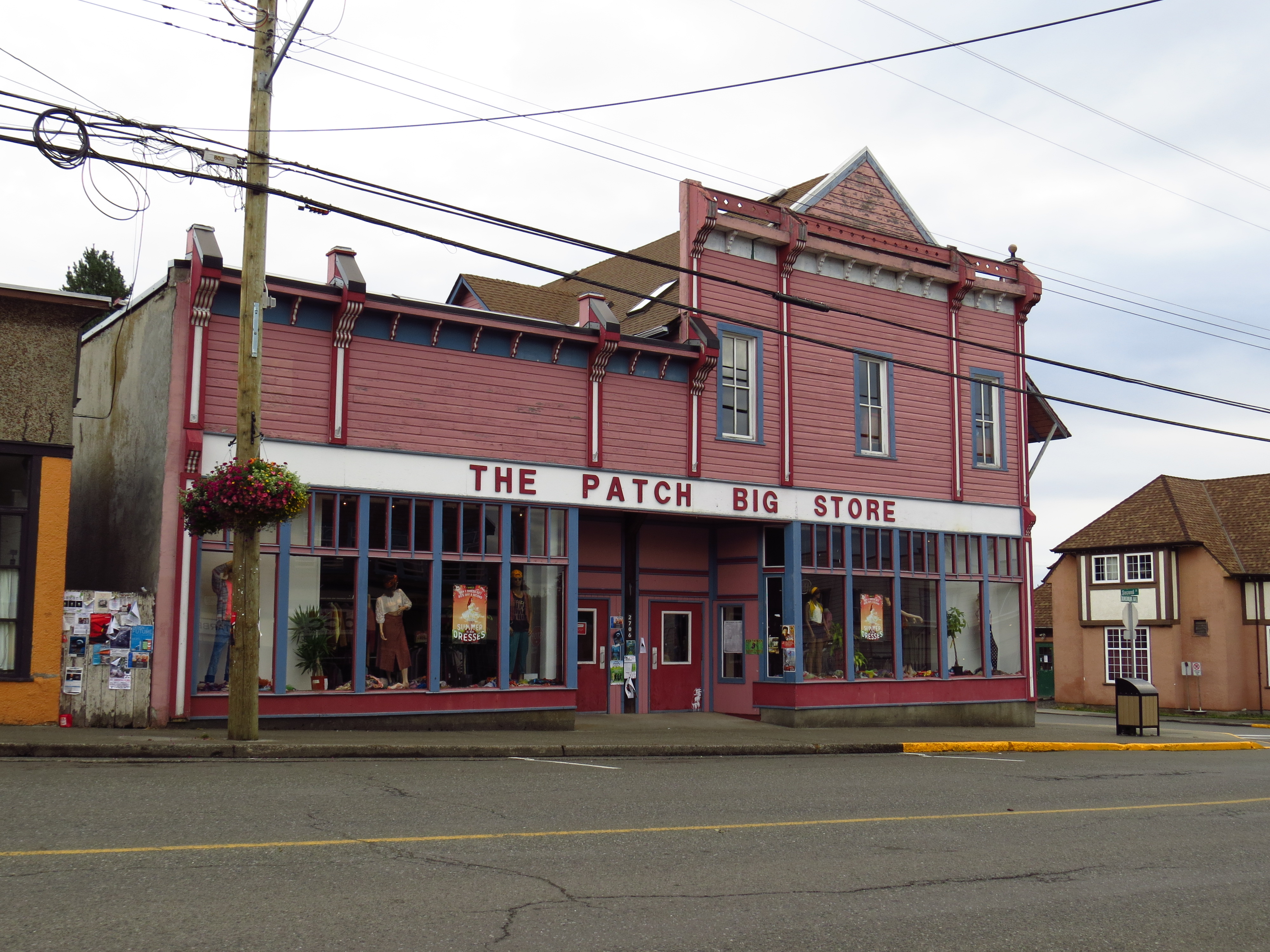
Cumberland: Vancouver Island's Coal Town Reborn
The street names give it away. Maryport, Windermere, Penrith, Derwent, Keswick - the principal avenues of this small Vancouver Island village are borrowed from Cumberland County in northern England, because the coal pulled from the ground here in the 1890s burned with the same high quality as the coal from those English mines. Cumberland, British Columbia, was a company town from the start, built to extract wealth from beneath the forest floor of the Comox Valley. What makes it remarkable is not that it existed - coal towns were common - but what it contained: a Chinatown of 2,000 people, a Japanese hamlet with a tea garden, labour wars that brought in the troops, and a death toll from mine explosions that speaks to how cheaply human life was valued underground.
Oxen, Rails, and the Dunsmuir Empire
Coal was known to First Nations long before J.W. Mackay stumbled across it near the present townsite in 1852. In 1869, Sam Cliffe's syndicate staked claims along what was then called Coal Creek, hacking a trail to the coast and laying wooden rails for a horse-drawn tramway. They named their venture the Union Coal Mining Company to honor British Columbia's 1871 confederation with Canada. When the money ran out, Robert Dunsmuir bought the operation in 1887, incorporating the Union Colliery Company and hauling a sawmill to the mine site by oxen along five kilometres of road that Grant and Mounce built as they went. Dunsmuir's son James would sell the mines in 1910 to Sir William Mackenzie, whose Canadian Collieries kept them running until the final closure in 1966.
The Price Paid Underground
Cumberland's mines killed in clusters. Sixty-four miners died in a single coal dust explosion in 1901. Twenty-one more in 1903. Eighteen in 1922 and thirty-three in 1923. These were not isolated accidents but the predictable results of an industry that prioritized output over safety. When miners protested working conditions in 1912 by taking an idle day, management locked them out. The dispute spread until every unionized miner on Vancouver Island was on strike by summer 1913. Strikebreakers arrived under police escort, riots erupted in Cumberland's streets, and the provincial government sent in troops to restore order. The labour activist Albert Goodwin, who would be shot dead under disputed circumstances in 1918, was among those who lived through these bitter years in Cumberland.
The Communities Coal Built - and Destroyed
About 1.2 kilometres west of town, Cumberland's Chinatown peaked at around 2,000 residents served by 100 businesses - one of the largest Chinese communities on Vancouver Island. The Great Depression drove many away, and a 1935 fire destroyed half the remaining buildings. Farther west, a Japanese hamlet of 36 homes stood beside Comox Lake, where the women ran a traditional tea garden from 1914 to 1939. In 1942, every resident was forcibly relocated to internment camps, abandoning the settlement permanently. Their homes, their stores, their gardens by the lake - all left behind. In 2002, the timber company that had purchased the land from the colliery gifted 104 acres encompassing both the Chinese and Japanese settlement sites to the village. Now called Coal Creek Historic Park, the site preserves the remnants of communities that the coal industry attracted and then, through economics and racism, destroyed.
From Coal Dust to Trail Dust
Cumberland reincorporated as a village in 1958 and spent decades as a quiet bedroom community for neighbouring Courtenay. Then the mountain bikers arrived. The dense second-growth forest surrounding the village, crisscrossed with old logging and mining roads, proved ideal for trail building. Today Cumberland's population of roughly 4,400 supports a network of trails that draws riders from across the Pacific Northwest. The historic Ilo-Ilo Theatre, opened as an opera house in 1914, rebuilt after a 1932 fire, and closed in 1957, awaits restoration discussions. The Waverley Hotel, which escaped the devastating 1933 fire that destroyed 18 businesses and 11 houses, still operates. Cumberland has found a second life by trading on the very landscape that coal mining once scarred, converting its rough terrain and rugged character into assets rather than liabilities.
From the Air
Located at 49.62N, 125.03W in the Comox Valley on central Vancouver Island, about 10 km southwest of Courtenay. The village sits inland from the coast at the edge of the Vancouver Island Ranges, surrounded by dense forest. Coal Creek Historic Park lies to the west. Comox Lake is visible to the southwest. Nearest airport: CFB Comox (CYQQ) approximately 12 km northeast. The village is west of BC Highway 19. From altitude, the mountain bike trail networks are visible as lighter lines threading through the surrounding forest. Best viewed at 2,000-3,000 feet approaching from the east.