Cumbres and Toltec Scenic Railroad
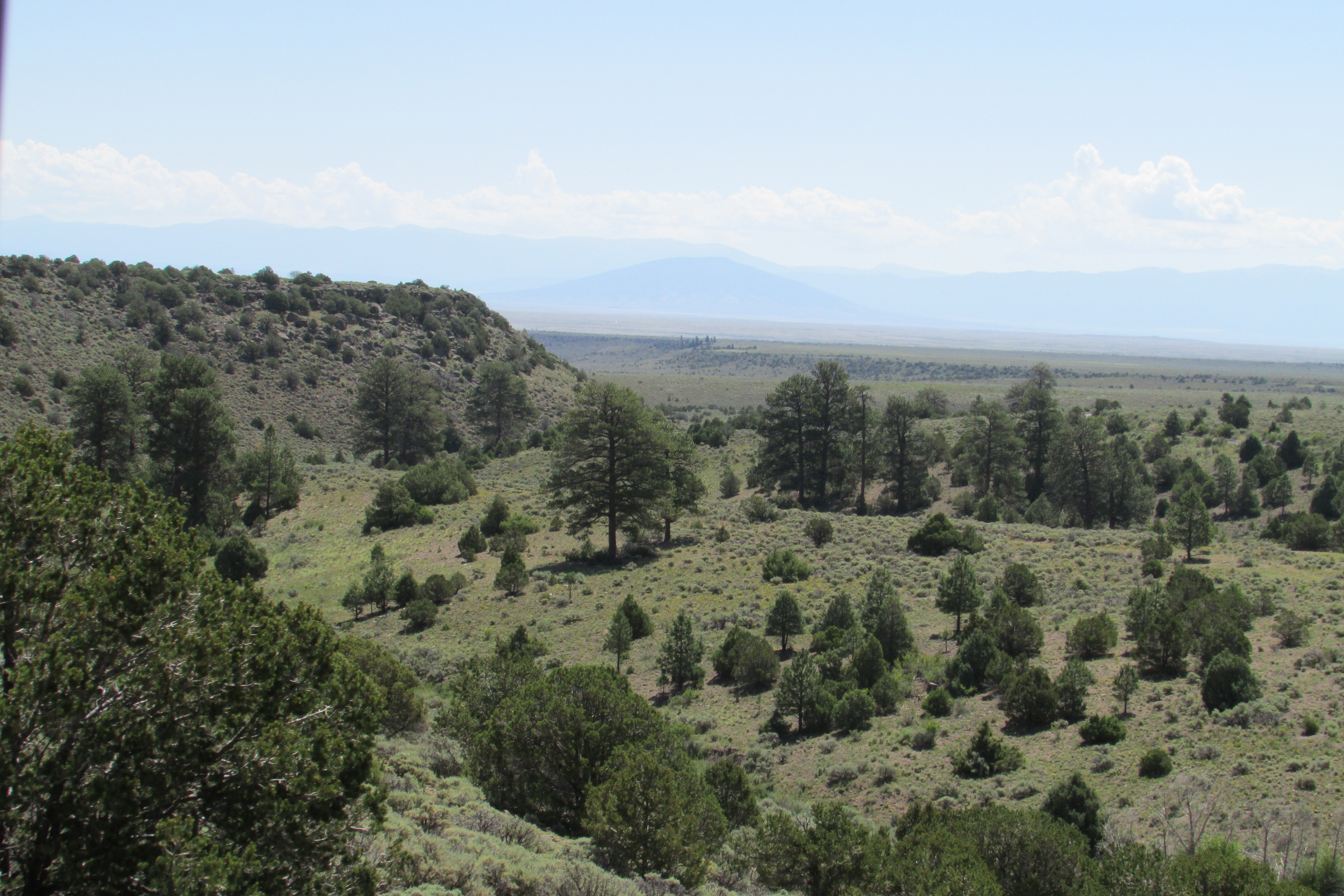
Ferguson's Trestle is named for a man who was hanged from a locomotive there. That grim bit of frontier justice is just one of the stories carried along 64 miles of narrow-gauge track between Antonito, Colorado, and Chama, New Mexico - a route where the train crosses the state line eleven times, threads through a tunnel bored into volcanic ash and braced with wooden pillars, and climbs to Cumbres Pass, the highest point reached by any narrow-gauge railroad in North America. The Cumbres and Toltec Scenic Railroad is not a theme park ride. It is an original piece of the Denver and Rio Grande Western Railroad's 19th-century network, still running steam locomotives built by Baldwin Locomotive Works, still hauling passengers over the same trestles and through the same gorges that miners and ranchers depended on more than a century ago.
Rails Through Impossible Country
On February 20, 1880, track crews of the Denver and Rio Grande Railway began laying narrow-gauge rails south from Alamosa, Colorado. They chose three-foot gauge instead of standard four-foot-eight-and-a-half-inch because narrower track was cheaper to build and could handle the tighter curves demanded by mountain terrain. From Antonito, the line pushed west to Chama, arriving on New Year's Eve 1880. In less than a year, the crews had punched through two tunnels, crossed a mountain pass, and skirted a 600-foot gorge - all to reach the silver and gold mines around Silverton, Colorado.
The route is a catalog of engineering audacity. Lobato Trestle, built in 1883, is the second-highest on the line and so weight-restricted that double-headed locomotives must uncouple, cross individually, and rejoin on the other side. Mud Tunnel is lined with wooden pillars because it was bored through soft volcanic ash. At Windy Point, an outcrop of volcanic rock near the summit, the wind blows so fiercely that locomotive smoke often streams forward instead of trailing behind.
Five Hundred Inches of Snow
Cumbres Pass is the railroad's greatest asset and its worst enemy. At over 10,000 feet above sea level, it offers passengers views that stretch across the San Juan Mountains. But every five or six years, winter buries the pass under as much as 500 inches of snow. The railroad purchased two steam-powered rotary snowplows - Rotary OM, dating from the late 1800s, and Rotary OY, built by ALCO in the 1920s - to keep the line open. Both still exist in the Chama yard.
The winter of 1951-1952, remembered as the "Granddaddy of All Snowstorms," was the worst on record. It helped seal the line's fate: in September 1968, the Denver and Rio Grande Western Railroad filed for abandonment of its entire narrow-gauge network. The oil boom in Farmington, New Mexico, had provided a reprieve after World War II, when 60-car pipe trains generated enough revenue to justify the route. But snow, maintenance costs, and declining freight eventually overwhelmed the economics.
Two States, One Railroad
What happened next was unprecedented. In April 1969, New Mexico passed legislation allowing the state to purchase the track between Chama and Antonito. Colorado followed with similar legislation in 1970. The two states took joint ownership, and by 1971 the Cumbres and Toltec Scenic Railroad was born - a heritage railroad owned by not one but two state governments.
In 1973, the railroad was listed on the National Register of Historic Places, and in 2012 it was designated a National Historic Landmark for its engineering, well-preserved infrastructure, and its role in developing the region it served. A nonprofit organization, Friends of the Cumbres and Toltec Scenic Railroad, was established in 1988 to help maintain rolling stock and infrastructure. The Friends also provide volunteer docents who ride the trains and share the history of each station, trestle, and water stop along the way.
Hollywood's Favorite Railroad
The C&TSRR has appeared in more than a dozen films, from the 1969 western The Good Guys and the Bad Guys to the 2021 Netflix film The Harder They Fall. A water tank at Lobato was originally built as a movie prop in the 1980s and later appeared in Indiana Jones and the Last Crusade before succumbing to age and high winds in 2006. Ferguson's Trestle itself starred in the 1988 TV movie Where the Hell's That Gold?, featuring Willie Nelson and Delta Burke - during filming, an explosion mishap burned the original bridge down, halting rail traffic for a week while a temporary span was built.
The line's authenticity is what draws filmmakers. The Baldwin-built Mikado-type steam locomotives, the narrow-gauge freight cars, the remote mountain landscapes - none of it is replicated or recreated. The railroad operates five steam locomotives from its roster of ten, all former D&RGW engines. Some have been converted from coal to oil to meet modern environmental requirements, but they remain the same machines that hauled ore and pipe trains through these mountains generations ago.
The Morning Whistle
From late May through late October, two trains depart each morning - one from Antonito, one from Chama - and converge at Osier, Colorado, the midpoint of the line, where passengers eat lunch in a modern dining hall. At Osier, riders can continue to the opposite terminus or switch trains and return the way they came. The westbound train pauses at Cumbres Pass to take on water, the locomotive having consumed roughly half its supply on the four-percent grade up from Chama.
The journey is a sensory immersion in 19th-century railroading. Coal smoke (or oil mist, depending on the engine) drifts through the coaches. The whistle echoes off volcanic canyon walls. At Tanglefoot Curve, above the pass, the track doubles back on itself to lose elevation gradually, and the engineer performs a boiler blowdown - releasing steam to clear sediment from the bottom of the boiler. Below, in Toltec Gorge, the track clings to a ledge hundreds of feet above the river. The continental-divide trail crosses at Cumbres Pass, and the railroad offers passing hikers a ride down the mountain - a small courtesy from a railroad that has been threading these peaks since 1880.
From the Air
The Cumbres and Toltec Scenic Railroad runs between Antonito, CO (37.07N, 105.66W, ~7,890 ft) and Chama, NM (36.90N, 106.58W, ~7,860 ft). Cumbres Pass, the highest point on the line, sits at approximately 36.98N, 106.45W at over 10,000 feet MSL. The route is visible from the air as a narrow-gauge rail line threading through mountain terrain, with distinctive trestles and tunnels. Toltec Gorge is a dramatic visual feature from altitude. Nearest airports: Alamosa San Luis Valley Regional (KALS) about 30 nm northeast of Antonito; no paved airport near Chama. The terrain is mountainous with elevations ranging from 7,800 to over 10,000 feet. Expect afternoon thunderstorms in summer and heavy snow in winter. The San Juan Mountains provide dramatic backdrop to the west and north.