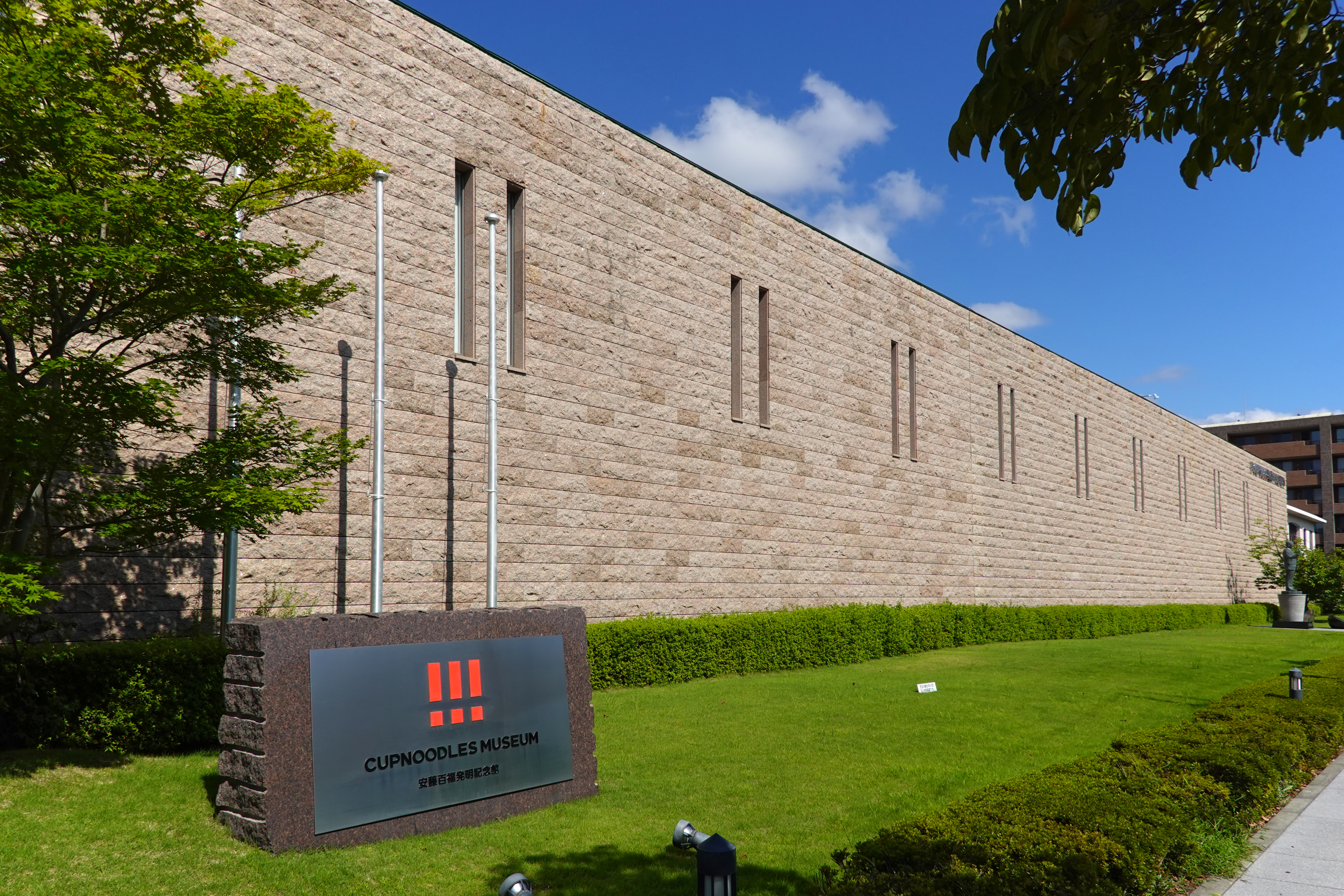
The Shed Where Instant Ramen Was Born
The shed is smaller than most people expect. A wooden workbench, a few pots, a wok for frying, bags of flour, a hand-cranked noodle machine -- these were the tools Momofuku Ando used to create one of the twentieth century's most consequential inventions. In this cramped backyard workspace in the residential streets of Ikeda, a quiet city north of Osaka, a 48-year-old bankrupt businessman spent every day of 1958 trying to solve a problem that had defeated the Japanese food industry: how to make noodles that could be stored indefinitely and prepared in minutes with nothing but boiling water. The CupNoodles Museum Osaka Ikeda preserves that shed and the story of the man who changed how the world eats.
A Bankrupt Man's Obsession
Momofuku Ando had already lived several lives by the time he turned to noodles. Born in 1910 in Japanese-controlled Taiwan, he moved to Osaka as a young man and built a successful trading business. After World War II, he saw long lines of hungry people waiting in the cold for bowls of ramen at black-market stalls, and the image stayed with him. When a series of business failures left him nearly penniless in his late forties, Ando retreated to a small shed he built behind his house in Ikeda. He gathered flour, oil, and basic kitchen tools, hauling supplies on the back of his bicycle. For a full year he worked nearly around the clock, often sleeping only four hours a night, driven by a single conviction: that a convenient, affordable noodle could change the world.
The Tempura Revelation
The breakthrough came from watching his wife Masako fry tempura. Ando noticed that vegetables dropped into hot oil expelled their moisture rapidly, leaving behind a porous, crispy structure. He realized the same principle could work with noodles -- flash-frying them in oil would dehydrate the strands while creating thousands of tiny holes. When boiling water hit those dried noodles, it would rush through the pores and rehydrate them almost instantly. On August 25, 1958, Ando produced his first successful batch of what he called Chicken Ramen. It could sit on a shelf for months and be ready to eat in three minutes. He founded Nissin Food Products to manufacture it, and within a year, Chicken Ramen was being sold across Japan.
From Shed to Shrine
The museum opened in 1999 on the very street where Ando conducted his experiments, within walking distance of Ikeda Station on the Hankyu Takarazuka Line. Admission is free. The centerpiece is a faithful recreation of Ando's workshop -- the actual dimensions, the tools arranged as he used them, the worn workbench where thousands of failed batches preceded the one that worked. Surrounding the shed exhibit, a tunnel of approximately 800 instant noodle packages traces the global explosion that followed Chicken Ramen: Cup Noodles in 1971, Space Ram for astronauts in 2005, and the staggering variety of regional flavors that now span continents. Each package represents a branch on the family tree that grew from one man's backyard.
Making Your Own
The museum's most popular attraction puts visitors in Ando's shoes. In the Chicken Ramen Factory on the second floor, participants knead wheat flour by hand, roll out noodle sheets, cut them into strands, season them, and flash-fry them using the same method Ando perfected. Reservations are required, and the experience takes roughly ninety minutes. For those short on time, the My CupNoodles Factory lets visitors design a custom Cup Noodle -- choosing from four soup bases and twelve toppings, then decorating the cup with original artwork. The finished product, sealed and vacuum-packed, costs 500 yen. It is a small, clever museum that turns the story of one invention into something visitors can touch, shape, and take home.
From the Air
Located at 34.818°N, 135.427°E in the residential city of Ikeda, approximately 15 kilometers northwest of central Osaka. Osaka Itami Airport (RJOO) is the nearest major airport, roughly 4 nautical miles to the southeast -- the museum sits almost directly under the approach path for Itami's Runway 32L. At 2,000-3,000 feet AGL, the Ikeda area is visible along the north bank of the Ina River where it feeds into the broader Osaka plain. Kansai International Airport (RJBB) lies approximately 35 nautical miles to the south on its artificial island in Osaka Bay.