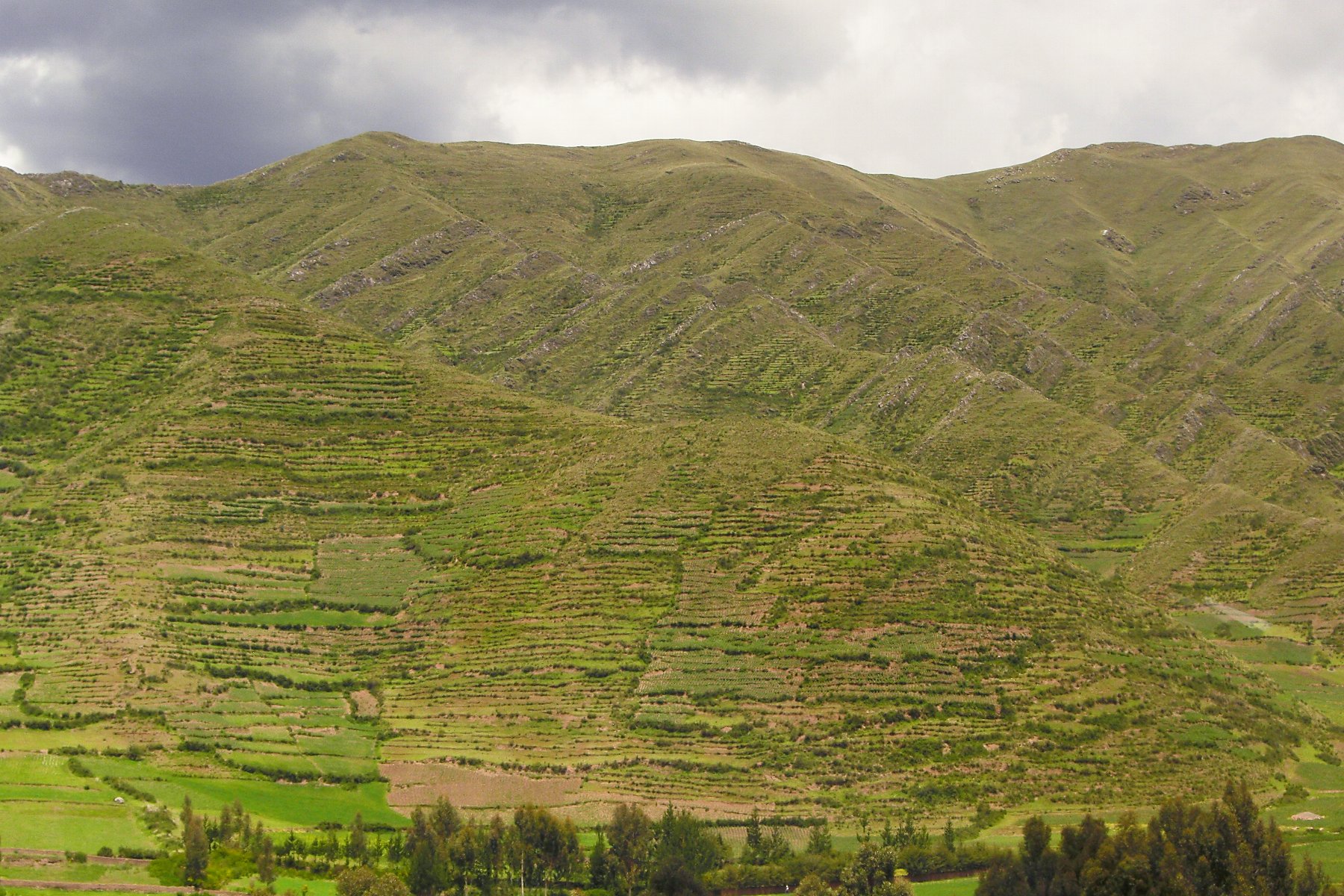
Cusco
Cusco was the capital of the Inca Empire, the navel of the world in Quechua cosmology. From here the Sapa Inca ruled territory stretching from Ecuador to Chile. When the Spanish conquered the city in 1533, they destroyed the Inca state but not its foundations - Qorikancha temple walls still stand, precise stonework shows beneath colonial churches, and the street plan follows Inca design. At 3,400 meters in the Andes, the altitude leaves visitors gasping while locals go unbothered. Some 430,000 people live in the province today. Cusco serves as the tourism gateway to Machu Picchu and the Sacred Valley, a city where every cobblestone carries history and every restaurant caters to travelers.
The Inca Foundations
Beneath and beside what the Spanish built, the walls of Inca Cusco survive. Consider the Qorikancha - the Temple of the Sun, most sacred site of the Inca Empire. Gold sheets once covered its walls before the Spanish melted them down. Now the Santo Domingo church and monastery sit on top. Stones fit together without mortar, cut so precisely that knife blades cannot slip between them. The conquistadors destroyed what Inca engineering created, yet they could not match it.
Throughout the historic center, Inca walls remain visible. The famous twelve-angled stone fits perfectly into its neighbors. Retaining walls hold terraces. Colonial buildings rest on indigenous foundations. No one has replicated the technique; how the Inca achieved such precision remains debated. These surviving walls serve as both engineering marvel and colonial metaphor - the indigenous foundation holding up what conquest imposed.
The Plaza de Armas
In Inca times, the Plaza de Armas was the city's heart - a gathering place for ceremonies and celebrations, larger then than now. Spanish colonists rebuilt it to their own proportions, surrounding it with the Cathedral and the Church of La Compania and lining its edges with arcades. Today the plaza remains Cusco's center. Tourists gather here, political demonstrations unfold here, and distances are still measured from this point.
Inside the Cathedral hangs colonial art with a distinctly Andean twist: a famous painting of the Last Supper features guinea pig as the main course. Indigenous artists substituted the Andean animal for lamb, producing a cultural syncretism visible in religious art throughout the region. The churches dominating the plaza were built from stones taken directly from Inca structures - a recycling of materials the Spanish practiced throughout their empire.
The Altitude
At 3,400 meters above sea level, Cusco's altitude affects every visitor arriving from lower elevations. Soroche - altitude sickness - brings headaches, breathlessness, and nausea to those who have not acclimatized. Hotels offer coca tea as traditional relief. What the Inca accepted as normal requires careful adaptation from modern tourists.
Beyond its impact on visitors, altitude shapes the city in subtler ways. Steep streets leave lungs burning. Cold nights arrive even at tropical latitude because of the elevation. Sunlight burns more intensely through thinner atmosphere. Why did the Inca choose this site despite such harsh conditions? The Sacred Valley below provided agriculture, while the height provided defense. Strategically, the location made perfect sense. Comfortable it was not.
The Gateway
Machu Picchu begins in Cusco. Trains depart from here for Aguas Calientes. Tours to the Sacred Valley launch from these streets. Hikers set out on the Inca Trail from staging points in the city. A vast tourism infrastructure has grown up around this gateway function, filling the historic center with hotels, restaurants, and agencies - services that history alone would never justify.
Being a gateway shapes Cusco's economy and character in profound ways. Backpackers seek budget transit, luxury travelers book packaged experiences, and tour groups crowd the narrow streets. These visitors define the city's contemporary life. But a different Cusco exists beneath the tourist layer - one where Peruvians live, work, and go about daily routines in neighborhoods visitors rarely see. The historic center functions as a tourism district while residential life happens elsewhere.
Sacsayhuaman
Above Cusco rises Sacsayhuaman, its zigzag walls of massive stones defying five centuries of weathering and human plunder. The scale is staggering - the largest stones weigh over 100 tons, fitted together with a precision Inca engineers achieved everywhere but here pushed to unprecedented dimensions. Spanish colonists dismantled much of the fortress, carrying its stones downhill to build colonial Cusco. What remains is impressive enough to make the destruction's full scope comprehensible.
Each June, Sacsayhuaman hosts the Inti Raymi festival celebrating the winter solstice, an event the Inca Empire placed at the center of its calendar. The modern festival is part reconstruction, part tourism product - ceremonies performed for audiences rather than gods. Yet the location still matters. Sacsayhuaman overlooks Cusco as it did when emperors ruled, and its connection to Inca cosmology persists even as the context has changed entirely.
From the Air
Cusco (13.52S, 71.97W) sits at 3,400m elevation in the Peruvian Andes. Alejandro Velasco Astete International Airport (SPZO/CUZ) lies 5km from the city center, with one runway 10/28 measuring 3,400m. High altitude significantly affects aircraft performance. From above, the historic center and its churches stand out clearly, while Sacsayhuaman fortress ruins are visible on the hillside above the city. Northwest, the Sacred Valley extends toward Machu Picchu. Mountainous terrain makes for steep approaches. The climate is subtropical highland: dry season runs April through October, wet season November through March. Expect afternoon clouds and thunderstorms during wet months. High altitude operations require special procedures.