Cuttack
Fifty-two bazaars and fifty-three lanes. That is the local boast about Cuttack, rendered in the Odia rhyme "Bauna Bazaar, Tepana Galee" -- a city so dense with commerce and history that its residents needed a saying just to capture the scale of it. Perched on a sliver of land between the Mahanadi and Kathajodi rivers, Cuttack has been the beating heart of Odisha for more than a millennium. Its Sanskrit name, Kataka, means simply "the fort," a reference to the Barabati Fort around which the city first took shape. But Cuttack has always been more than fortifications. It is a city built on water, shaped by trade, and held together by a culture that has outlasted every dynasty that claimed it.
A Fortress Between Rivers
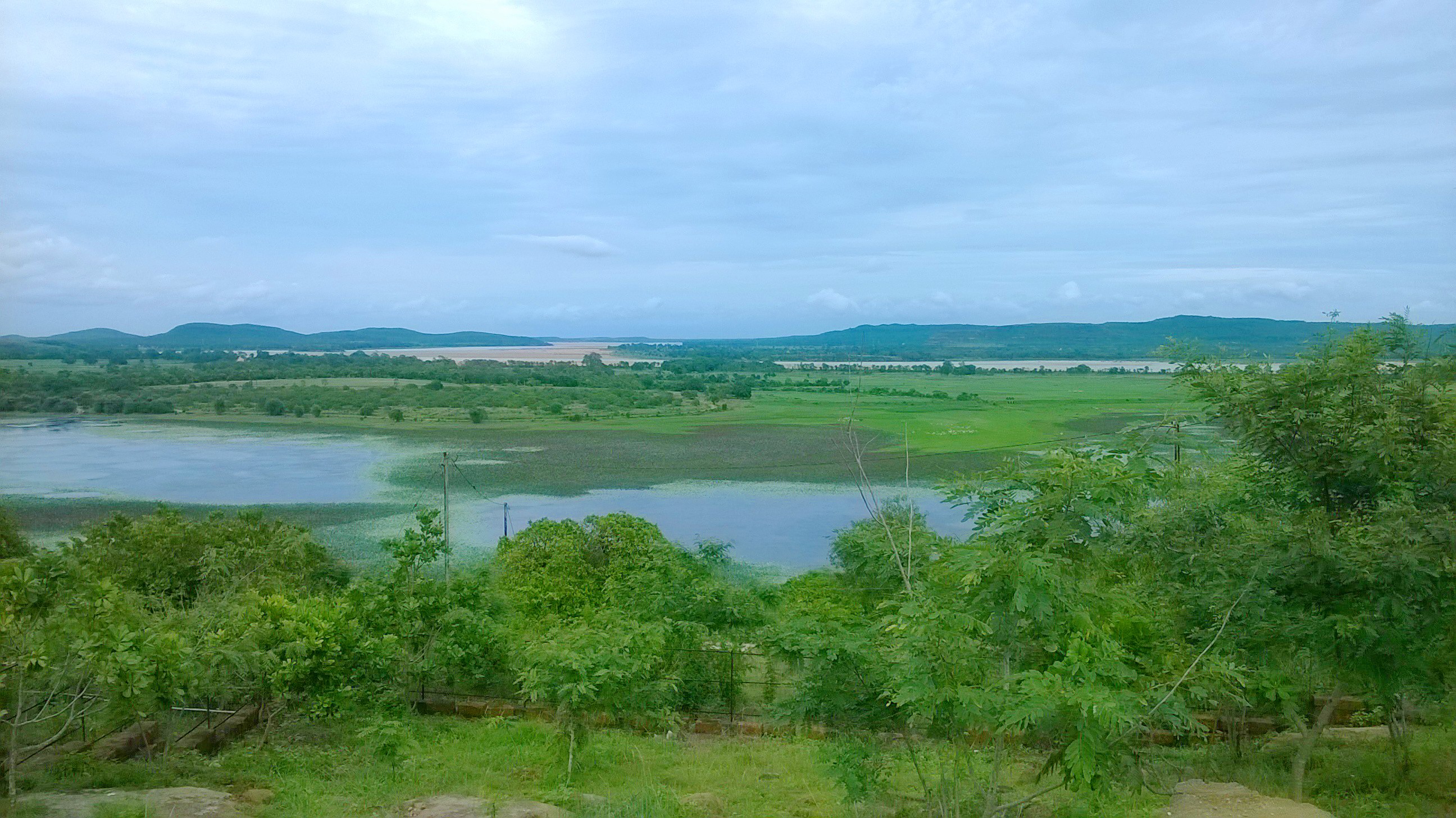
The geography tells you everything. Cuttack sits at the apex of the Mahanadi River delta, where the great river splinters into distributaries -- the Kathajodi, the Kuakhai, the Birupa -- creating a web of waterways that once made the city both commercially strategic and dangerously flood-prone. In 1002 CE, Maharaja Markata Keshari of the Keshari dynasty ordered stone embankments built to protect his new capital from the river's fury, an engineering feat that marks the city's earliest recorded history. Two centuries later, Raja Anangabhimadeva III of the Ganga dynasty established Cuttack as a full kingdom capital in 1211 CE. The Barabati Fort, whose moated remains still occupy the city's core, became the seat of power for successive rulers -- the Gangas, the Suryavamsi Gajapatis, the Mughals under Shah Jahan, and eventually the Marathas, who conquered it in 1750.
From Attock to Cuttack
The phrase entered the lexicon of empire. When the Marathas took Cuttack in 1750 and then Attock in the northwest eight years later, "Attock te Cuttack" became shorthand for the staggering breadth of Maratha dominion -- from the Afghan frontier to the Bay of Bengal. Cuttack thrived under this arrangement as the point of contact between the Bhonsale Marathas of Nagpur and English merchants pushing inland from Bengal. But Maratha control did not last. The British occupied the city in 1803, and by 1816 it had become the capital of the Odisha division under colonial administration. Cuttack held that distinction until 1948, when the newly independent state shifted its capital to the planned city of Bhubaneswar. Even then, Cuttack refused to relinquish everything: the Orissa High Court stayed, making Cuttack the judicial capital of Odisha to this day.
Silver Threads and Durga's Gaze
Two things have defined Cuttack's cultural identity for centuries: silver filigree and Durga Puja. The city's artisans practice tarakasi, a craft that transforms fine silver wire into impossibly delicate jewelry, miniature animals, and ornamental pieces. The work requires steady hands and infinite patience -- a single brooch can take days of twisting wire thinner than a human hair. This tradition earned Cuttack its nickname: the Silver City. The other pillar is devotion. The Cuttack Chandi Temple, dedicated to the goddess who serves as the city's presiding deity, anchors a Durga Puja celebration that stretches across sixteen days. The tradition traces back to the 16th century and the visit of the saint Chaitanya, who witnessed the consecration of a Durga idol at the Binod Behari Devi Mandap. Today the festival transforms the city's labyrinthine lanes into corridors of light and sound.
The Twin That Refuses to Be Overshadowed
Cuttack and Bhubaneswar form the Twin Cities of Odisha, their metropolitan area home to nearly two million people. But where Bhubaneswar was designed from scratch as a modern administrative capital, Cuttack grew organically over centuries, and its character reflects that. The old city is a maze -- narrow streets opening suddenly into temple courtyards, bazaars spilling goods onto sidewalks, the smell of dahibara and thunkapuri drifting from food stalls that have occupied the same spots for generations. Across the Kathajodi, the planned township of Markat Nagar spreads across two thousand acres in fifteen sectors, a concession to modernity. But the soul of Cuttack remains in its older quarters, where the Dhabaleswar Temple sits on a river island connected by Odisha's only suspension bridge, and the thousand-year-old Paramhansa Nath Temple rises eighty feet above the Kathajodi's banks.
Living with Water
Four rivers run through Cuttack. This is both the city's gift and its recurring crisis. The monsoon brings roughly 1,600 millimeters of rain between July and October, and the rivers swell against embankments that have been reinforced and rebuilt since Markata Keshari's original stone walls a thousand years ago. A catastrophic cyclone in 1971 killed more than ten thousand people across Odisha, a reminder that the Bay of Bengal's storms reach deep inland along these river corridors. The city sits in seismic zone III and carries what the United Nations Development Programme calls a "very high damage risk" from wind and cyclones. Yet Cuttack endures. Its residents have spent a millennium negotiating with the rivers that sustain and threaten them, building and rebuilding on the same strip of land where Kataka -- the fort -- first rose above the floodplain.
From the Air
Cuttack is located at 20.45N, 85.87E at an elevation of 36 meters. From cruising altitude, the city is identifiable by its position at the apex of the Mahanadi River delta, where multiple river channels visibly diverge. The strip of land between the Mahanadi and Kathajodi rivers defines the old city core. Biju Patnaik International Airport (VEBS) in Bhubaneswar is the nearest major airport, approximately 25 km to the south. The twin-city metropolitan area is clearly visible as a continuous urban zone.