D-Day: The Longest Day
June 6, 1944 - D-Day - was the largest amphibious invasion in history. At dawn, 156,000 American, British, and Canadian soldiers stormed five beaches on the Normandy coast of France: Utah, Omaha, Gold, Juno, and Sword. Overhead, 11,000 aircraft supported the assault. Offshore, nearly 7,000 vessels waited. By nightfall, the Allies had a foothold in Nazi-occupied Europe - purchased with approximately 10,000 casualties, including 4,414 confirmed dead. The beaches of Normandy became sacred ground, the place where the liberation of Europe began and thousands of young men breathed their last.
The Plan
Operation Overlord was years in planning. The Allies had to cross the English Channel, land on defended beaches, and establish a beachhead against the German army. Deception operations convinced Hitler the invasion would strike Pas-de-Calais, not Normandy. Paratroopers would secure the flanks. Naval guns would suppress defenses. Then the infantry would wade ashore.
Everything depended on weather. The invasion required calm seas, low tides at dawn, and moonlight for paratroopers. General Eisenhower postponed from June 5 to June 6 due to storms. 'OK, let's go,' he finally ordered. The largest armada in history crossed the Channel.
The Beaches
The five beaches stretched 50 miles along the Normandy coast. Utah and Omaha were American; Gold was British; Juno was Canadian; Sword was British. Each beach presented different challenges - German defenses, obstacles, terrain.
Utah was relatively easy - light opposition, accurate bombing. Gold, Juno, and Sword saw fierce fighting but achieved their objectives. But Omaha was a slaughter. German defenders on the bluffs overlooked the beach. The preparatory bombardment missed. Tanks sank offshore. Men died in the water before reaching the sand.
The Slaughter
Omaha Beach became the bloodiest of the five. Soldiers of the 1st and 29th Infantry Divisions faced entrenched German positions with clear fields of fire. The first waves were cut down in the surf. Surviving soldiers huddled behind obstacles, unable to advance.
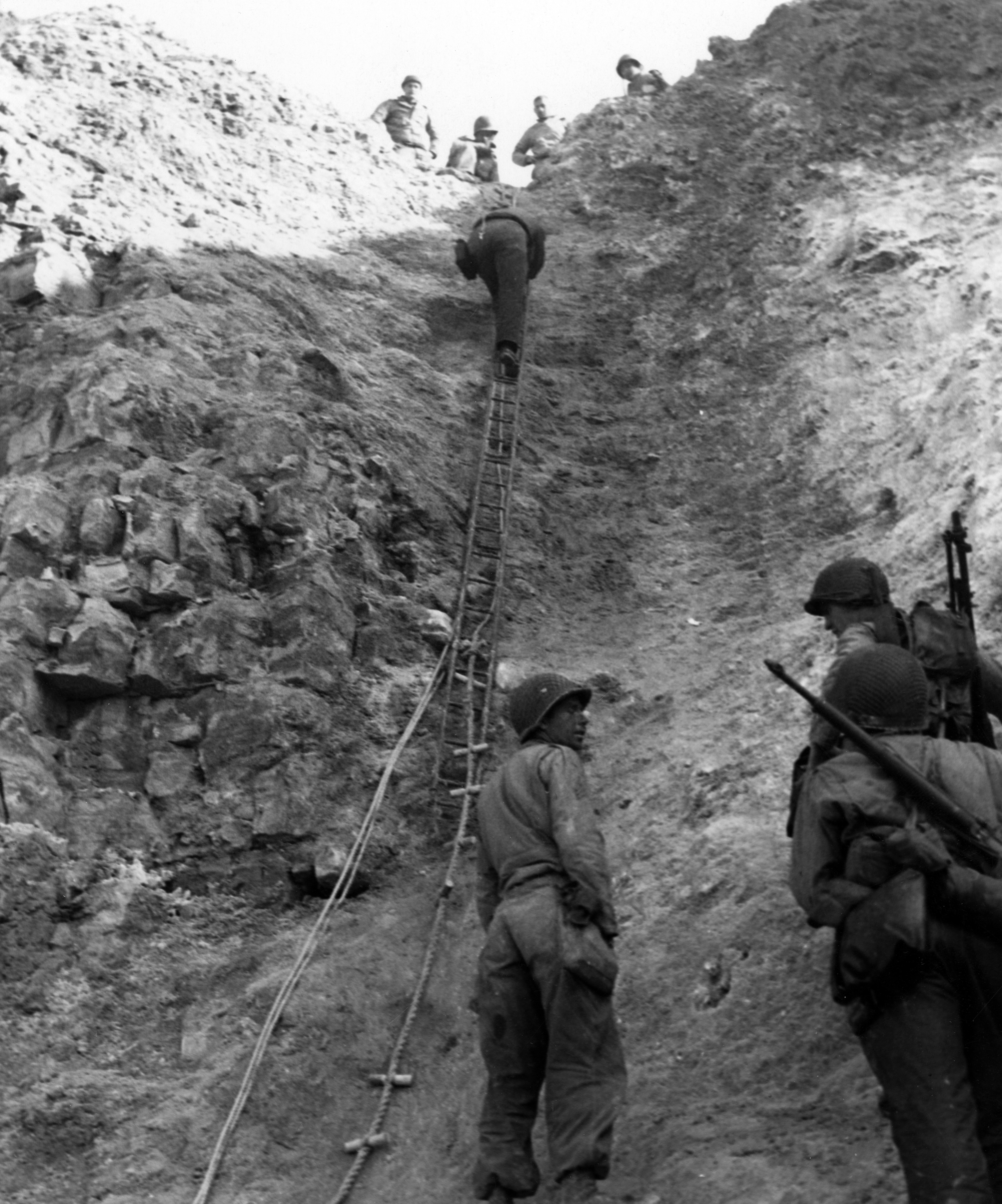
Individual acts of heroism broke the deadlock. Small groups of Rangers scaled cliffs. Officers rallied survivors. By sheer determination, Americans pushed off the beach, up the bluffs, and into the German positions. By day's end, Omaha was secure - at the cost of approximately 2,400 American casualties.
The Airborne
Before dawn, 23,000 paratroopers dropped behind German lines. The 101st and 82nd Airborne Divisions landed across Normandy, scattered by wind and anti-aircraft fire. Many troopers landed miles from their objectives. Some drowned in flooded fields.
But the chaos worked in their favor. German defenders couldn't determine where the main attack was coming. Paratroopers seized bridges, blocked reinforcements, and created confusion. When the beach assault began, the Germans were already fighting on multiple fronts.
The Memorial
By June 11, the five beachheads had merged into a continuous front. By August 25, Paris was liberated. By May 8, 1945, Germany had surrendered. D-Day was the beginning of the end.
The Normandy beaches are now sites of remembrance. Cemeteries hold thousands of graves - Americans at Colleville-sur-Mer, British at Bayeux, Canadians at Bény-sur-Mer. The beaches themselves have returned to peaceful tourism, but the bunkers and monuments remain. Every June 6, veterans (fewer each year) return to honor those who died on the longest day.
From the Air
The D-Day beaches extend along the Normandy coast of France (49.37N, 0.87W). Caen-Carpiquet Airport (LFRK) is 20km inland. The beaches - Utah, Omaha, Gold, Juno, Sword - stretch west to east. Omaha Beach and the American Cemetery at Colleville-sur-Mer are visible from the air. The terrain is flat coastal plain backed by gentle hills. Weather is maritime - mild but often cloudy.