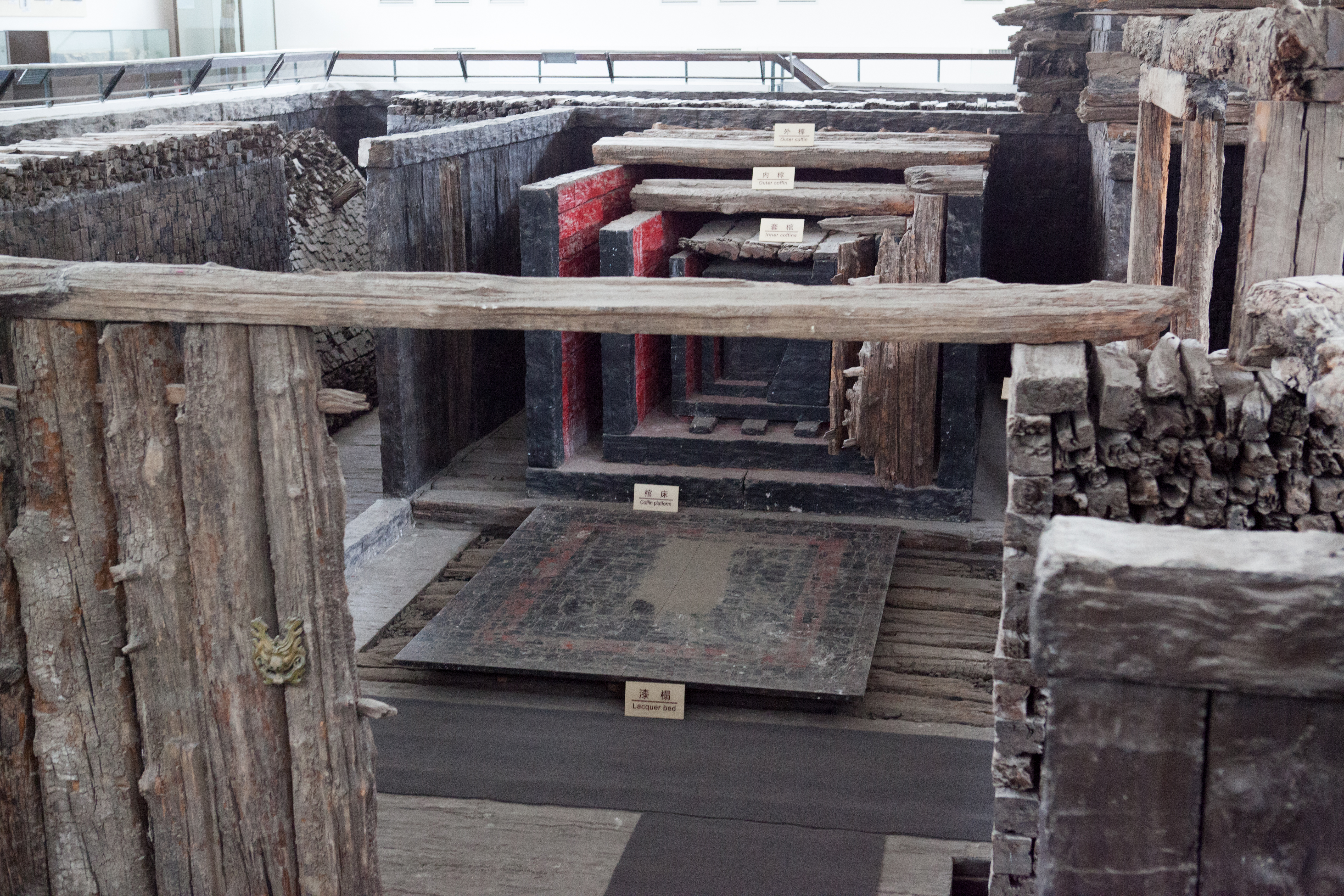
Dabaotai Western Han Dynasty Mausoleum
In 1974, construction workers in southwestern Beijing broke through to something unexpected: the burial chambers of a prince who had been dead for more than two thousand years. Liu Jian, a prince of the Western Han dynasty who ruled from 73 BC to 45 BC, had been interred at Dabaotai with his wife in elaborate tombs that time and geology had sealed beneath layers of earth in what is now Fengtai District. The discovery added Beijing to the map of major Han dynasty archaeological sites, and the museum that opened over the tombs in 1983 remains one of the city's most unusual heritage destinations.
A Prince Restored
Liu Jian's story is one of dynastic fortune. His family had lost their royal status, but during the reign of Emperor Xuan of Han, the family's position was restored and Liu Jian was elevated to prince. He ruled for approximately 29 years, a long tenure that suggests stability and favor within the imperial court. His tomb, designated Tomb No. 1, was discovered first. A year later, in 1975, archaeologists excavated Tomb No. 2, belonging to his wife. The tombs were constructed according to the elaborate burial practices of the Western Han, a dynasty that believed in equipping the dead for a comfortable afterlife. The museum preserves these burial chambers in situ, allowing visitors to view the actual structures rather than reconstructions.
Layers of History
The Dabaotai site holds more than Han dynasty remains. Excavations in the vicinity uncovered remnants of a residence from the Jin dynasty (1115-1234), adding nearly a thousand years to the site's historical range. Jin dynasty records indicate that the area, located about 15 kilometers south of the Jin capital Zhongdu, served as a country retreat for Consort Li of Emperor Zhangzong, who ruled from 1189 to 1208. The juxtaposition of a Han prince's tomb and a Jin consort's retreat, separated by more than twelve centuries, speaks to the enduring appeal of this patch of ground at the edge of Beijing's expanding footprint. Archaeological finds from the Jin period include pieces with carved flying dragon motifs on their oblique sides.
Troubled Waters
The museum's history has not been smooth. Located on Fengbao Lu and surrounded by Huaxiang Park, the site sits in an area prone to drainage problems. Flooding in the summers of 2013 and 2015 damaged the museum, and it has been closed for renovation and expansion since September 2012. The irony is pointed: the tombs survived two millennia underground only to be threatened by water once exposed. The ongoing renovation aims to address the drainage issues while expanding the museum's exhibition space. For the time being, the mausoleum remains one of Beijing's heritage sites that is more discussed than visited, a place whose significance outweighs its accessibility.
Neighborhood of Antiquities
The Dabaotai Mausoleum sits in a pocket of southwestern Beijing that concentrates an improbable amount of history. Beijing World Park, the miniature landmarks theme park, lies just 500 meters to the northwest. The Dabaotai Station of Beijing Subway's Fangshan Line is within walking distance. The contrast between the park's cheerful replicas and the mausoleum's genuine antiquity makes for an unusual pairing. One offers the world shrunk down to toy size; the other offers a single prince's burial preserved at full scale. Together they illustrate the range of ways a city can engage with its past, from playful approximation to solemn preservation, from the miniature global to the monumental local.
From the Air
Located at 39.80N, 116.29E in Fengtai District, southwestern Beijing. The site is surrounded by Huaxiang Park and lies near Beijing World Park. Beijing Daxing International Airport (ZBAD) is approximately 35 km to the south. Beijing Capital International Airport (ZBAA) is about 45 km northeast. The Dabaotai Station on Beijing Subway's Fangshan Line is approximately 500 m to the northwest. From the air, the area presents as suburban development with scattered parks and green spaces.