Daegu Subway Fire
The youngest victim was celebrating his second birthday. He had ridden the subway with his mother to visit relatives on the morning of February 18, 2003, born on that exact date two years earlier. They were among the passengers on Daegu Metro's Line 1 when a cascade of decisions -- one man's act of arson, one operator's failure to warn, another operator's removal of a master key -- turned a subway station in downtown Daegu into the deadliest deliberate incident in South Korean peacetime history. One hundred and ninety-two people died. Most were students and young women on their way to open department stores for the day.
Nine Minutes
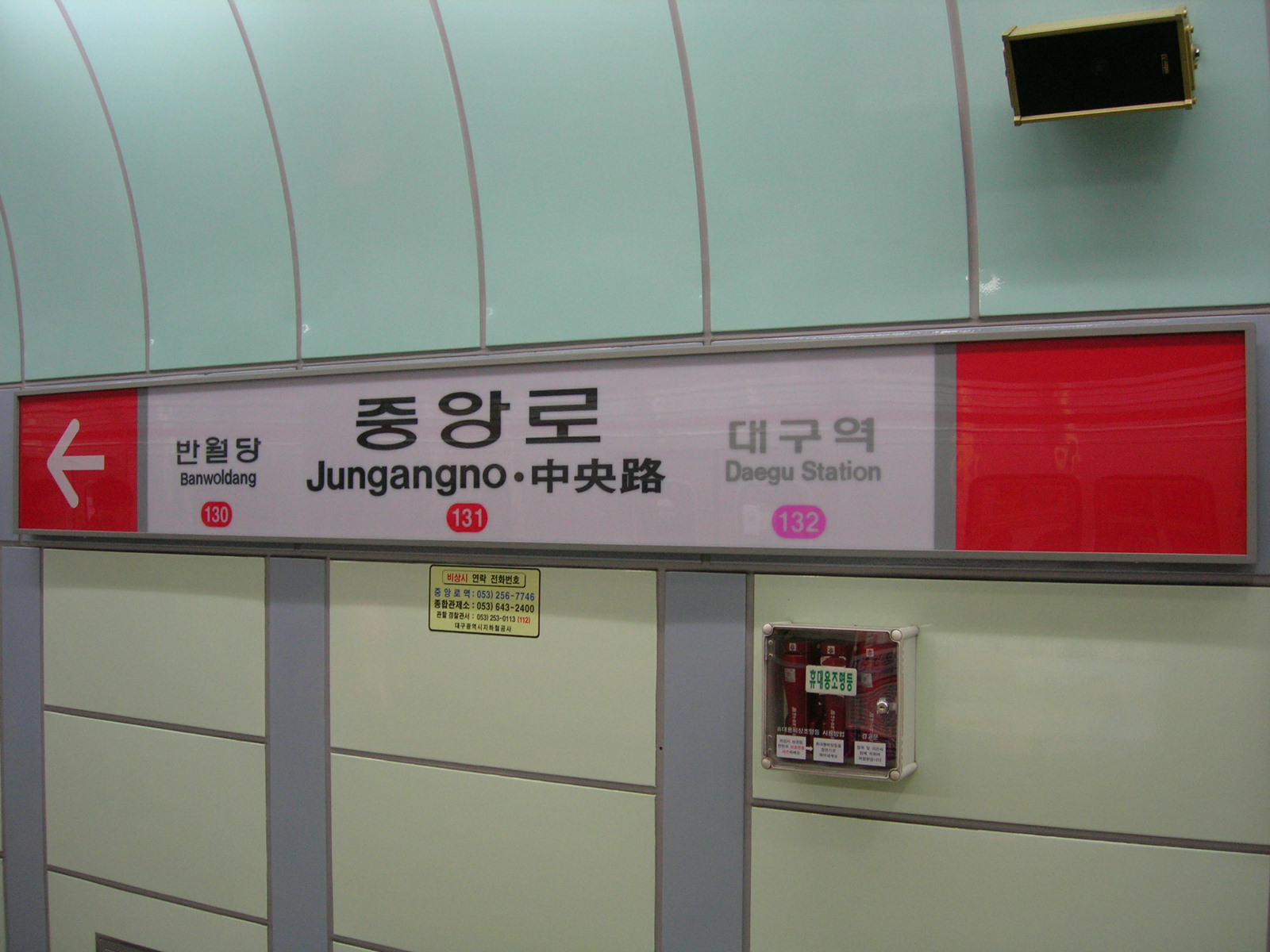
Kim Dae-han was 56, unemployed, and partly paralyzed from a stroke suffered in November 2001. Dissatisfied with his medical treatment and consumed by depression, he later told police he wanted to die -- but not alone. On the morning of February 18, he boarded train 1079 carrying a duffel bag with two green milk cartons filled with flammable liquid, likely paint thinner or gasoline. As the train left Banwoldang station around 9:53 a.m., he fumbled with the cartons and a lighter. Other passengers tried to stop him. In the struggle, one carton spilled and ignited as the train pulled into Jungangno station in the center of the city. Within two minutes, fire had spread to all six cars, feeding on vinyl seat cushions, plastic strap handles, and heavy plastic floor matting. Kim, his back and legs burning, managed to escape. So did many passengers on train 1079. But the fire was only the beginning.
The Second Train
Subway officials saw smoke on their closed-circuit monitors. They radioed the operator of train 1080, Choi Sang-yeol, advising him to proceed with caution. Four minutes after the fire started, train 1080 entered Jungangno station and stopped alongside the blazing wreckage of train 1079. The doors opened briefly, then shut -- an attempt to keep toxic smoke out of the cars. Seconds later, an automatic fire detector cut power to both trains, trapping 1080 in the station. Radio transcripts show Choi made three announcements telling passengers to remain seated while he tried to reach his supervisors. When he was finally told to evacuate, Choi opened the doors and fled -- but took the master key with him. Without it, the onboard batteries shut down. The doors closed again, sealing the passengers inside. Every one of the 79 people aboard train 1080 died there, trapped in cars that had become airtight chambers filling with lethal smoke.
What Was Missing
Daegu's subway trains carried no fire extinguishers. The stations had no sprinkler systems, no emergency lighting. When the power failed, passengers stumbled through absolute darkness in a station filling with toxic fumes, searching for exits they could not see. The ventilation systems, designed for normal operations, proved completely inadequate for clearing smoke from an underground fire. Over 1,300 emergency personnel responded, but the fire was not extinguished until 1:38 p.m. -- nearly four hours after it started. Even then, the smoke's toxicity was so severe that rescuers could not enter the station for another three and a half hours. When they finally reached the victims, most were burned beyond recognition. DNA analysis was required to identify the dead. Of the 192 confirmed deaths, 185 bodies were identifiable; six required DNA matching; one person's belongings were found, but their remains never were.
The Reckoning
South Korea's grief quickly turned to anger. The disaster exposed what many saw as the cost of corners cut during the country's rapid industrialization -- a transit system that had prioritized speed and capacity over basic safety provisions. Both train operators were convicted of criminal negligence: Choi Sang-yeol received five years, Choi Jeong-hwan four. Kim Dae-han, the arsonist, was convicted of arson and homicide. Prosecutors and victims' families sought the death penalty, but the court sentenced him to life imprisonment, citing his remorse and mental instability. He died of chronic illness in prison on August 31, 2004, in the city of Jinju. In the aftermath, six stations were shuttered for refurbishment, fire-resistant chemicals were applied to train interiors nationwide, and sprinklers and emergency lighting became standard requirements. In 2008, the city opened the Daegu Safety Theme Park at the site, dedicated to teaching the public about emergency preparedness -- education built on the knowledge of what happens when it is absent.
From the Air
Jungangno station is located at 35.87N, 128.59E in central Daegu, South Korea's fourth-largest city. The station is underground and not visible from the air, but Daegu's urban grid is clearly identifiable. Daegu International Airport (RKTN) is located approximately 10km northeast of the city center. The city sits in the Daegu Basin, surrounded by mountains, making it visually distinctive from altitude.