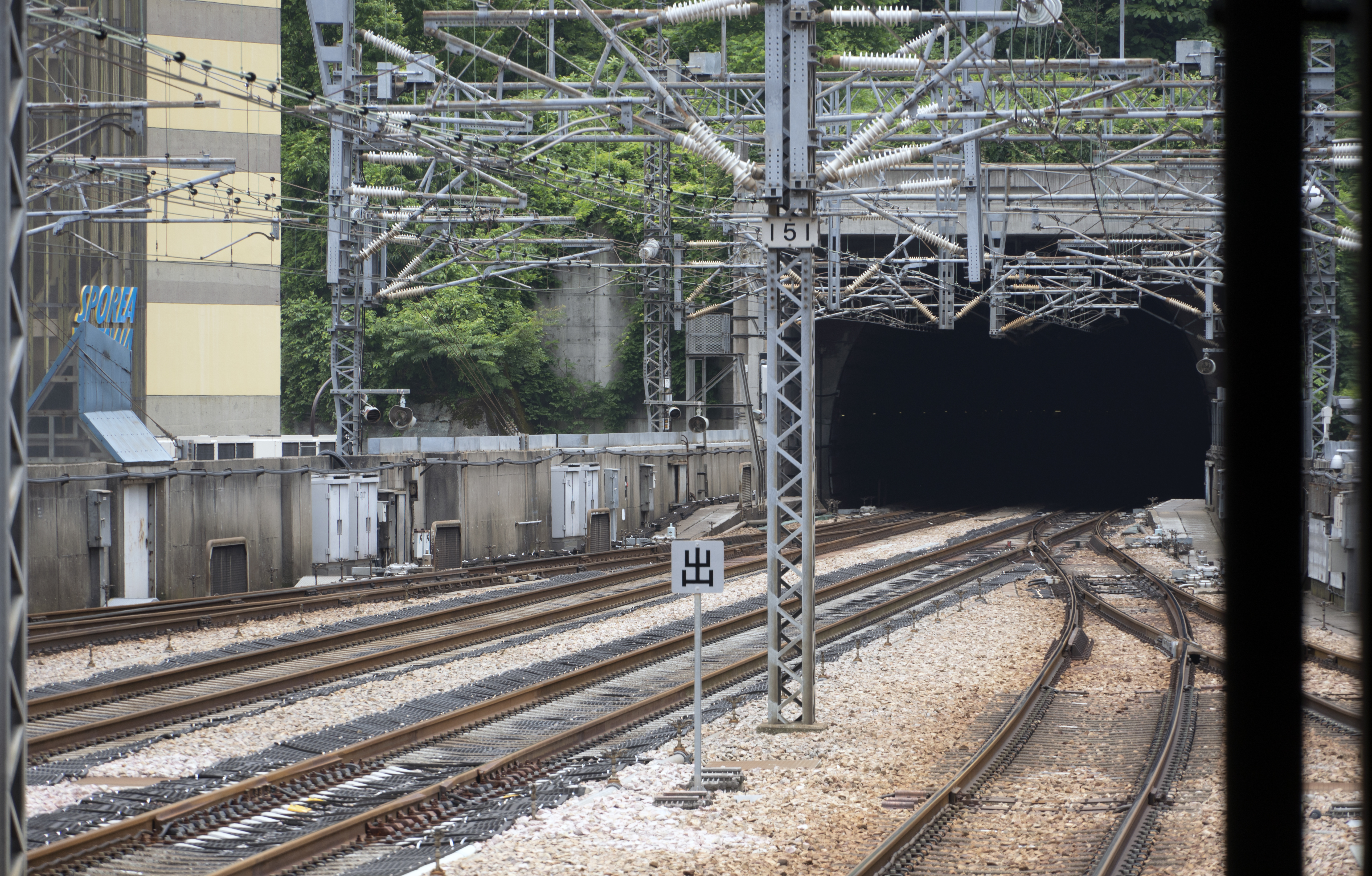
Daishimizu Tunnel
Somewhere beneath the mountains on the border of Gunma and Niigata Prefectures, a bullet train is hurtling through 22.2 kilometers of darkness at 240 kilometers per hour. The passengers barely notice. They are reading, sleeping, scrolling through phones. The tunnel takes about six minutes to cross. It took construction crews more than a decade to build, cost the lives of 16 workers, and for a brief period held the title of the longest railway tunnel on Earth. The Daishimizu Tunnel is one of those engineering marvels that succeeds so completely it becomes invisible -- a problem solved so thoroughly that no one thinks about the problem anymore.
The Mountain Barrier
Japan's central mountain range runs like a spine down the length of Honshu, dividing the country into two fundamentally different worlds. To the east lies the Kanto Plain, home to Tokyo and the dense urban corridor of the Pacific coast. To the west lies the Niigata region, facing the Sea of Japan, isolated by terrain that made overland travel slow, expensive, and seasonal. For centuries, this mountain wall shaped Japanese commerce and culture, forcing trade through a handful of narrow passes. The existing Joetsu Line, a conventional railway, wound through the mountains with brutal inefficiency. A trip from Tokyo to Niigata took nearly five hours. The Joetsu Shinkansen was conceived to punch straight through the barrier, and the Daishimizu Tunnel was the centerpiece of that ambition -- a single bore running 22.2 kilometers under the Tanigawa mountain range, connecting the two halves of the island.
Sixteen Lives Underground
Construction of the tunnel was an ordeal. Workers bored into rock deep beneath the mountain ridgeline, contending with extreme water pressure, unstable geology, and temperatures that climbed as they pushed deeper. The tunnel was completed in 1978 after years of grueling excavation. The worst single incident came when a fire broke out underground, filling the confined bore with smoke. Sixteen workers died from carbon monoxide poisoning, unable to escape through the kilometers of completed tunnel behind them. Their sacrifice is not memorialized in any grand monument -- the tunnel itself, carrying millions of passengers each year in climate-controlled comfort, is the monument. When the Joetsu Shinkansen began service in 1982, the journey from Tokyo to Niigata shrank from nearly five hours to roughly one hour and forty minutes. Three hours of travel time, erased.
The World's Longest -- Briefly
At 22.2 kilometers, the Daishimizu Tunnel held the title of the world's longest railway tunnel upon completion. It was a record Japan would not hold for long. The Seikan Tunnel, connecting Honshu to Hokkaido beneath the Tsugaru Strait, surpassed it when it opened in 1988 at 53.85 kilometers. And the Gotthard Base Tunnel in Switzerland claimed the global crown in 2016 at 57.1 kilometers. But context matters more than rankings. The Daishimizu Tunnel was not built to set records -- it was built to solve a geographic problem that had constrained the Niigata region for centuries. Every day, Joetsu Shinkansen trains carry commuters, business travelers, and tourists through this passage in minutes, a journey that once demanded an entire day. The tunnel does not draw sightseers. It simply works.
Water from the Mountain's Heart
During construction, drilling crews struck something unexpected: veins of pure, naturally filtered spring water flowing through the rock deep inside the mountain. Rather than treat this as an engineering nuisance to be pumped out and discarded, someone recognized an opportunity. The spring water is now bottled and sold commercially, a product drawn from the same geological formations that the tunnel passes through. It is one of those peculiar footnotes of infrastructure -- a byproduct of blasting and boring that turned out to have its own quiet value. The water is cold and mineral-rich, filtered through millennia of compressed rock, and it arrives at the surface as an accidental gift from a project that was never intended to produce anything but a faster rail connection. Passengers on the Shinkansen above may never know that the rock surrounding them also supplies the bottled water in a convenience store in Echigo-Yuzawa station at the tunnel's northern end.
From the Air
Located at 36.83N, 138.92E on the border of Gunma and Niigata Prefectures, deep beneath the Tanigawa mountain range. The tunnel itself is entirely underground and invisible from the air, but its path can be traced between the southern portal near Jomo-Kogen Station and the northern portal near Echigo-Yuzawa Station. The rugged Tanigawa mountain ridgeline above rises to approximately 1,977 meters. Nearest airports: Niigata (RJSN) approximately 100 km to the north, Matsumoto (RJAF) approximately 80 km southwest. The mountain terrain creates turbulence and rapidly changing weather; winter brings heavy snowfall, particularly on the Niigata side.