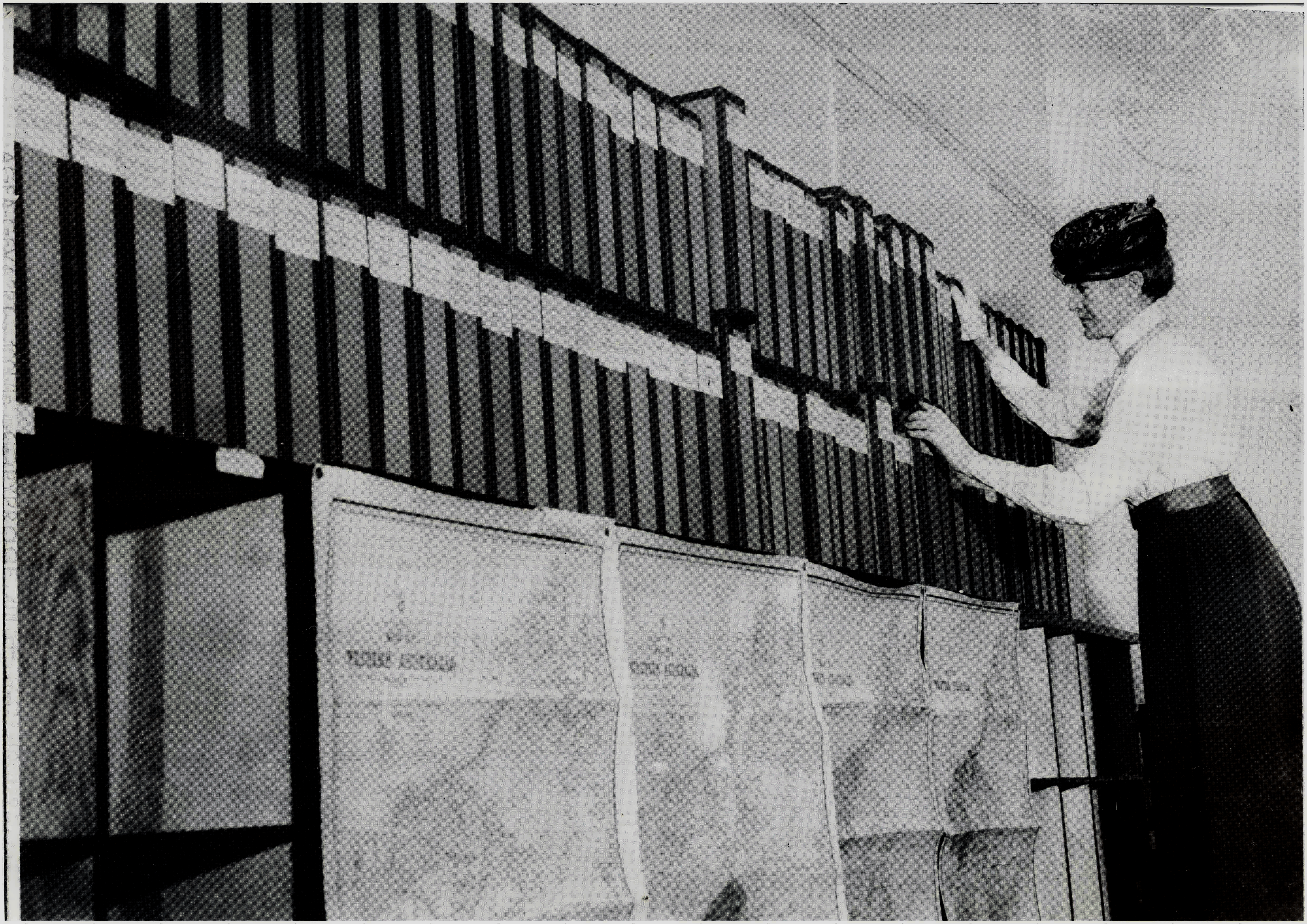
Daisy Bates (author)
For sixteen years, Daisy Bates lived in a tent at Ooldea — a soak on the Trans-Australian Railway, 800 kilometres north of Adelaide, in the Great Victoria Desert. She had no running water, no electricity, and no permanent company. She was in her late fifties when she arrived in 1919, and did not leave until 1935. She cooked food and dressed wounds and documented languages. Aboriginal people she worked with gave her the courtesy name Kabbarli, meaning grandmother. Others called her mamu — ghost or devil. Both names contain a truth about her. Few Australians of her era were as devoted to Aboriginal welfare, and few held more harmful ideas about Aboriginal people's future.
The Cause She Chose
Born in Ireland in 1859, Bates arrived in Australia in her twenties and became increasingly absorbed in Aboriginal life. By 1914 she was petitioning the South Australian government to appoint her as a Protector of Aborigines — for a salary of £200 a year and a camel buggy to travel the region. The application was rejected. She kept working anyway, publishing articles through William Hurst's newspapers and building a reputation as the most dedicated amateur ethnographer in the country. Her anthropological research focused on material culture and linguistics — she recorded words and objects and rituals that would otherwise have gone undocumented. Some of what she gathered she sent to museums. Some she sold to collectors. She refused to accept money for herself from these transactions, which is consistent with her character and also beside the point of whether the items should have been sold at all.
Ooldea: Sixteen Years at the Soak
Ooldea was a meeting point. Aboriginal people from surrounding areas came to its permanent water soak during the droughts that had struck the inland regions. Settlers along the Trans-Australian Railway came too. Bates believed the contact between them would harm Aboriginal people — particularly women and girls — and she positioned herself at the junction, providing medical care and acting as an intermediary. The work was brutal. She developed dysentery and was blinded for three weeks by conjunctivitis. She had two breakdowns, both attributed to depression. By her last years at Ooldea her short-term memory was failing. When journalist Ernestine Hill came to interview her in 1932, what began as an article became a collaborative project that Hill would later shape into Bates's autobiography — doing most of the writing while receiving no formal credit.
The Contradictions She Lived
Daisy Bates is difficult to hold whole. She advocated that Aboriginal people be shielded from contact with non-Aboriginal Australians — which sounds protective and reflects genuine care, and also reflects a belief that the two populations should remain permanently separate. She claimed that various Aboriginal peoples practiced cannibalism, and published these claims widely. She wrote in 1921 that 'the only good half-caste is a dead one' — a statement that sits permanently in the record. Yet the people she worked alongside over decades gave her names that acknowledged her presence. The Pitjantjatjara at Ooldea called her Kabbarli. Whether that name was given in affection, respect, or simply a kind of sociable management of an odd elder who lived in a tent and handed out food is not fully knowable.
Recognition and the End
In 1907, Bates was elected to the Victorian branch of the Royal Geographical Society and appointed an honorary corresponding member of the Royal Anthropological Institute of Great Britain and Ireland. In 1934, she was made a Commander of the Order of the British Empire. Her book The Passing of the Aborigines, heavily edited by Hill and Max Lamshed, was published in 1938. By then she was nearly blind and living on handouts. She died in Adelaide in 1951 at the age of 91. Sidney Nolan painted her in 1950 — standing alone in a barren outback landscape — and the painting now hangs in the National Gallery of Australia. The image captures something essential: a solitary figure against red earth, neither belonging nor leaving.
From the Air
Daisy Bates is associated with the Pilbara coast near Cossack at approximately 20.68°S, 117.19°E, though her most significant work occurred at Ooldea on the Trans-Australian Railway far to the south. The Cossack geohash places her in the context of the Pilbara region where she conducted early fieldwork. Nearest airports to Cossack: Karratha (YPKA), approximately 35 km west. The vast inland desert where she spent most of her life lies beyond any reasonable day-flight range from the coast.