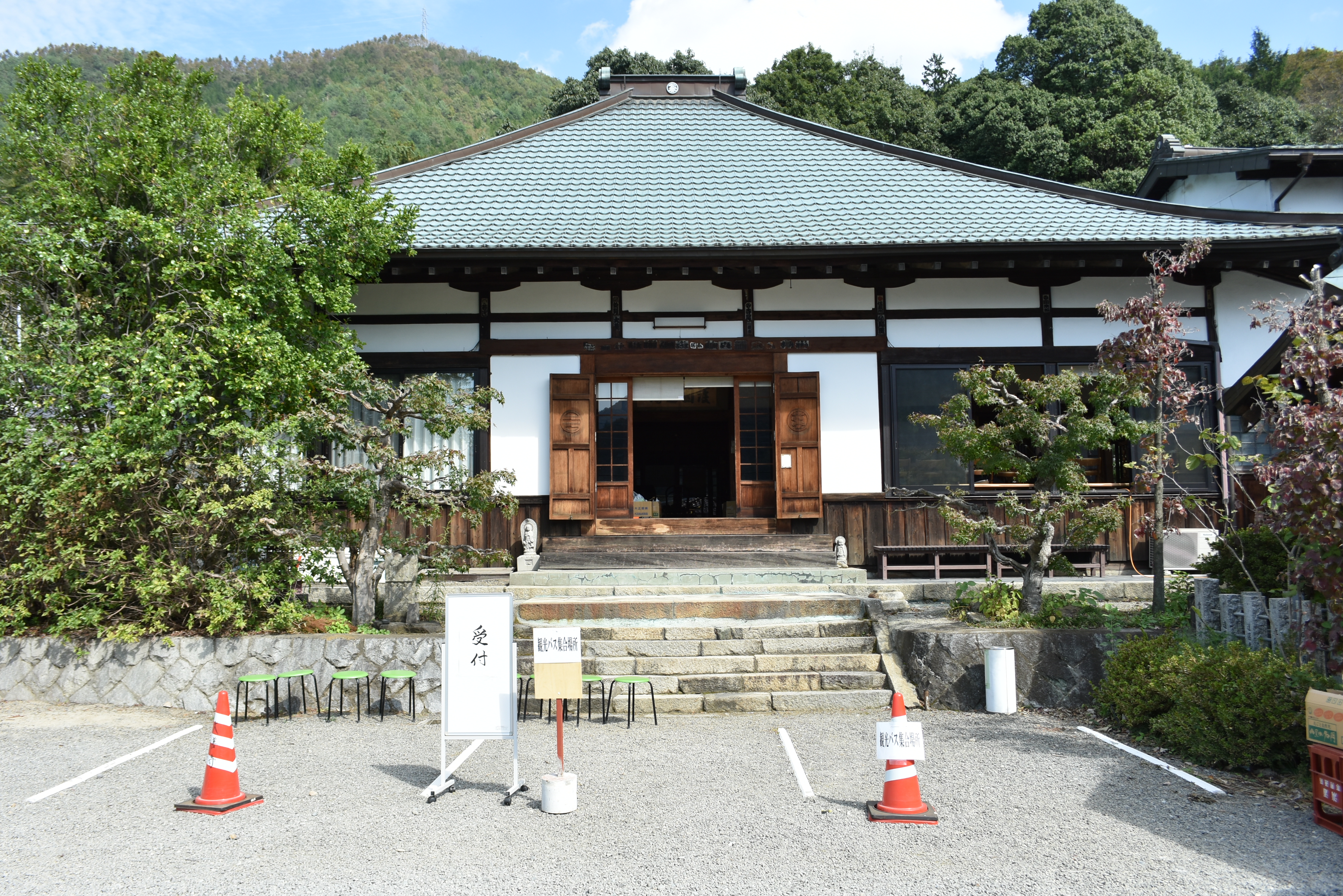
Daizen-ji
Every five years, the doors of the main altar at Daizen-ji open to reveal a secret. Seated in lacquered cherry wood and covered in gold leaf, the figure of Yakushi Nyorai -- the Medicine Buddha -- has been hidden from public view since the Heian period, shown only at these rare intervals. The statue is small, just 85.5 centimeters tall, but the temple it anchors is vast in significance. Known as the Grape Temple, Daizen-ji sits in the city of Koshu in Yamanashi Prefecture, at the heart of Japan's most important wine-producing region. According to temple tradition, it was here that the monk Gyoki received a vision of the Medicine Buddha holding a bunch of grapes, inspiring him to teach the locals how to cultivate them. That act, sometime in the Nara period, is widely credited as the beginning of grape growing in Japan.
Visions, Vines, and the Healing Buddha
The temple claims foundation by Gyoki during the Nara period, though the style of its main Yakushi Nyorai image dates to the early Heian period, and the earliest written records confirm only a reconstruction of the main hall in 971 AD. What is beyond dispute is the temple's deep connection to grape cultivation. The legend holds that Gyoki's vision -- Yakushi Nyorai extending a cluster of grapes rather than the traditional medicine jar -- inspired him to introduce viticulture to the local population as a form of healing. The Koshu grape, Japan's signature wine variety, traces its lineage to this region. Today, the Koshu Valley is Japan's largest grape-producing area and home to the highest concentration of wineries in the country. The monks at Daizen-ji still grow grapes and produce wine on the temple grounds, bottling roughly 9,000 bottles annually -- making this perhaps the only Buddhist temple in the world with an active commercial winery.
A Fugitive Warlord's Last Refuge
Daizen-ji served for centuries as the clan temple of the Saigusa clan, a powerful Gozoku family who controlled the eastern Kofu basin. During the Sengoku period, the temple drew the patronage of the Takeda clan, one of Japan's most storied warrior lineages. The temple's most dramatic historical episode came in 1582, when Takeda Katsuyori -- the last lord of the Takeda -- arrived at Daizen-ji fleeing catastrophe. His forces had been destroyed at the Battle of Tenmokuzan, crushed by the combined armies of Oda Nobunaga and Tokugawa Ieyasu after they overran Shinpu Castle. Katsuyori spent one night at the temple before continuing his doomed flight. He would die soon after, ending the Takeda dynasty. A nun named Rikei, witnessing these events, composed the 'Rikei-ni no Ki' at Daizen-ji -- a firsthand chronicle of the fall of the Takeda that remains an important historical document.
Seven Centuries of Standing
The main hall of Daizen-ji -- the Yakushi-do -- was built in 1290 during the Kamakura period, commissioned by the Shikken (regent) Hojo Sadatoki. It is the oldest standing building in Yamanashi Prefecture. The structure is nearly square, with 18-meter-long sides beneath a simple pyramidal roof. Doors occupy the three central bays along the front, flanked by lattice windows, with additional doors on each side and at the rear. Two-stage wooden capitals crown the columns, supporting a roof that has weathered more than seven centuries of mountain weather. The building underwent extensive repair in the early Edo period and was completely disassembled, examined, and reassembled in 1954. Designated an Important Cultural Property in 1907, the Yakushi-do was elevated to National Treasure status in 1955. The altar inside, dating from 1355, carries the same designation.
Stone Guardians and Hidden Prayers
The treasures inside the Yakushi-do rival the building itself. Flanking the main Yakushi Nyorai are twelve statues of the Heavenly Generals, each standing between 138 and 145 centimeters tall. Carved during the Kamakura period and attributed to the sculptor Renkei of the Kei school, two of the statues bear dates of 1227 and 1228. Larger Nikko Bosatsu and Gakko Bosatsu statues, standing nearly 2.5 meters tall, guard the space outside the main altar. These Kamakura-period works were carved using the yosegi-zukuri technique -- assembling separate blocks of wood -- with crystal eyes inset for lifelike intensity. When the statues were examined, restorers discovered their hollow interiors had been stuffed with scrolls containing prayers and petitions from the Kamakura period. Every May 8, the temple holds the Wisteria Cutting Festival, reenacting the legend of En no Gyoja, a mountain ascetic who saved the local people by slaying a great serpent -- an event the temple commemorates with a ritual cutting of wisteria vines.
From the Air
Daizen-ji is located at 35.66N, 138.74E in the city of Koshu, Yamanashi Prefecture, situated in the Kofu Basin east of the main city of Kofu. The temple sits on elevated ground overlooking the town of Katsunuma and the surrounding vineyards. From the air, the Kofu Basin is a distinctive flat valley surrounded by mountains on all sides, with the Tanzawa range to the southeast and the Southern Alps to the west. Mount Fuji dominates the southeastern skyline. Nearest airports: Mt. Fuji Shizuoka Airport (RJNS) approximately 50nm southwest, Tokyo Haneda (RJTT) approximately 60nm east. Kofu has a small airfield (Kofu Airport, no ICAO code, general aviation only). Best viewed at 3,000-4,000 feet AGL to see the temple grounds in context with the surrounding vineyard landscape.