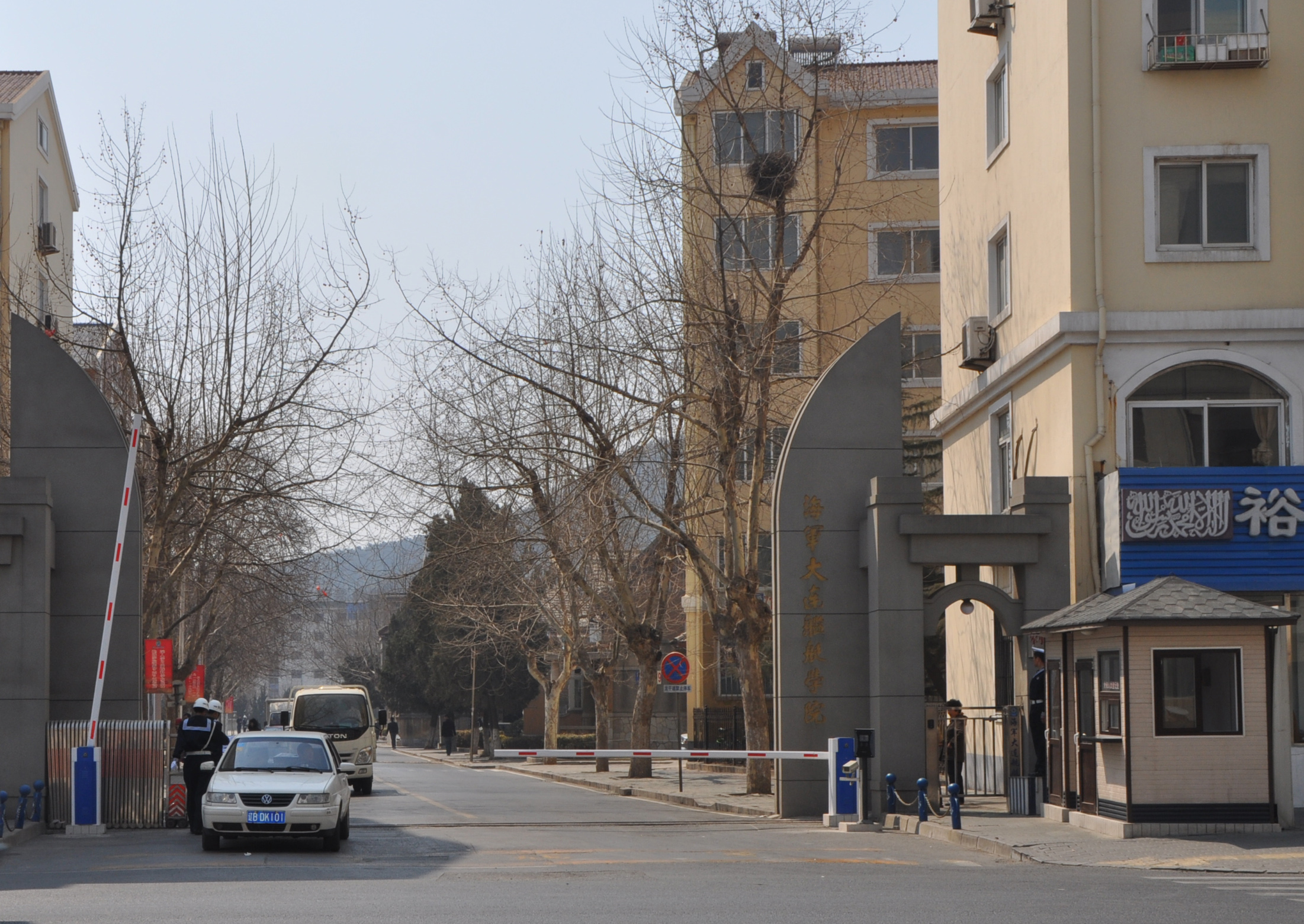
Dalian Naval Academy
In 1949, the same year Mao Zedong proclaimed the People's Republic, the new government founded its first naval academy in a port city that had spent the previous half-century under Russian and Japanese control. The choice of Dalian was deliberate. This was a city that understood navies, having served as a base for the Russian Pacific Fleet, the Imperial Japanese Navy, and now the fledgling People's Liberation Army Navy. The Dalian Naval Academy, established at 667 Jiefang Road in the Zhongshan District, would become the institution that transformed a landlocked revolutionary army into a blue-water naval power.
From Revolution to Academy
When the academy opened its doors in 1949, the People's Liberation Army had almost no maritime tradition. The PLA had won its civil war on land, through guerrilla campaigns and massive infantry battles across China's interior. Building a navy from scratch required not just ships, which could be captured or purchased, but trained officers who understood navigation, gunnery, fleet tactics, and the peculiar demands of operating at sea. Dalian Naval Academy took on this foundational mission. It was renamed to its current designation in 1986, but its core purpose has remained unchanged for more than seven decades: to produce the officers who command China's growing fleet.
A Campus by the Sea
The academy sits just north of Laohutan, or Tiger Beach, one of Dalian's most popular resort areas and home to the Dalian Laohutan Ocean Park. The location places cadets within sight and smell of the sea they are training to master. Dalian itself occupies the southern tip of the Liaodong Peninsula, surrounded on three sides by water, with the Yellow Sea to the east and Dalian Bay to the west. The campus benefits from Dalian's relatively mild climate, unusual for northeastern China, where the moderating effect of the surrounding seas keeps temperatures more temperate than the harsh continental interior of Manchuria.
Admirals' Proving Ground
The roster of former academy heads reads like a directory of modern Chinese naval leadership. Zhang Zhannan, Wu Shengli, Dong Jun, Shen Jinlong, Jiang Guoping, and Li Yujie all served as head of the academy before ascending to senior positions within the PLA Navy. Wu Shengli, for instance, went on to serve as Commander of the PLA Navy. This concentration of future flag officers in a single institution speaks to the academy's central role in shaping Chinese naval doctrine and culture. Foreign naval delegations regularly visit, including a Turkish Naval Academy delegation in 2010, reflecting the institution's standing in international military education circles.
Layers of Maritime History
The ground beneath the academy carries the weight of overlapping imperial ambitions. In the late 19th century, this coastline was part of the Qing Dynasty's Beiyang Fleet territory. Russia leased the peninsula in 1898 and built Port Arthur into a major naval base. Japan seized the territory during the Russo-Japanese War of 1904-1905 and held it until 1945. The Soviet Union occupied it after World War II before handing it to the People's Republic in 1955. Each power left its architectural and strategic imprint on Dalian. The naval academy, training officers for yet another navy to operate from these same waters, is the latest chapter in a coastline that has been contested for more than a century.
From the Air
Located at 38.88N, 121.66E on the southern coast of the Liaodong Peninsula in Dalian, Liaoning Province. The academy campus is visible near Laohutan (Tiger Beach) on the city's southeast coast. Nearest airport is Dalian Zhoushuizi International (ZYTL), approximately 12 km northwest. The Zhongshan District waterfront and Dalian Bay are clearly visible landmarks from altitude.