Dealey Plaza: The Intersection Where History Changed Course
The motorcade was running late. President Kennedy's visit to Dallas was supposed to heal Democratic divisions before the 1964 election; the route through downtown would show him to the crowds. The open limousine turned onto Elm Street at 12:30 PM on November 22, 1963. Shots rang out. Kennedy slumped; Governor Connally was wounded; the motorcade sped toward Parkland Hospital, where the president was pronounced dead at 1:00 PM. A sniper's perch was found on the sixth floor of the Texas School Book Depository, overlooking the plaza. Lee Harvey Oswald was arrested, then murdered two days later by Jack Ruby. The Warren Commission concluded Oswald acted alone. Sixty years later, most Americans don't believe it. Dealey Plaza remains the place where conspiracy theorizing became an American tradition.
The Assassination
The route brought Kennedy past the School Book Depository, then down the slope toward the Triple Underpass. Abraham Zapruder, a dressmaker, filmed from a concrete pedestal on what would become known as the grassy knoll. His 26 seconds of footage became the assassination's defining record, showing Kennedy's head snap backward - a direction that seemed inconsistent with shots from the sixth floor behind him. Multiple witnesses reported hearing shots from different directions. The confusion was immediate and never resolved. Oswald was arrested at a movie theater after allegedly killing a police officer; he was shot two days later in the Dallas Police basement, live on national television. The facts remained contested; the theories multiplied.
The Theories
The Warren Commission's conclusion - that Lee Harvey Oswald, acting alone, fired three shots from the sixth floor, killing Kennedy and wounding Connally - satisfied almost no one. The 'single bullet theory,' proposing that one bullet caused seven wounds to both men, strained credulity for many. The House Select Committee on Assassinations concluded in 1978 that a conspiracy was probable. Suspects multiplied: the Mafia, the CIA, Cuban exiles, the Soviet Union, Lyndon Johnson, all were accused with varying evidence. The grassy knoll became the symbol of the alternative theories - witnesses who heard shots from there, the physical contradiction of the head snap. Dealey Plaza became the holy site of conspiracy belief.
The Museum
The Texas School Book Depository was nearly demolished before preservation efforts saved it. The Sixth Floor Museum opened in 1989, interpreting Kennedy's life, death, and legacy from the floor where Oswald allegedly positioned himself. The sniper's window is visible but cordoned off; the corner where boxes were stacked to create the perch is preserved. Exhibits trace the day's events through photographs, films, and artifacts. The museum takes no position on conspiracy theories but presents the official conclusions and notes the continuing doubts. More than six million people have visited, making it Dallas's most-attended historical site. The questions they bring rarely find answers.
The Plaza
Dealey Plaza looks much as it did in 1963. The pergolas and concrete colonnades remain; the grassy knoll rises unchanged. An X marks the spot on Elm Street where the fatal shot struck - though the city never placed it and periodically removes it. Visitors stand on the knoll, photograph the sixth floor window, recreate Zapruder's angle. Self-appointed guides offer conspiracy theories for tips. The experience is strange: a small urban park that receives the attention of a battlefield, ordinary pavement treated as sacred ground. The wound doesn't heal because it was never sutured; the questions remain open, the conspiracy theories evolving, the intersection where America's trajectory changed still unable to explain itself.
Visiting Dealey Plaza
Dealey Plaza is located in downtown Dallas, west of the city center. The Sixth Floor Museum occupies the former Texas School Book Depository; tickets are available online or at the door. Audio guides provide detailed interpretation. The plaza itself is freely accessible. The grassy knoll, pergolas, and the X on Elm Street are readily identifiable. Photography is unrestricted outside; no photography allowed in the museum's main exhibit space. The nearby JFK Memorial, designed by Philip Johnson, provides a contemplative space. Expect the area to be busy regardless of day - the assassination draws visitors from worldwide. The experience requires confronting both history and the uncertainty that surrounds it. The facts are established; the truth remains contested.
From the Air
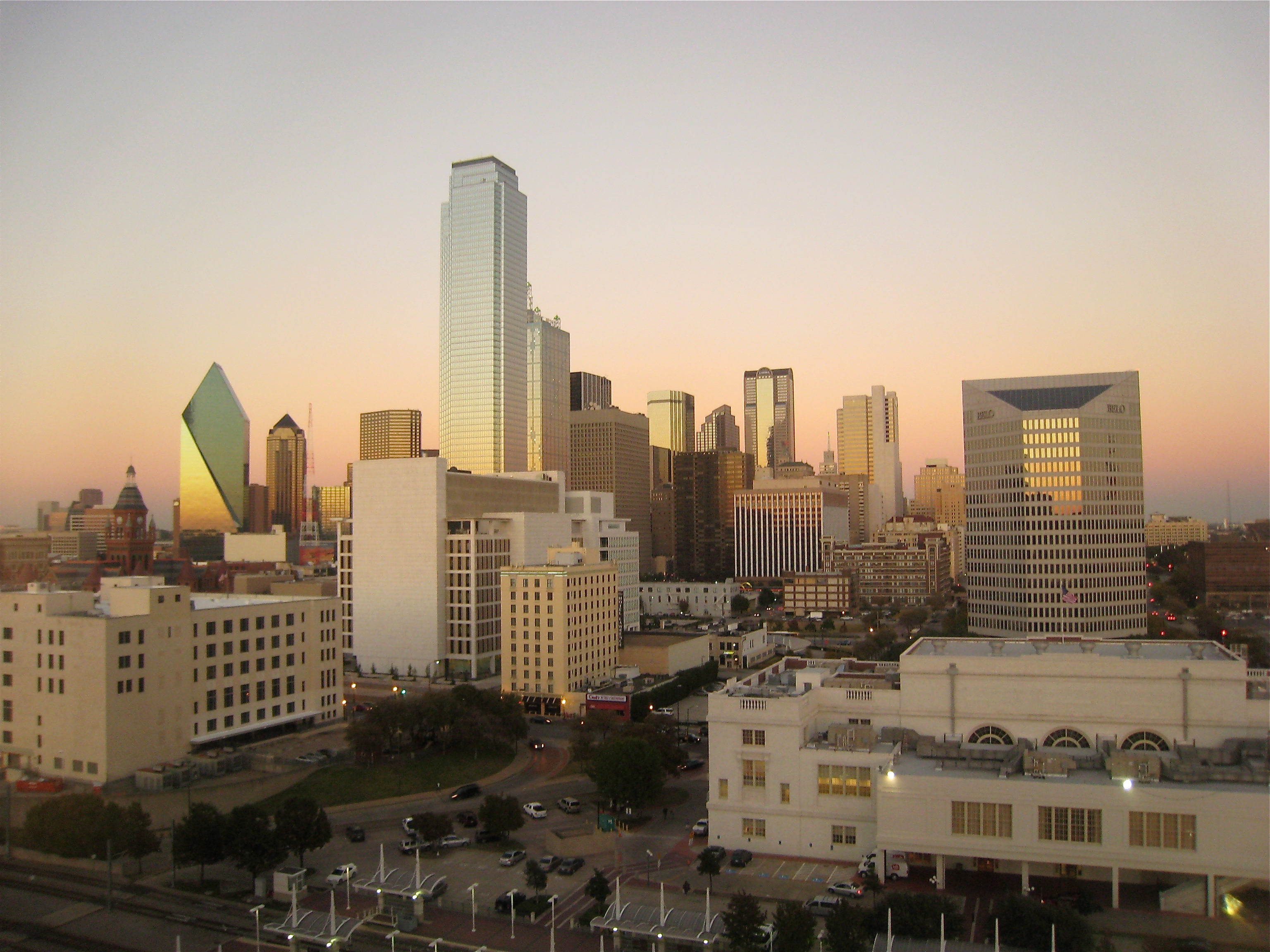
Located at 32.78°N, 96.81°W in downtown Dallas, west of the central business district. From altitude, Dealey Plaza appears as a small green triangle where Elm, Main, and Commerce Streets converge toward the Triple Underpass. The former Texas School Book Depository, now the Sixth Floor Museum, is visible at the plaza's northeast corner, its red brick and distinctive windows recognizable. The modern Dallas skyline rises to the east. The grassy knoll slopes beside Elm Street. What appears from altitude as an unremarkable urban intersection is the most analyzed crime scene in American history - the plaza where Kennedy died, where conspiracy theories were born, and where visitors still gather seeking answers to questions that may never be fully resolved.