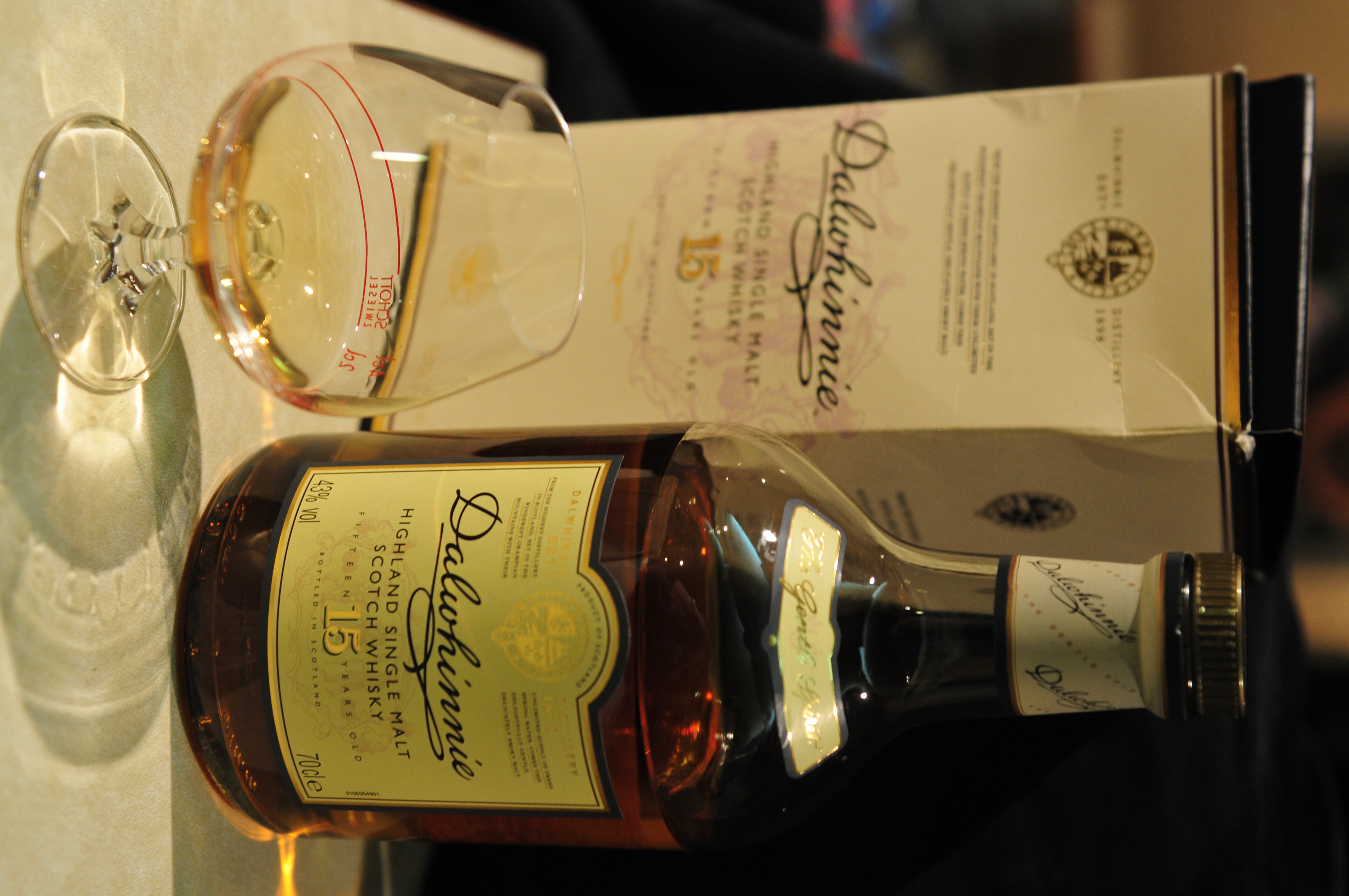
Dalwhinnie distillery
The name Dalwhinnie comes from the Gaelic 'Dail Chuinnidh' -- meeting place. For centuries, this spot in the central Highlands was where cattle drovers' routes through the mountains converged, a crossroads in country where crossroads were rare. In 1897, three men looked at the same geography and saw something else: clear spring water from Lochan-Doire-Uaine, abundant peat from the surrounding bogs, and a location between the Great North Road and the Highland Railway. They put up ten thousand pounds and began building a distillery. It was in liquidation by summer.
Bankruptcy, Prohibition, and Survival
John Grant of Grantown-on-Spey, George Sellar of Kingussie, and designer Alexander Mackenzie built the Strathspey Distillery at Dalwhinnie in 1897. Mackenzie had already designed a distillery in Kingussie, and the layout he created at Dalwhinnie was functional from the start -- production began in February 1898. But the finances collapsed almost immediately, and by summer the venture was in liquidation. In October, A. P. Blyth purchased the distillery for his son, renamed it Dalwhinnie, and announced 'considerable improvements on the building and plant.' The whisky industry's cyclical nature would test the distillery repeatedly. When Prohibition hit America in 1919, cutting off one of Scotch whisky's largest export markets, Dalwhinnie returned to Scottish ownership under Sir James Calder, chairman of the blending firm Macdonald Greenlees in Leith. The distillery changed hands several more times before landing with Diageo, the drinks conglomerate, which now produces it as one of its core single malts.
The Highest Dram in Scotland
At 326 meters above sea level, Dalwhinnie is the highest distillery in Scotland. The altitude is not mere trivia -- it shapes the whisky. Cold air slows the condensation of spirit in the copper worm tubs, and the peat cut from the surrounding bogs gives the water a particular mineral character. The spring water from Lochan-Doire-Uaine, chosen by the original builders for its clarity, still feeds the process. The standard expression is a fifteen-year-old single malt, light and honeyed, with a gentle smokiness that reflects the peat rather than dominating it. Older expressions at twenty-five, twenty-nine, and thirty-six years, along with a Distillers Edition and the Winter's Gold bottling, explore what extended aging does in a climate where winter lasts six months and the thermometer regularly drops below freezing. The distillery sits in mountain scenery within the Badenoch and Strathspey ward, technically placing it in the Speyside whisky region -- though the Scottish Whisky Association allows Speyside distilleries to label their product as Highland, and Dalwhinnie has always felt more Highland than Speyside. It is a meeting place, after all, not a destination.
From the Air
Dalwhinnie Distillery at 56.9401N, 4.2381W is located in the village of Dalwhinnie alongside the A9 trunk road and the Highland Main Line railway. The distillery buildings with their distinctive pagoda roofs are visible near the road. Best viewed at 2,000-4,000 ft. The A9 and railway running through Drumochter Pass provide strong orientation. Nearest airport: Inverness (EGPE) approximately 35 nm north-northeast.