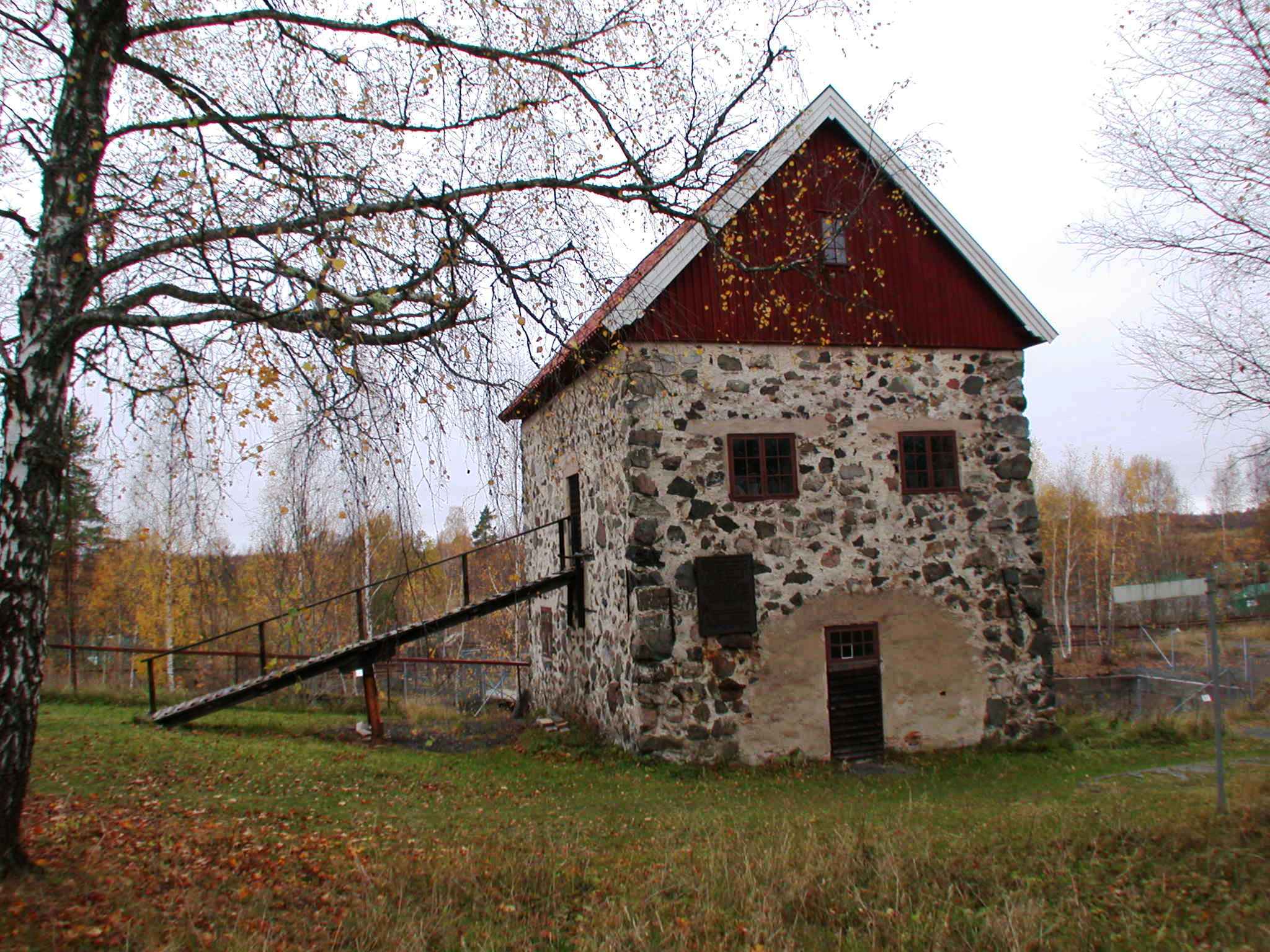
Dannemora Mine
The iron from Dannemora was so pure, so consistently excellent, that English steelmakers insisted on it by name. For two centuries, the ore that came out of this Swedish mine traveled to Sheffield and became the springs, tools, and blades that spread the English city's reputation around the world. The mine itself may have operated since the thirteenth century, documented from 1481, a seemingly inexhaustible source of high-quality ore in the forests of Uppsala County. Yet the same global markets that once made Dannemora famous eventually destroyed it. When iron prices collapsed by seventy percent in 2015, the latest resurrection of this ancient mine ended in bankruptcy, leaving behind flooded shafts, abandoned equipment, and five hundred years of industrial history.
Kings and Germans in the Shafts
Joachim Piper renewed the mining privileges at Dannemora in 1532, investing heavily in production of iron and other minerals. Within thirteen years, the ownership had grown complicated: a dozen wealthy investors, many of them German, and King Gustav Vasa himself all held stakes. The Germans wanted to export pig iron, but the king persuaded them to produce wrought iron, a more finished product. That venture lasted only a few years before bankruptcy forced Gustav Vasa to take over the operation entirely. This pattern of royal interest, foreign investment, and cyclical difficulty would repeat for centuries. The crown recognized what it had: ore deposits of unusual purity in a landscape of forests that could fuel smelting furnaces.
Sheffield Steel's Secret Ingredient
During the seventeenth century, Dannemora iron achieved an uncontested reputation as the finest in Sweden, particularly valued in England. Sheffield's steelmakers preferred it for tools, weapons, and the springs that powered clocks and carriages. The iron's consistent quality made it ideal for crucible steel production, where impurities could ruin an entire batch. Much of Sweden's iron went to Sheffield, and thus Dannemora contributed to building that English city's worldwide fame as the steel capital of the world. The relationship worked both ways: English demand kept the Swedish mines profitable and drove investment in better extraction and transportation technologies.
Railroads and Rationalization
Between 1770 and 1870, Dannemora produced a steady fifteen to twenty thousand tonnes of ore annually. Then the industrial revolution transformed everything. Production rose to forty thousand tonnes in the 1870s, and the Dannemora-Hargs Railway opened in 1878 to move ore to the port at Hargshamn for export. By the twentieth century, output reached fifty thousand tonnes, though a strike in 1927 halted work entirely for eight years. When production resumed in 1935, modernization followed. A new sorting plant and concentrator completed in 1955 lifted annual production to six hundred thousand tonnes. During the 1970s, the mine produced about one million tonnes of crude ore, most of it shipped abroad. The shareholders had consolidated from dozens to four major steelmakers, who formed AB Dannemora Mines in 1937.
State Rescue and Collapse
The Swedish steel crisis of the late 1970s forced the state-owned company SSAB to take over Dannemora in 1978. The nationalization could not save it. Global competition from cheaper iron sources, rising energy costs, and declining ore grades all took their toll. SSAB closed the mine in 1992, ending over five centuries of continuous operation. The shafts flooded. For fifteen years, Dannemora sat silent, its historic pithead gear rusting, Marten Triewald's eighteenth-century engine house standing empty. The mine had become a monument to itself.
Final Revival and Fall
In 2007, Dannemora Mineral AB went public with plans to resurrect the old mine, estimating reserves of thirty-five million tonnes sufficient for fourteen years of production. The initial stock offering was massively oversubscribed. Workers pumped out the flooded shafts, refurbished the railroad to Hargshamn, built new sorting mills. On June 13, 2012, King Carl XVI Gustaf himself attended the reopening ceremony. Three years later, with iron prices having dropped seventy percent, Dannemora Mineral declared bankruptcy. The mine that helped build Sheffield, that survived world wars and depressions, that Kings Gustav Vasa and Carl XVI Gustaf both took interest in across five centuries, could not survive the commodity markets of the twenty-first century. Its shafts stand quiet once more.
From the Air
Located at 60.20N, 17.86E in Uppsala County, roughly 40 km northeast of Uppsala city. The mine site lies near the village of Dannemora in the forested Swedish lowlands. Look for the distinctive open pit and the pithead structures, including the 1952 winding gear. The historic narrow-gauge railroad route to Hargshamn on the Baltic coast runs northeast. Nearest airports are Stockholm-Arlanda (ESSA), 70 km south, and Uppsala Sundbro (ESSU), 40 km southwest. The terrain is generally flat with mixed forest and farmland. Best viewed at 1,500-2,500 feet to appreciate the scale of the mining operations against the surrounding woodland.