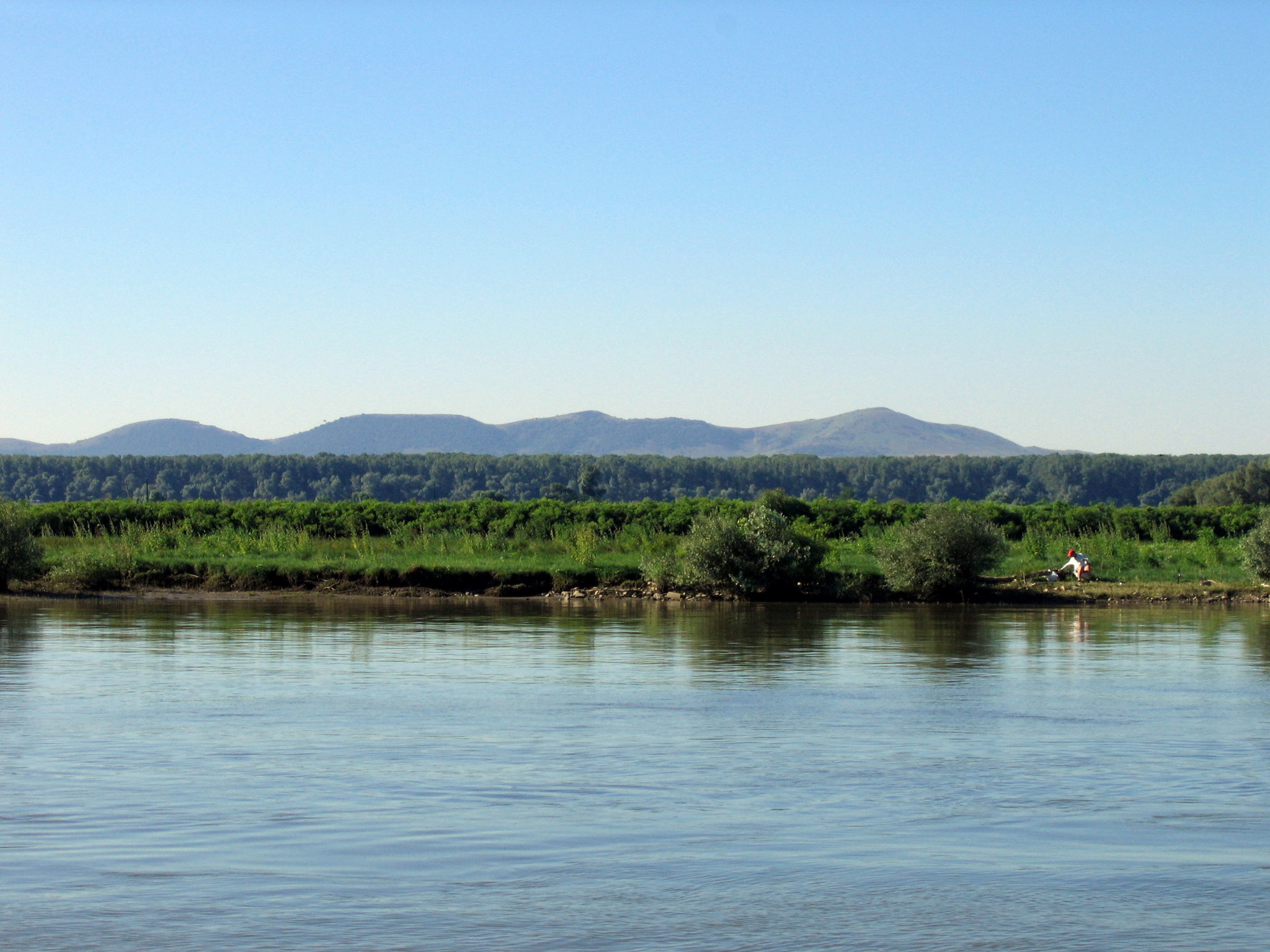
Danube Delta
Forty percent of the Danube Delta was built in the last thousand years. When geologist Liviu Giosan realized that, he called it a eureka moment — the discovery that this vast, labyrinthine wetland is not ancient at all but geologically young, still in the active process of building itself from the sediment of a river that has traveled 2,850 kilometers across ten countries. Where the Danube empties into the Black Sea, mostly in Romania's Tulcea County with a small portion in Ukraine's Odesa Oblast, approximately 4,152 square kilometers of marshes, channels, lakes, and floating reed islands form Europe's second-largest river delta and its best-preserved. The combined territory, including the Razim-Sinoe lagoon complex to the south, is a UNESCO World Heritage Site.
A Delta Still Being Born
The modern delta began forming after 4000 BC, when the Black Sea rose to its present level and a sandy barrier blocked a bay where the river deposited its sediment. Since then, the Danube has built several successive lobes: St. George I from 3500 to 1600 BC, the Sulina lobe from 1600 BC to the start of the common era, and the still-active St. George II and Chilia lobes. The result is a landscape whose average altitude sits at just half a meter above sea level, with 20% of the territory actually below it. Sand dunes on the Letea and Caraorman strand plains rise to 12.4 and 7 meters respectively — the delta's high ground. Three main branches carry the Danube to the sea: the Chilia in the north, the longest and most vigorous; the Sulina in the center, shortened from 92 to 64 kilometers by 19th- and 20th-century engineering; and the Sfantu Gheorghe in the south, the oldest arm, whose alluvium created the 19-kilometer-long Sacalin Islands beginning in 1897.
A Million Wings
Situated on major migratory routes that funnel birds from six ecoregions — including Mongolian, Arctic, and Siberian flyways — the delta is one of Europe's great avian crossroads. Over 320 bird species appear during summer, 166 of them nesting here. In winter, more than one million individual birds shelter in the wetlands: swans, ducks, coots, and geese gathering on water surfaces that remain relatively mild compared to the surrounding steppe. The great white pelican and the rarer Dalmatian pelican both breed here, their colonies among the largest in Europe. Purple herons, Eurasian spoonbills, glossy ibises, and pygmy cormorants inhabit the reed beds alongside mute swans and greylag geese. On the delta's firm ground, the fauna shifts: Eurasian otters, European mink, wild boar, and wildcats share the levees with meadow vipers and Eurasian eagle owls. During the Middle Ages, even Caspian tigers roamed these steppes before being hunted to extinction.
Plaur and Hasmace
The delta has its own vocabulary. Plaur are floating islands of matted reed roots, grass, and soil — sometimes anchored to the riverbed, sometimes drifting with the current. They are the building blocks of the ecosystem, providing spawning grounds for fish and nesting platforms for birds. Common reed dominates, slowly encircling lakes and invading open water surfaces. Where the delta rises above the waterline, another word takes over: hasmace, the small groves of oak, ash, and wild vine that grow in depressions between sand dunes on the Letea levee. These pockets of forest look almost tropical, with silk-vine climbing 25 meters into the canopy. The contrast is startling — a temperate jungle growing on sand dunes surrounded by marsh. Beneath the surface, the waterways teem with carp, pike, sturgeon, and catfish, though decades of overfishing and pollution have visibly reduced populations from their historic levels.
Two People Per Square Kilometer
With an average population density of just two people per square kilometer, the Romanian side of the Danube Delta is one of the least inhabited regions in temperate Europe. About 20,000 people live here, of whom 4,600 reside in the port town of Sulina at the mouth of the central branch. The remaining population scatters among 27 villages, most with fewer than 500 residents. Tulcea, at the delta's western gate, serves as the regional hub with a population of about 65,000. During the Communist era, Romania's government attempted to transform the delta into an agro-industrial zone, draining wetlands and converting them to cropland, fish farms, and forest plantations. By 1991, agricultural land exceeded 100,000 hectares, and more than a third of the delta's surface had been altered. The ecological consequences — disrupted fish breeding, eroded banks, eutrophication — eventually led to the delta's protection as a UNESCO site and a Ramsar wetland of international importance.
Contested Waters
The delta sits on a geopolitical seam. Most of it belongs to Romania, but a strip along the northern Chilia branch falls within Ukraine. In 2004, Ukraine began constructing the Bistroe Channel to create an additional navigable route from the Black Sea into its section of the delta. The European Union warned that the project could damage the fragile ecosystem. Romania threatened legal action at the International Court of Justice. The dispute became a proxy for larger tensions about sovereignty, commerce, and environmental stewardship in a shared waterway. Under subsequent Ukrainian leadership, both sides agreed to let scientists rather than politicians determine the channel's fate — though Ukraine's long-term plan to build a navigation channel of some kind persists. The argument captures the essential tension of the delta itself: a landscape too valuable to exploit and too strategically positioned to leave alone.
From the Air
The Danube Delta is centered at approximately 45.2°N, 29.5°E, where the Danube River meets the Black Sea in southeastern Romania and southwestern Ukraine. From 5,000–10,000 feet AGL, the delta's three main branches (Chilia, Sulina, Sfantu Gheorghe) are clearly visible as they fan out across the wetland. The vast reed beds, lakes, and channels create a distinctive green-and-blue mosaic that contrasts sharply with the dark waters of the Black Sea to the east. Tulcea, the gateway city at the delta's western edge, is the main visual reference point. The nearest major airport is Tulcea Danube Delta Airport (LRTC). The region experiences Romania's sunniest and driest weather, with mean annual temperatures around 11°C, though visibility can be reduced by haze over the wetlands in summer.