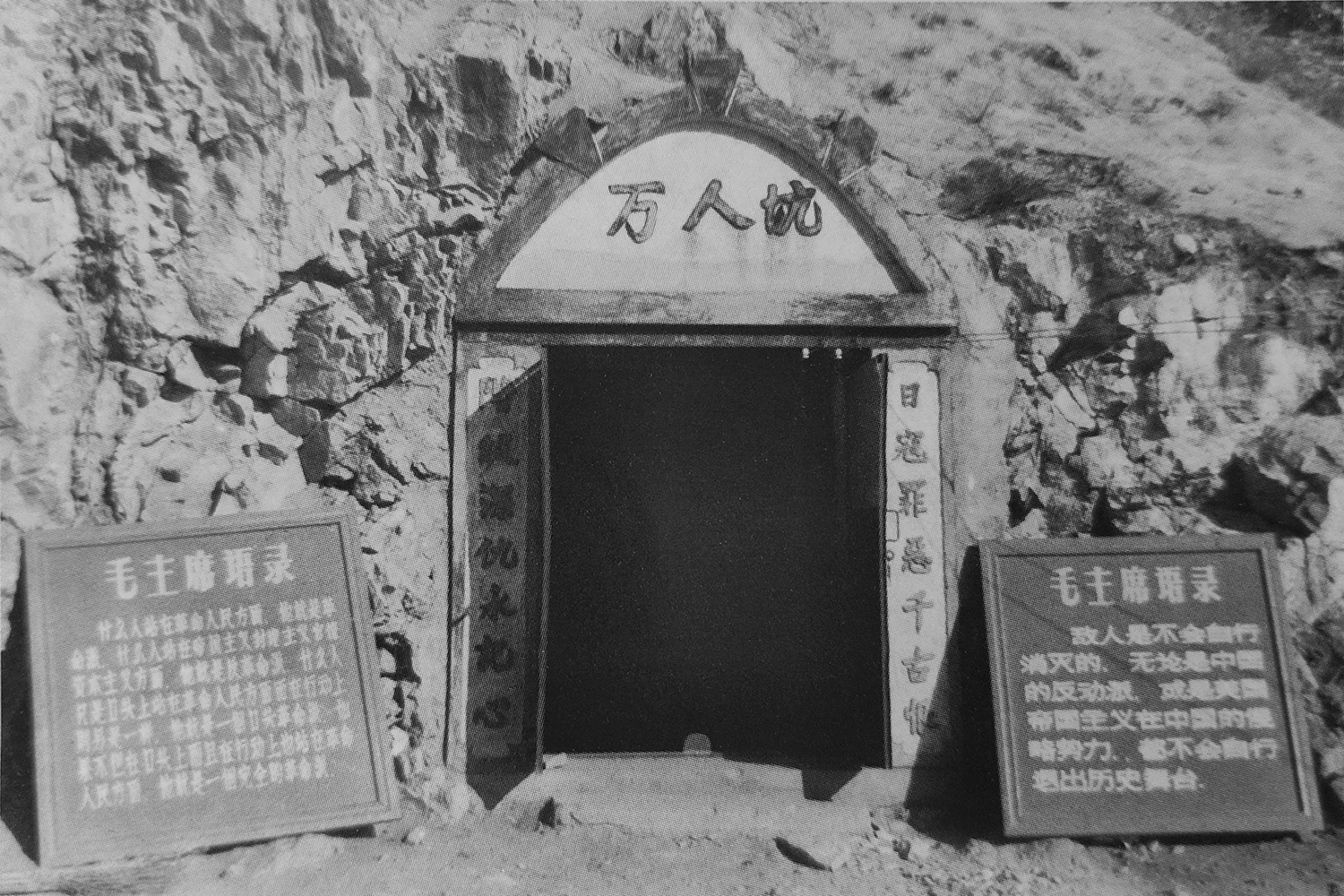
Datong Mass Grave Memorial
The Chinese name says it plainly: Datong coal mine pit of ten thousand people. But the number ten thousand is a euphemism. According to historian Li Jinwen, more than 155,000 Chinese laborers lie buried in the abandoned coal shafts around Datong, Shanxi Province -- men who were forced to extract coal for the Japanese war machine during the Second Sino-Japanese War and whose bodies were discarded in the mines when they could no longer work.
Coal for Conquest
Datong sat atop some of northern China's richest coal deposits, and during the Japanese occupation, those deposits became strategic military assets. Chinese laborers were conscripted to work the mines under conditions designed to extract maximum output with minimal investment in human welfare. Workers endured extended hours without protective equipment, breathing coal dust in poorly ventilated shafts. Injuries went untreated. Malnutrition became endemic. Disease spread through the cramped dormitories where miners slept between shifts. When workers collapsed and died, their bodies were hauled to unused mineshafts and dumped. Those who fell too ill or too injured to continue working faced an even worse fate -- some were buried alive.
Unearthing the Evidence
The mass graves remained sealed underground for nearly two decades after the war ended. It was not until the 1960s that excavations first revealed the scale of what had happened beneath Datong's surface. The pits were opened to the public in 1969, allowing visitors to see the skeletal remains still lying where they had been discarded. The bones told stories that records could not: fractures from mining accidents, signs of malnutrition etched into the calcium of ribs and femurs, the contorted positions of bodies that had not been laid to rest but thrown.
A Memorial Takes Shape
Construction on a formal memorial hall began in 2006, and the facility opened to the public in 2010. The museum spans 337,000 square meters, making it one of the larger memorial sites in China dedicated to wartime atrocities. Its exhibits move between the specific and the sweeping, documenting individual stories of miners alongside the broader history of coal extraction in Datong. The memorial does not treat the forced labor as an isolated event but places it within the centuries-long relationship between Datong and its coal -- a resource that has shaped the city's economy and identity long before and after the occupation.
The Weight of the Ground Below
From the air, Datong's industrial landscape reveals little of what lies beneath. The coal mines that once consumed lives now sit alongside modern operations that continue to extract from the same geological seams. The memorial stands on the city's outskirts, a deliberate interruption in the rhythm of an industrial city that might otherwise look only forward. More than 155,000 people died in these mines, and the memorial insists that the ground itself carries that weight. For the families who lost grandfathers and great-grandfathers to the shafts, the site is not a museum but a graveyard -- one where the dead were never properly mourned until decades after they were gone.
From the Air
Located at 40.02°N, 113.13°E on the outskirts of Datong, Shanxi Province. The memorial is situated in a former coal mining area. Datong Yungang Airport (ZBDT) is the nearest airport, approximately 20 km to the east. The surrounding landscape is marked by coal mining operations both historical and active. Best viewed at low altitude where the industrial terrain is visible.