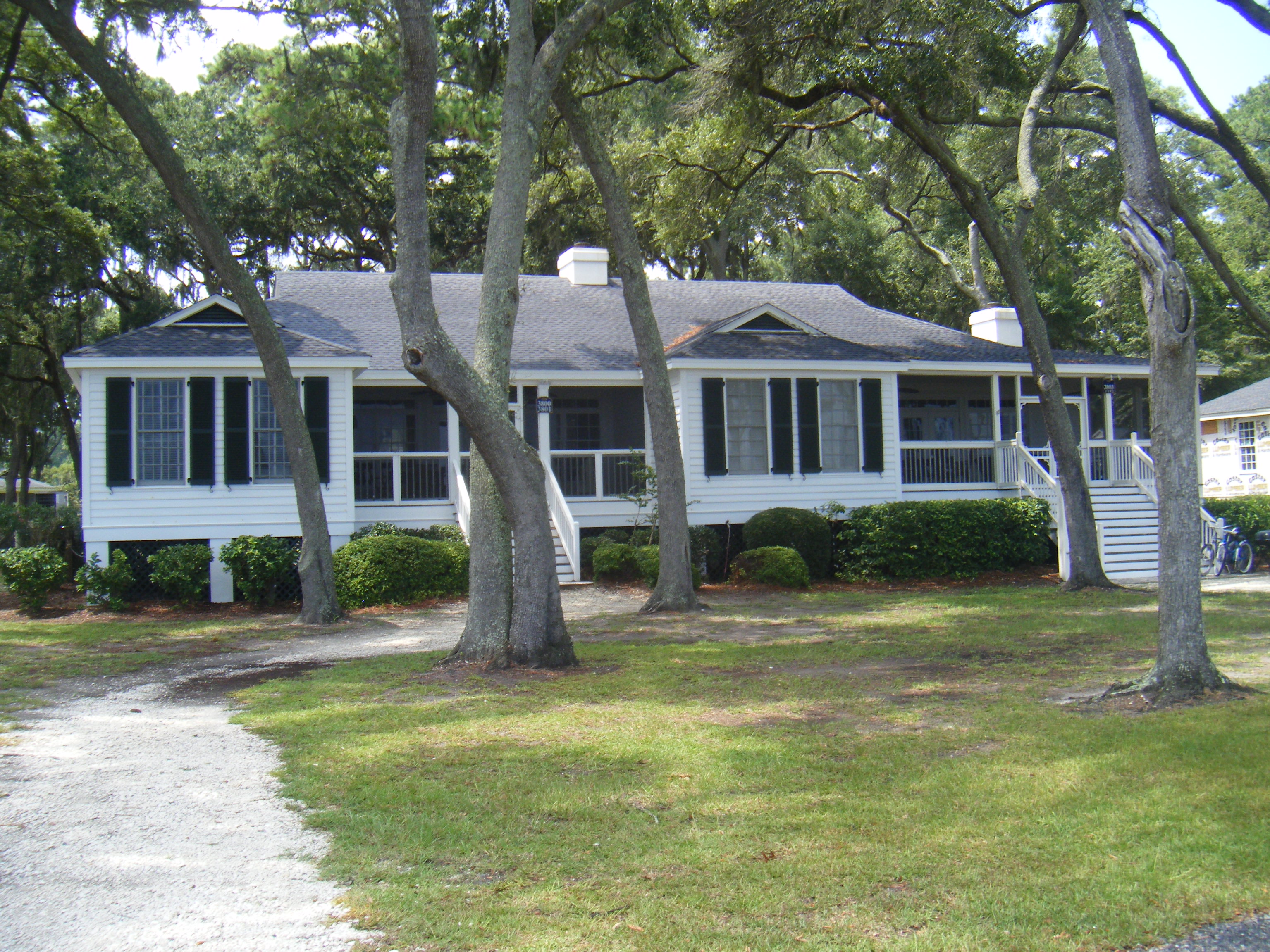
Daufuskie Island: The Last Sea Island
The Tsar of Russia ate Daufuskie oysters. That detail alone captures something essential about this five-thousand-acre sea island wedged between Hilton Head and Savannah - a place so remote it had no electricity until 1953 and no telephones until 1972, yet produced shellfish coveted by royalty half a world away. Daufuskie Island is the southernmost inhabited sea island in South Carolina, and it remains accessible only by ferry or water taxi. No bridge connects it to the mainland. No traffic lights interrupt its dirt roads. The live oaks that arch over those roads look much the same as they did a century ago, draped in Spanish moss, sheltering a community whose population has swung from three thousand to fewer than a hundred and back to roughly five hundred.
Sharp Feather on the Water
The name Daufuskie comes from the Muscogee language, meaning "sharp feather" - a reference to the island's distinctive shape as seen from the water. The island has been inhabited for thousands of years. Ancient shell middens, massive piles of discarded oyster shells mixed with pottery shards, trace continuous human occupation through every phase of the hunter-gathering period. The Muskogean-speaking tribes who lived here understood what later arrivals would rediscover: these tidal waters, with their flat coastline, saltmarsh estuaries, and natural oyster reefs, are among the richest shellfish habitats on the Atlantic coast. By the time Robert Sandford entered Calibogue Sound between Hilton Head and Daufuskie in July 1666, the Spanish had already introduced Iberian horses to the southeastern coast. Descendants of those horses, now known as Carolina Marsh Tackies, still roam parts of the island - a rare breed perfectly adapted to swampy lowcountry terrain.
Bloody Point and Plantation Kings
Between 1715 and 1717, three brutal battles of the Yamasee War unfolded on Daufuskie's southwestern shore. The violence gave that stretch of land the name it carries today: Bloody Point. After the wars subsided, two families arrived seeking religious freedom - the descendants of French Huguenot David Mongin, and the daughter of Italian Prince Filippo de Martinangelo, who had escaped the Inquisition. Both families rose to become powerful plantation owners, their stories intertwined across generations. During the American Revolution, Daufuskie's residents remained loyal to the Crown, earning the island the nickname "Little Bermuda." After independence, the island thrived on sea island cotton, a variety so prized by European mills for its extraordinary fiber length, fineness, and strength that plantation mansions rose across eleven separate estates. The mansion at Haig Point was built entirely of tabby - a concrete made from burned oyster shells, lime, water, sand, and ash - and stood as the largest tabby domestic building in coastal South Carolina.
Oysters for the World
In the 1880s, an Italian immigrant named Luigi Paolo Maggioni leased oyster beds on Daufuskie and opened a raw shuck house. By 1893, his L.P. Maggioni and Company Oyster Factory was harvesting, shucking, steaming, and canning oysters for shipment to Savannah and beyond. The industry exploded. By the turn of the century, the island's population had swelled to between two and three thousand, most working in the shellfish trade. "Daufuski" brand oysters, bearing a distinctive Indian chief label, shipped worldwide. Restaurants in Bar Harbor and New York listed them as delicacies. Tsar Nicolas II of Russia reportedly favored them above all others. Then the bottom fell out - twice. The Great Depression and World War II drove workers off the island. In the 1950s, pollution from the Savannah River contaminated the beds entirely. The cannery limped along until the 1986 spring season, when rising labor costs finally shuttered it for good. Today, small mom-and-pop shops still sell oysters on the island, keeping a sliver of the tradition alive.
The Gullah Heartland
When Union forces occupied the Beaufort-area islands early in the Civil War, white plantation owners on Daufuskie fled, leaving property and enslaved people behind. Union troops on the island supported the siege and reduction of Fort Pulaski, which guarded the Savannah River entrance. After the war, Daufuskie's extreme isolation created something remarkable: a place where Gullah culture could survive and flourish through generations, largely undisturbed. The Gullah language, heavily influenced by West African languages and rural English, remained remarkably well preserved here. Daufuskie sits at the heart of the Gullah/Geechee Cultural Heritage Corridor. Pat Conroy arrived in 1969 to teach on the island, an experience he chronicled in his 1972 memoir "The Water Is Wide," in which he fictionalized Daufuskie as Yamacraw Island. The book won him a humanitarian award from the National Education Association and was adapted into the 1974 film "Conrack" starring Jon Voight. Today, the First Union African Baptist Church - the island's oldest building - still holds services, and descendants of the Gullah people live on land they have owned continuously since just after the Civil War.
Island Time
Daufuskie today is a place of contrasts. The northeastern end holds the private Haig Point Club, with its 150 year-round residents and two hundred twenty-five homes. The western side remains unincorporated - about a hundred residents living in everything from cabins to waterfront homes with private docks. The historic district preserves winding dirt roads lined with live oaks, artisan shops, and the Mary Fields School where Pat Conroy once taught, now operating as a coffee shop. Two historic lighthouses mark the island's edges: Haig Point Range Lights, built in 1873, and the Bloody Point Range Lights from 1883. Students in grades six through twelve take a school bus to the ferry, cross to Hilton Head, then catch another bus to school - an hour and ten minutes each way, during which they nap or do homework on the boat. The entire island is listed on the National Register of Historic Places, and the commute alone explains why this sea island remains a world apart.
From the Air
Located at 32.11°N, 80.87°W in the South Carolina Lowcountry between Hilton Head Island and Savannah, Georgia. Daufuskie Island is clearly visible from altitude as a distinct landmass surrounded by the waters of Calibogue Sound, the Intracoastal Waterway, and the Atlantic Ocean. The island's roughly 5,000 acres of low-lying terrain are heavily wooded with live oaks. No bridge connects it to the mainland - look for the ferry routes crossing the water to the north toward Hilton Head. The Bloody Point and Haig Point lighthouses mark the southern and northern tips respectively. Nearest airports include Hilton Head Island Airport (KHXD) to the north and Savannah/Hilton Head International Airport (KSAV) to the south. Best viewed at 2,000-3,000 feet to appreciate the island's isolation and the surrounding tidal waterways.