David Koresh
On the morning of February 28, 1993, roughly 80 agents of the Bureau of Alcohol, Tobacco, and Firearms rolled up to a cluster of ramshackle buildings outside Waco, Texas. Within minutes, gunfire erupted. By nightfall, four federal agents and six Branch Davidian members were dead, and a 51-day standoff had begun that would end in fire, conspiracy theories, and a body count that still haunts American memory. At the center of it all stood a man born Vernon Wayne Howell -- a high school dropout, self-proclaimed prophet, and aspiring rock musician who had renamed himself David Koresh, borrowing from a biblical king and a Persian emperor.
A Boy Nobody Claimed
Vernon Wayne Howell entered the world on August 17, 1959, in Houston, Texas, born to a 20-year-old father and a 14-year-old mother who were not married. His father left within two years. His mother, Bonnie Sue Clark, struggled through an abusive first marriage and eventually placed her son in the care of relatives. His grandmother pretended to be his mother; Bonnie posed as an aunt on her occasional visits. When Bonnie married merchant marine Roy Haldeman in 1964, five-year-old Vernon learned the truth about who his real mother was. He later claimed that around this same time, a male relative began sexually abusing him. Dyslexic and placed in special education classes, he was bullied relentlessly. He dropped out of Garland High School in his junior year, drifting through a series of dead-end jobs. By 19, he had fathered a daughter he would never see. The teenage mother refused contact, considering him unfit as a parent.
The Road to Mount Carmel
After being expelled from a Seventh-day Adventist congregation in 1981 -- the pastor had forbidden him from seeing his 15-year-old daughter -- Koresh made his way to Waco and joined the Branch Davidians, a splinter sect based at the Mount Carmel Center. The group had been founded by Victor Houteff and was then led by Lois Roden, the elderly widow of former leader Benjamin Roden. Koresh rose quickly. By 1983, he was claiming the gift of prophecy and teaching his own doctrine, "The Serpent's Root." Lois Roden's son George viewed Koresh as an interloper, and a bitter power struggle followed. George forced Koresh and about 25 followers off the property at gunpoint. They spent two years living in buses and tents near Palestine, Texas. But when George Roden was declared insane and confined to a psychiatric hospital in 1987, Koresh raised the money to pay the back taxes on Mount Carmel and reclaimed the compound. His hold on the community was now complete.
The Name He Chose
On May 15, 1990, Vernon Howell petitioned a California court to change his name to David Koresh. The new identity was deliberate and symbolic. David invoked King David, the biblical monarch from whose lineage the messiah was prophesied to descend. Koresh is the Hebrew rendering of Cyrus the Great, the Persian king called a messiah in scripture for freeing the Jews from Babylonian captivity. By fusing these names, Koresh was declaring himself a divinely commissioned figure -- a spiritual descendant of royalty carrying out God's errand on earth. His teachings grew increasingly apocalyptic. He claimed the prophecies of Daniel would be fulfilled in Waco, that the Mount Carmel Center was the Davidic kingdom, and that he was its final prophet. He recruited followers from California, the United Kingdom, Israel, and Australia, building an international congregation drawn to his charismatic, marathon Bible study sessions that could last twelve hours or more.
Fifty-One Days
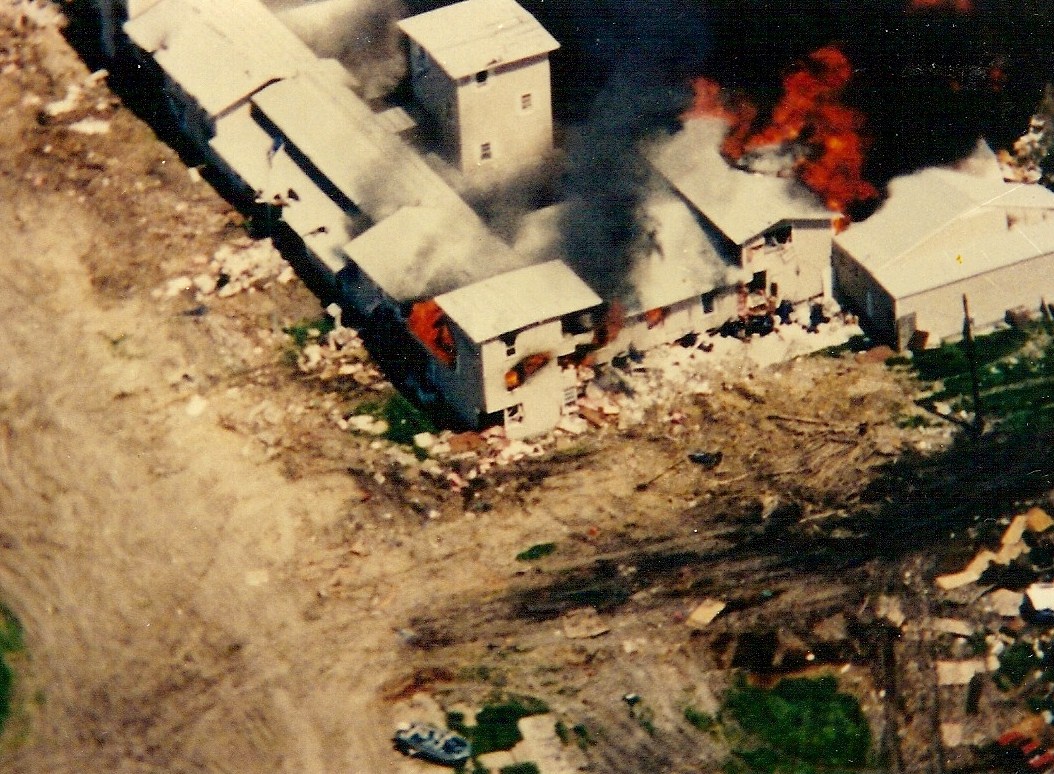
Allegations of weapons stockpiling brought the ATF to Mount Carmel on February 28, 1993. The initial raid devolved into a gunfight that left ten people dead. The FBI Hostage Rescue Team took over, and a tense standoff dragged on for 51 days as negotiators communicated with Koresh by telephone. Koresh, wounded by gunfire, alternated between negotiating delays and delivering dense, hours-long biblical monologues. On April 19, Attorney General Janet Reno authorized a final assault. M728 Combat Engineer Vehicles punched holes in the walls while CS gas was pumped inside. Fire broke out. Within hours, the compound was consumed. Seventy-nine Branch Davidians perished in the blaze, including 21 children under the age of 16. Coroner reports showed that many, including Koresh, died of single gunshot wounds to the head. Whether Koresh took his own life or was killed by his lieutenant Steve Schneider has never been determined.
Ashes and Echoes
David Koresh is buried in the "Last Supper" section of Memorial Park Cemetery in Tyler, Texas. He was 33 years old. The reverberations of Waco extended far beyond the charred ground of Mount Carmel. Timothy McVeigh and Terry Nichols cited the siege as their motivation for the Oklahoma City bombing on April 19, 1995 -- the second anniversary of the fire -- killing 168 people in the deadliest act of domestic terrorism in American history at that time. The events at Waco fueled decades of debate over the use of federal force, the boundaries between religious freedom and law enforcement, and how a charismatic loner from a broken Houston home could bend so many wills to his own apocalyptic vision. Three documentary films, a Paramount miniseries, a Netflix series, and a BBC podcast have revisited the story. The site of Mount Carmel remains outside Waco, a quiet patch of Texas prairie where a small chapel now stands among the foundations of what burned.
From the Air
The Mount Carmel Center site is located approximately 10 miles northeast of Waco, Texas, near 31.59°N, 96.99°W. However, David Koresh's article is geolocated to 32.36°N, 95.37°W near Tyler, Texas, where he is buried. Waco Regional Airport (KACT) and TSTC Waco Airport (KCNW) are the nearest airports to the Mount Carmel site. East Texas Regional Airport (KGGG) and Tyler Pounds Regional Airport (KTYR) serve the Tyler area. From the air, the Waco area is flat central Texas prairie with the Brazos River winding through it.