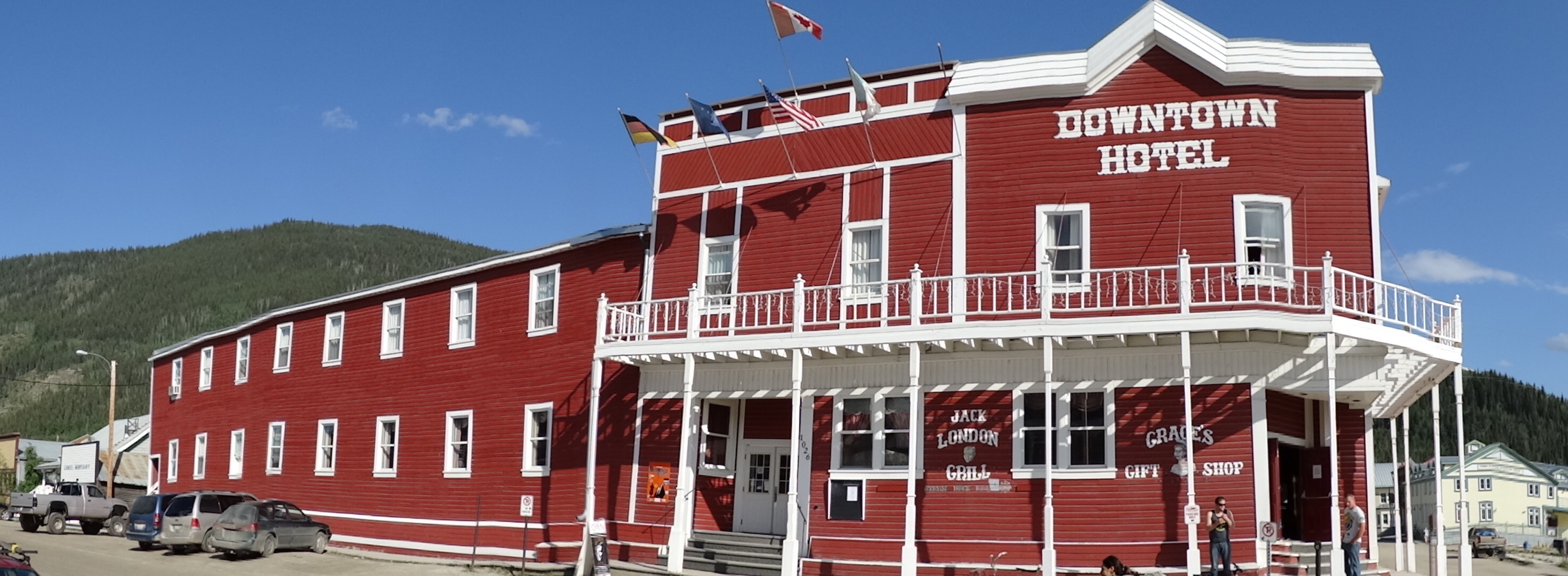
Dawson City
In 1896, Dawson City didn't exist. By 1898, it was the largest Canadian city west of Winnipeg, with a population of 30,000 to 40,000 people crammed into a tent city at the confluence of the Klondike and Yukon Rivers. The Klondike Gold Rush had created an instant metropolis in the wilderness - a city with electricity, running water, telephones, and saloons serving champagne, all 600 miles from the nearest railroad. They called it 'the Paris of the North.' The gold seekers who survived the Chilkoot Pass and floated down the Yukon arrived to find most claims already staked. Some got rich anyway; most went broke. By 1899, gold was discovered in Nome, Alaska, and the stampede moved on. Dawson's population crashed. Today, about 1,300 people live in a town that preserves its gold rush architecture, unpaved streets, and frontier atmosphere - a time capsule of the last great gold rush.
The Boom
Gold was discovered on Bonanza Creek in August 1896. Within weeks, prospectors already in the Yukon had staked the richest claims. News didn't reach the outside world until July 1897, when ships carrying newly rich miners arrived in San Francisco and Seattle. The stampede that followed brought perhaps 100,000 people toward the Klondike; only about 30,000 arrived. They came over the Chilkoot Pass from Skagway, down the Yukon River from Whitehorse, across the frozen wilderness from Edmonton. Most arrived in the spring of 1898 to find Dawson a chaotic boomtown where eggs cost a dollar each and hotel rooms couldn't be had at any price.
The City
For a few months, Dawson was remarkable. The town had theaters presenting Shakespeare and vaudeville. Dance halls offered companionship for a price. The Klondike Nugget and other newspapers published daily. Electric lights illuminated Front Street. The North-West Mounted Police maintained surprising order, confiscating weapons and regulating everything from building heights to sled dog routes. The wealth was real - some claims produced gold measured in pounds per day - but it was concentrated among the lucky few who had arrived first. For the thousands who came later, Dawson offered spectacle but not fortune. Most worked for wages in the mines or scrambled for service jobs in town.
The Bust
The crash came quickly. In 1899, gold was discovered on the beaches of Nome, Alaska - no Chilkoot Pass required, just step off a steamship and start panning. Thousands left Dawson immediately. By 1902, large-scale dredging operations replaced individual prospectors, requiring capital but not labor. Dawson's population dropped to 5,000 by 1903. The territorial capital moved to Whitehorse in 1953. By the 1960s, fewer than a thousand people remained. The gold rush buildings rotted; boardwalks collapsed into the permafrost. Dawson seemed destined to become a ghost town.
The Preservation
Instead of dying, Dawson fossilized. Parks Canada acquired numerous buildings and began restoration in the 1960s. The discovery of hundreds of nitrate films in a swimming pool excavation (the 'Dawson City Collection') brought international attention. Tourism replaced gold as the economic base. Today, Dawson City is a living museum of the gold rush era. The original buildings have been preserved or restored, the streets remain unpaved (except for the main drag), and the atmosphere consciously evokes 1898. Diamond Tooth Gerties gambling hall offers cancan shows. The Sourtoe Cocktail Club challenges visitors to drink whiskey with a preserved human toe. It's kitsch and history intertwined.
Visiting Dawson City
Dawson City lies at the confluence of the Klondike and Yukon Rivers in Canada's Yukon Territory. The town is accessible by road (the Klondike Highway from Whitehorse, 330 miles south) or by air (Dawson City Airport has limited service). The Dawson Historical Complex National Historic Site includes numerous restored gold rush buildings. The Palace Grand Theatre hosts live entertainment. Dredge No. 4, a giant gold-mining machine preserved eight miles south of town, demonstrates industrial-scale mining. Bonanza Creek, where gold was discovered, offers recreational gold panning. The Midnight Dome offers panoramic views and, in summer, the midnight sun. Summer is the only practical time to visit - roads close in winter and temperatures drop to -40°F. Whitehorse (YXY) is the nearest airport with regular jet service.
From the Air
Located at 64.06°N, 139.43°W at the confluence of the Klondike and Yukon Rivers in Canada's Yukon Territory. From altitude, Dawson City appears as a small grid of streets on the east bank of the Yukon, with the Klondike River joining from the east. The surrounding terrain is subarctic - boreal forest, permafrost, and the tailings piles of historic mining operations. The Yukon River winds broadly through the landscape.