Dawson City
In 1896, gold was discovered in the Klondike. Within two years, 100,000 people attempted the journey to Dawson City, at the confluence of the Yukon and Klondike Rivers. Perhaps 40,000 made it. They found a city of saloons, dance halls, gambling dens, and desperate men - the last great gold rush, the end of the frontier. By 1899, the rush was over. Gold still trickled out of the creeks, but the easy claims were gone. Dawson's population crashed from 30,000 to a few hundred. The town never modernized because there was no money to modernize. The permafrost kept the old buildings standing. Today Dawson City is a time capsule of the Gold Rush era, its wooden boardwalks and frontier facades preserved by cold and poverty. The population is 1,300. The sun barely rises in winter. And once a year, tourists gather at a bar to drink a cocktail containing an actual human toe.
The Rush
The Klondike Gold Rush began on August 16, 1896, when George Carmack, Skookum Jim, and Tagish Charlie found gold on Bonanza Creek. News reached the outside world in July 1897, when ships arrived in San Francisco and Seattle carrying successful prospectors and tons of gold. The stampede began. Over 100,000 people started for the Klondike; about 40,000 arrived; perhaps 4,000 found gold; a few hundred got rich. The routes were brutal: over the Chilkoot Pass from Skagway, down the Yukon River from Whitehorse, or around by sea to St. Michael and up the river. The journey took months. Many turned back. Some died. Those who arrived found every creek already claimed.
The City
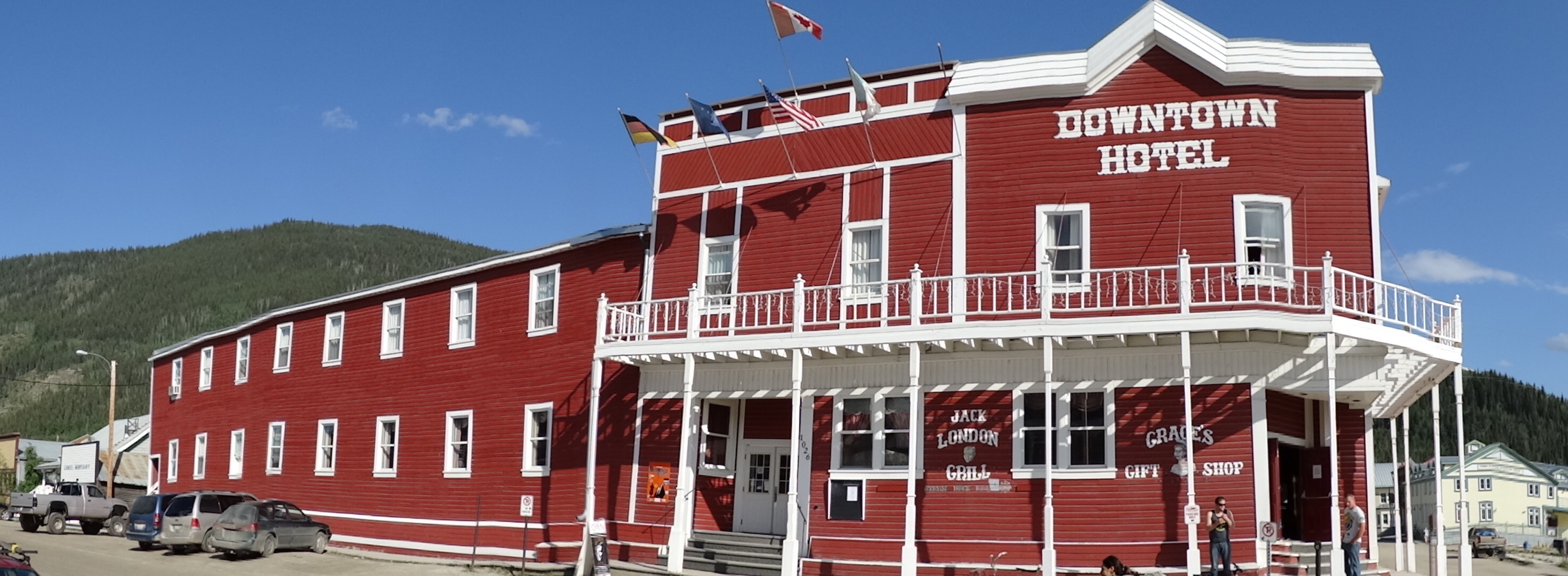
Dawson City sprang up at the junction of the Yukon and Klondike Rivers, the natural staging point for the goldfields. By 1898, it was the largest city west of Winnipeg and north of San Francisco - 30,000 people crammed into wooden buildings on permafrost. Front Street featured saloons, dance halls, and supply stores. The Dawson City Museum now occupies the old Territorial Administration Building. The Palace Grand Theatre, built in 1899, still hosts performances. Diamond Tooth Gertie's, Canada's oldest gambling hall, operates in a building from the rush era. The wooden boardwalks remain because asphalt won't last on permafrost. The dirt streets turn to mud in summer and freeze solid in winter.
The Preservation
Dawson City survived because it couldn't afford to change. When the rush ended, the population crashed. There was no money for modern buildings, paved streets, or demolition. The permafrost kept the old structures standing. By the 1960s, the federal government recognized Dawson's heritage value. Parks Canada now manages many historic buildings. The town maintains strict architectural guidelines: new construction must match the Gold Rush aesthetic. The result is a living museum, a frontier town where people still live and work in buildings from 1898. The preservation is genuine - these aren't reconstructions but original structures, preserved by poverty and cold.
The Sourtoe Cocktail
At the Downtown Hotel, visitors can join the Sourtoe Cocktail Club by drinking a shot of whiskey containing a real human toe. The tradition began in 1973 when a miner found a preserved toe in his cabin and donated it to the bar. The rules are simple: 'You can drink it fast, you can drink it slow, but your lips must touch that gnarly toe.' Swallowing the toe incurs a $2,500 fine. The original toe was swallowed; current toes are donations from amputees. Over 100,000 people have completed the challenge. It's macabre, unsanitary, and completely Dawson City - a town that celebrates its rough frontier past with dark humor.
Visiting Dawson City
Dawson City is located in Yukon Territory, Canada, at the junction of the Yukon and Klondike Rivers. The town is accessible by air (Dawson City Airport has scheduled service from Whitehorse) or by road via the Klondike Highway from Whitehorse (330 miles). Summer is the tourist season; winter is dark, cold, and sparse. Must-see sites include the Dawson City Museum, Palace Grand Theatre, Diamond Tooth Gertie's gambling hall, and the Dredge No. 4 historic site. The Sourtoe Cocktail is available at the Downtown Hotel. Bonanza Creek, where the original discovery occurred, is a short drive from town. The midnight sun shines in June; plan accordingly.
From the Air
Located at 64.06°N, 139.43°W at the confluence of the Yukon and Klondike Rivers in Yukon Territory, Canada. From altitude, Dawson City appears as a small town grid on the Yukon River's east bank, surrounded by forested mountains. The Klondike River joins from the east. Bonanza Creek is visible extending into the hills. Gold dredge tailings - piles of gravel from mining operations - mark the landscape. The terrain is subarctic - boreal forest, permafrost, mountains. Whitehorse is 330 miles south. The Arctic Circle is 165 miles north. Dawson City Airport is just south of town.