Daybreak Star Cultural Center
On the evening of March 7, 1970, at a pow-wow held in the Filipino Community Hall in south Seattle, Bernie Whitebear announced the plan. The next morning, about a hundred Native Americans and their supporters would invade Fort Lawton. The U.S. Army was preparing to declare most of the base surplus, and Whitebear's group claimed rights under 1865 treaties that promised reversion of surplus military lands to their original owners. One group would scale the bluffs from Elliott Bay. Another would climb the fence from the north. They committed to nonviolence. They did not know that seven years later, on the same ground, a building would rise that merged traditional Northwest Native architecture with modern design -- a cultural center that would serve as the urban base for Native Americans in the Seattle area for decades to come.
Scaling the Bluffs
March 8, 1970 did not go entirely as planned. About a hundred invaders confronted military police in riot gear while five hundred supporters protested legally outside the gates. Some of the invaders reached the base chapel, where a Sunday service was underway, but the MPs formed skirmish lines and contained the action. Violence broke out when some invaders responded to what Whitebear described as "overly aggressive handling by the MPs." The military police, aided by regular Army troops and Seattle Police, placed the invaders in the fort stockade before ejecting them. The activists established a tipi encampment outside the fort. Jane Fonda, in Seattle to support parallel protests at Fort Lewis linking Native rights to opposition to the Vietnam War, lent her celebrity to the cause. The occupation had failed as a physical takeover. As a political statement, it was just beginning.
From Protest to Foundation
Whitebear organized the movement under the United Indians of All Tribes Foundation, blending political negotiation with continued direct action and public pressure. The city, under Mayor Wes Uhlman, initially refused to negotiate, directing the group to the Bureau of Indian Affairs -- an agency that excluded urban Indians from its services and that urban Indians deeply distrusted. Whitebear built alliances across tribal and governmental lines. Joe DeLaCruz, leader of the Quinault, conducted outreach to every tribe in Washington State. U.S. Senators Henry Jackson and Warren Magnuson amended the Land and Water Conservation Act to reduce the cost of acquiring surplus federal property. The BIA imposed a temporary freeze on Fort Lawton transfers. Eventually, the city granted $600,000 to the American Indian Women's Service League for social services, and a one-million-dollar state grant funded design and construction of the cultural center itself.
A Building Between Two Traditions
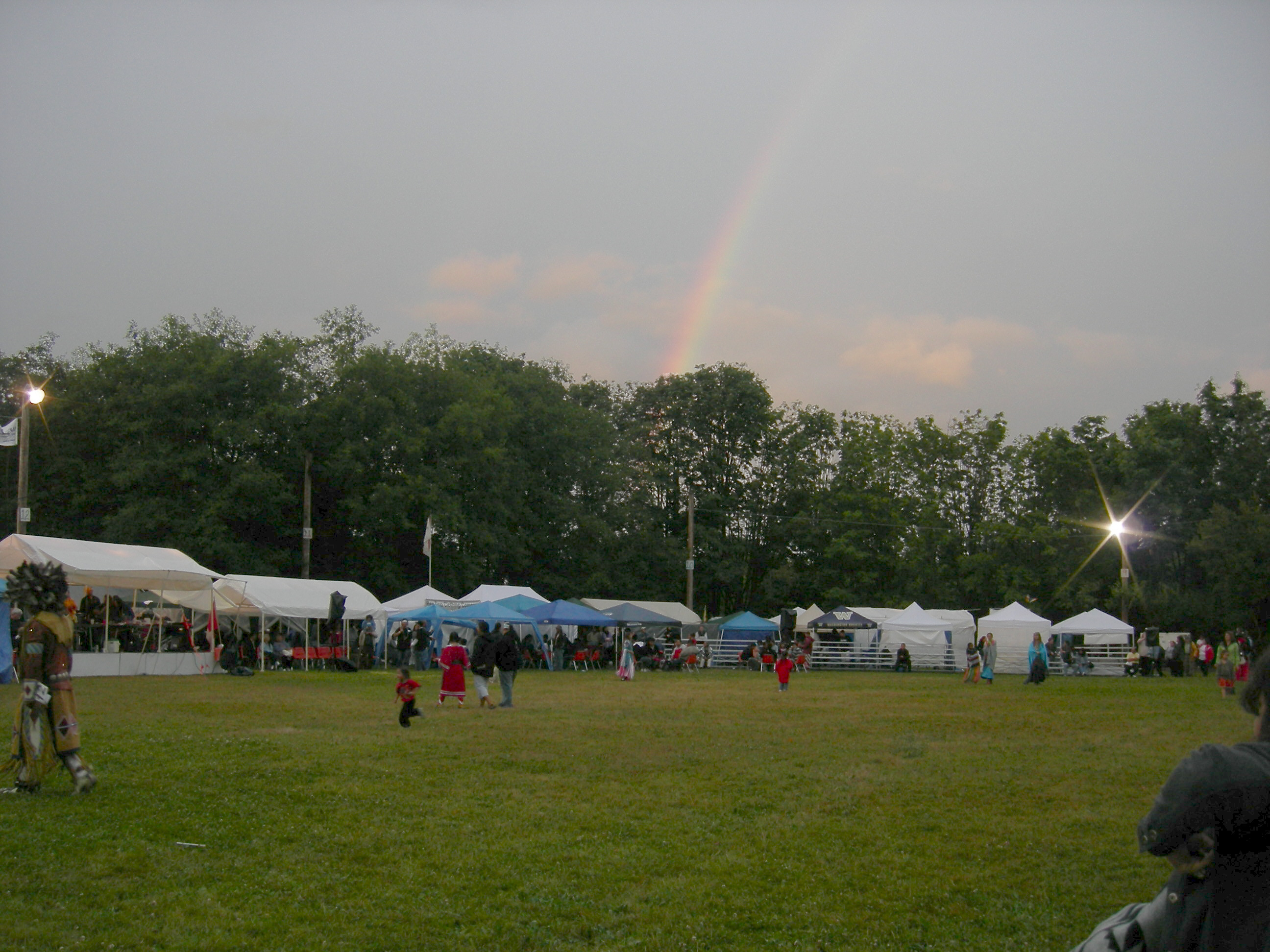
Whitebear's brother, sculptor Lawney Reyes, joined with Arai Jackson Architects to design the facility. The result, completed in 1977, is a work of modern architecture that incorporates elements of traditional Northwest Native building -- massive timbers, soaring spaces that echo the proportions of a longhouse, and an orientation toward the water and landscape that gives the building a ceremonial presence. Inside, the permanent art collection anchors the space. Reyes's Blue Jay, a sculpture 30 feet wide and 12 feet high, hung for more than three decades in the Bank of California building in downtown Seattle before being donated to Daybreak Star when the bank merged with Union Bank in 1996. A major oil painting by Guy Anderson, based on a traditional Northwest Native representation of a whale, arrived with the same donation. Today the center functions as a conference space, a location for pow wows, a Head Start school, and an art gallery serving about 25,000 Native Americans from various tribes who live in the Seattle area.
Whitebear's Unfinished Vision
Bernie Whitebear died of cancer in 2000. His final dream was a complex of three additional buildings called the People's Lodge, approved in 2004 but postponed indefinitely in 2006 for lack of funds, even after the tribes, the city, and neighborhood residents had agreed on a reduced scope. What endures is the building he did live to see, standing on 20 acres of Discovery Park -- land that the Army once controlled and that the government once said it didn't need. Outside the center, the Bernie Whitebear Memorial Ethnobotanical Garden grows the plants that Northwest Native peoples have used for centuries. It is a quiet place, which is appropriate. The loudest act in Daybreak Star's history was the occupation that made it possible. Everything since has been the patient, daily work of sustaining a culture in the heart of a city that nearly ignored it.
From the Air
Located at 47.668N, 122.418W within Discovery Park in Seattle's Magnolia neighborhood, on the bluffs above Puget Sound. The center sits on 20 acres within the larger 534-acre park. Discovery Park's forested peninsula is a prominent landmark from the air, jutting into Puget Sound west of the Magnolia neighborhood. The West Point Lighthouse marks the park's westernmost point. Nearest airports: Boeing Field/King County International (KBFI), 8 nm south-southeast; Seattle-Tacoma International (KSEA), 13 nm south.