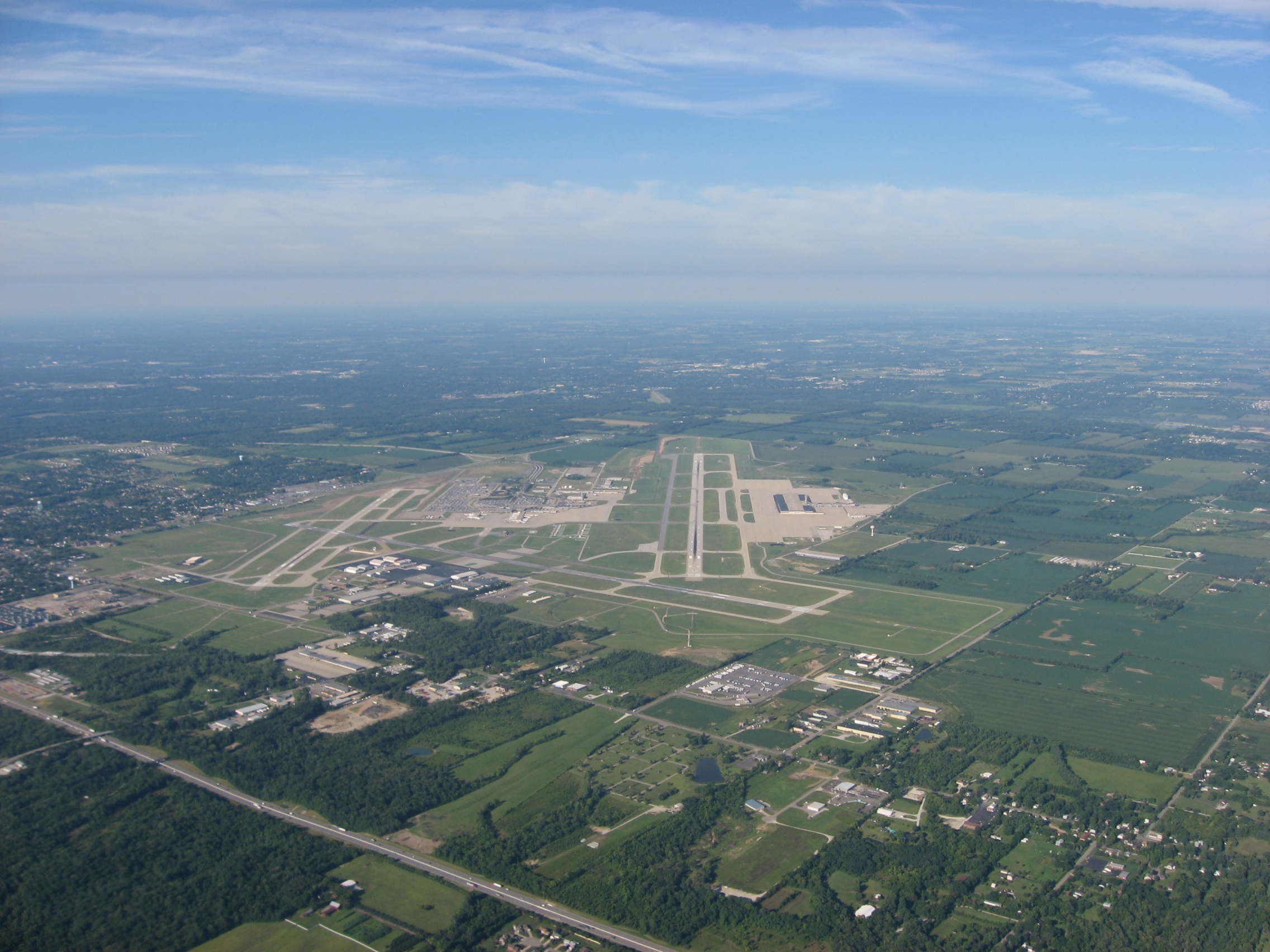
Dayton: The Birthplace of Aviation Where the Wright Brothers Built
Dayton was where the airplane was invented - not just designed, but built and tested in a bicycle shop on the west side of town. Wilbur and Orville Wright conducted their powered flights at Kitty Hawk, but the engineering happened in Dayton, the wind tunnel tests, the propeller designs, the problem-solving that made controlled flight possible. The city of 137,000 that produced one of history's most important inventions has struggled ever since - the manufacturing that sustained mid-century prosperity is gone, the population is half what it was in 1960, the opioid crisis hit here harder than almost anywhere. Dayton is what happens when invention doesn't translate to sustained prosperity.
The Wright Brothers
Wilbur and Orville Wright were Dayton natives who ran a bicycle shop and pursued flight as a hobby that became obsession. Their systematic approach - building wind tunnels, testing wing shapes, solving the control problem that others ignored - led to the first controlled, powered flight at Kitty Hawk on December 17, 1903. But the engineering happened in Dayton: Huffman Prairie outside town served as their test field; the bicycle shop served as their laboratory. The Wright Brothers National Museum and Dayton Aviation Heritage National Historical Park preserve the sites; the legacy is Dayton's primary claim on history.
The Museum
The National Museum of the United States Air Force at Wright-Patterson Air Force Base is the world's largest and oldest military aviation museum - over 350 aircraft and missiles, from the Wright Flyer replica to the stealth bomber, the presidential aircraft to the space capsules. The museum is free (it's on a military base) and massive, requiring multiple visits to see everything. The collection tells the story of American air power from the Wright Brothers through the Space Age. The museum draws 800,000 visitors annually, making it Dayton's primary tourist attraction and the reason aviation enthusiasts visit.
The Decline
Dayton's decline is textbook Rust Belt: the manufacturing left, the population left, the tax base collapsed. General Motors closed the massive Moraine plant in 2008; NCR, founded in Dayton, moved headquarters to Atlanta in 2009. The opioid crisis hit Dayton harder than almost any American city - the overdose death rate was among the nation's highest. The population dropped from 262,000 in 1960 to 137,000 today. The decline is visible: the vacant lots, the boarded buildings, the poverty concentrated in neighborhoods that once housed factory workers.
The Survivors
Dayton survives on Wright-Patterson Air Force Base - 27,000 employees make it the largest single-site employer in Ohio - and on the healthcare and education that replaced manufacturing. The University of Dayton provides employment and youthful presence; the hospitals employ thousands. The Oregon District offers restaurants and nightlife in renovated buildings. The makers and entrepreneurs drawn by cheap space try to build something new. Dayton's survival depends on whether it can find purpose beyond the decline, whether the aviation heritage that's its history can become something more than museum exhibit.
Visiting Dayton
Dayton is served by Dayton International Airport (DAY). The National Museum of the United States Air Force is essential - free, massive, and world-class. The Dayton Aviation Heritage National Historical Park includes the Wright Cycle Company and Huffman Prairie. The Oregon District provides dining and entertainment. The Dayton Art Institute holds a strong collection. Carillon Historical Park presents Dayton history including an original Wright Flyer III. For day trips, the covered bridges of Preble County are nearby. The weather is Midwestern: cold winters, hot summers. Dayton rewards visitors who appreciate aviation history.
From the Air
Located at 39.76°N, 84.19°W on the Great Miami River in southwestern Ohio. From altitude, Dayton appears as urban development in the river valley - Wright-Patterson Air Force Base visible to the east, the Air Force Museum visible as a cluster of hangars. What appears from altitude as a mid-sized Ohio city is where powered flight was invented - where the Wright Brothers built and tested, where the Air Force Museum preserves aviation history, and where industrial decline followed the invention that should have made it famous.