DDR Museum
You can sit in the Trabant. That fact alone separates this place from almost every other museum in Berlin. Across the Spree from the Berlin Cathedral, in what was once the diplomatic quarter of East Germany, the DDR Museum invites visitors to do what museums normally forbid - touch the exhibits, open the drawers, change the channels on a 1970s television, climb into the recreated Plattenbau apartment and live for a few minutes inside the country that disappeared in 1990.
An Unauthorized Memory
When ethnologist Peter Kenzelmann visited Berlin in the early 2000s and went looking for a museum about the German Democratic Republic, he found nothing. The newly reunified country had archives, monuments, and academic institutes, but no popular museum of the everyday East. He decided to fill the gap himself, and on July 15, 2006, the DDR Museum opened as a private institution - unusual in Germany, where museums are nearly always state-funded. The state museums were not entirely pleased. Some worried a private competitor might give politicians an excuse to defund their own collections. Others doubted whether private money could handle East German history with the gravity it required. The visitors voted with their feet: 180,000 in the first year, four million by 2015, eleventh-most-visited museum in Berlin and climbing.
The Apartment That Time Forgot
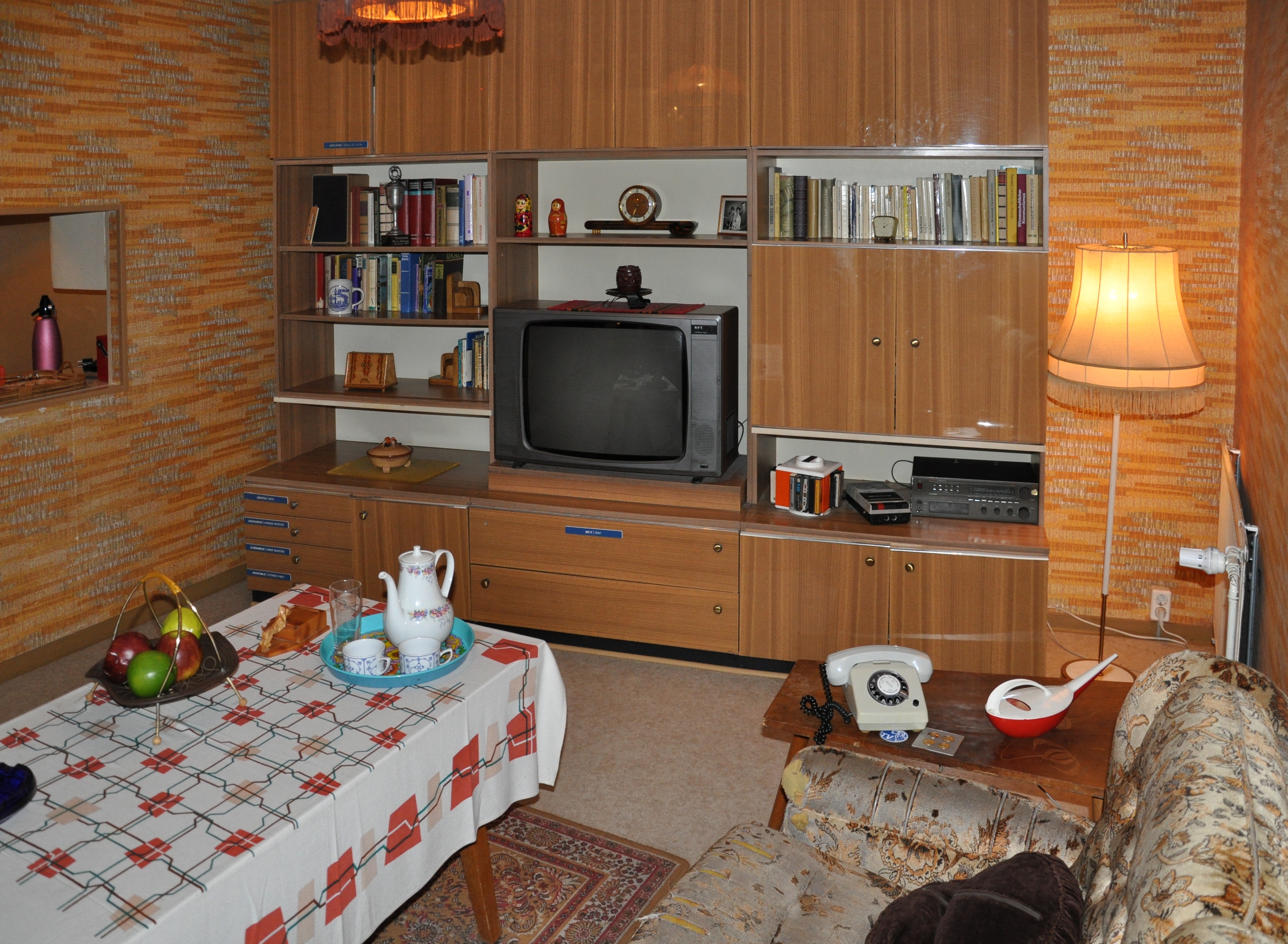
The heart of the museum is a fully furnished WBS-70 tower-block flat - the prefab apartment style that housed millions of East Germans in identical rooms across identical concrete buildings from Rostock to Dresden. There is the children's bedroom with its plush toys, the kitchen with its enamel pots and instant coffee, the living room with its bulky polished furniture and the inevitable schrankwand wall unit dominating one side. There is also a Stasi listening room, accessed through what looks like an ordinary door, where the surveillance microphones and reel-to-reel recorders sit waiting. Both things were true at once. Most East Germans were not Stasi informers and most did not live under direct surveillance, but everyone knew they could be. The flat captures both the warmth of an ordinary domestic life and the cold knowledge that nothing was ever entirely private.
Trabant and Volvo
Out in the main exhibition halls, the contrasts continue. There is a Trabant - the famously slow, smoky, two-stroke car that East Germans waited a decade to buy - rigged with a driving simulator so visitors can attempt to manage the unsynchronized gearbox themselves. A few meters away sits a Volvo 264 TE, a Swedish-built limousine from the East German government car pool, the kind of vehicle that ferried Politburo members between meetings while ordinary citizens walked or queued. The collection holds more than 250,000 objects: school books from the Pioneer organization, food-shortage records, a one-megabit chip from the East German microelectronics program (a desperate attempt to catch up with the West that arrived just as the Wall fell), and a printing press from the Umweltbibliothek - the underground environmental library that helped seed the dissident movement of the late 1980s.
The Empathy of Small Things
What the museum does best is something larger institutions often miss: it treats the GDR as a place where real people lived. Not heroes, not victims, not Stasi caricatures, just citizens negotiating the terms of an ordinary life under an extraordinary system. The semicircle of power exhibition makes clear who held the strings - the Party at the center, surrounded by interlocking systems of politics, economy, and surveillance. But the apartment around the corner shows the rest of it: a woman saving for years to afford the polyester dress on display, a child watching the Sandman cartoon before bed, a family planning a vacation to Bulgaria because they could not visit France. East Germany ended 36 years ago, and most of the people who lived there are still alive. The museum asks visitors to remember that before they laugh at the wallpaper.
From the Air
The DDR Museum sits at 52.52 N, 13.40 E on the east bank of the Spree in central Berlin, directly opposite Berlin Cathedral and within Museum Island's wider ensemble. The building is small and easily missed from above; orient instead on the green dome of Berlin Cathedral and the Fernsehturm television tower a short distance northeast. Berlin Brandenburg (EDDB) is 25 km southeast. Berlin's Class C airspace tightly restricts overflight of the Mitte district - visual reference only from the published transit corridors.