De Bilt
Every weather forecast in the Netherlands begins in De Bilt. Every storm warning, every heatwave bulletin, every official record of how hot or how wet the country has been - it all flows out of a campus of low buildings on the edge of this commuter town, broadcast since 1924 by the Royal Netherlands Meteorological Institute, the KNMI. The town itself is so unassuming that travelers blow past it on the A27 without knowing it is there. But the Dutch sky has been measured from this spot longer than there have been radios to announce the readings.
The Hill That Wasn't Quite
The name is honest about what the land does. De Bilt and its younger sibling Bilthoven both come from de bult - the bump, the slight rise. They sit on the western edge of the Utrechtse Heuvelrug, the Utrecht Hill Ridge, a strip of moraine left behind by ice-age glaciers that pushed this far south and no further. In a country that mostly disputes the difference between zero and minus-one meters, even a gentle rise was worth naming. The first settlers came in the twelfth century, after the Kromme Rijn river was dammed off and the marshy floodplain became something you could plow. The Duchy of Guelders burned the town to the ground in 1372. It was rebuilt, as Dutch towns nearly always were.
A Canal, a Highway, an Idea
What turned De Bilt from a farming hamlet into something more was the Biltsche Grift, the canal cut around 1640 to link Utrecht with Zeist by way of De Bilt. Suddenly the place was easy to reach, and easy to reach mattered enormously in seventeenth-century Holland. Wealthy Utrecht merchants bought up land along the new waterway and built country estates and summer houses along the Dorpsstraat. Craftsmen followed the money. Inns and taverns opened to serve the carriage traffic on the main eastern road into Utrecht. By the time the railway from Utrecht to Amersfoort opened on 20 August 1863, De Bilt was a prosperous Dutch town with deep roots and money in its bricks - but the railway station was a half-hour walk from the town center, and that distance would create a town of its own.
How a Suburb Got Its Name
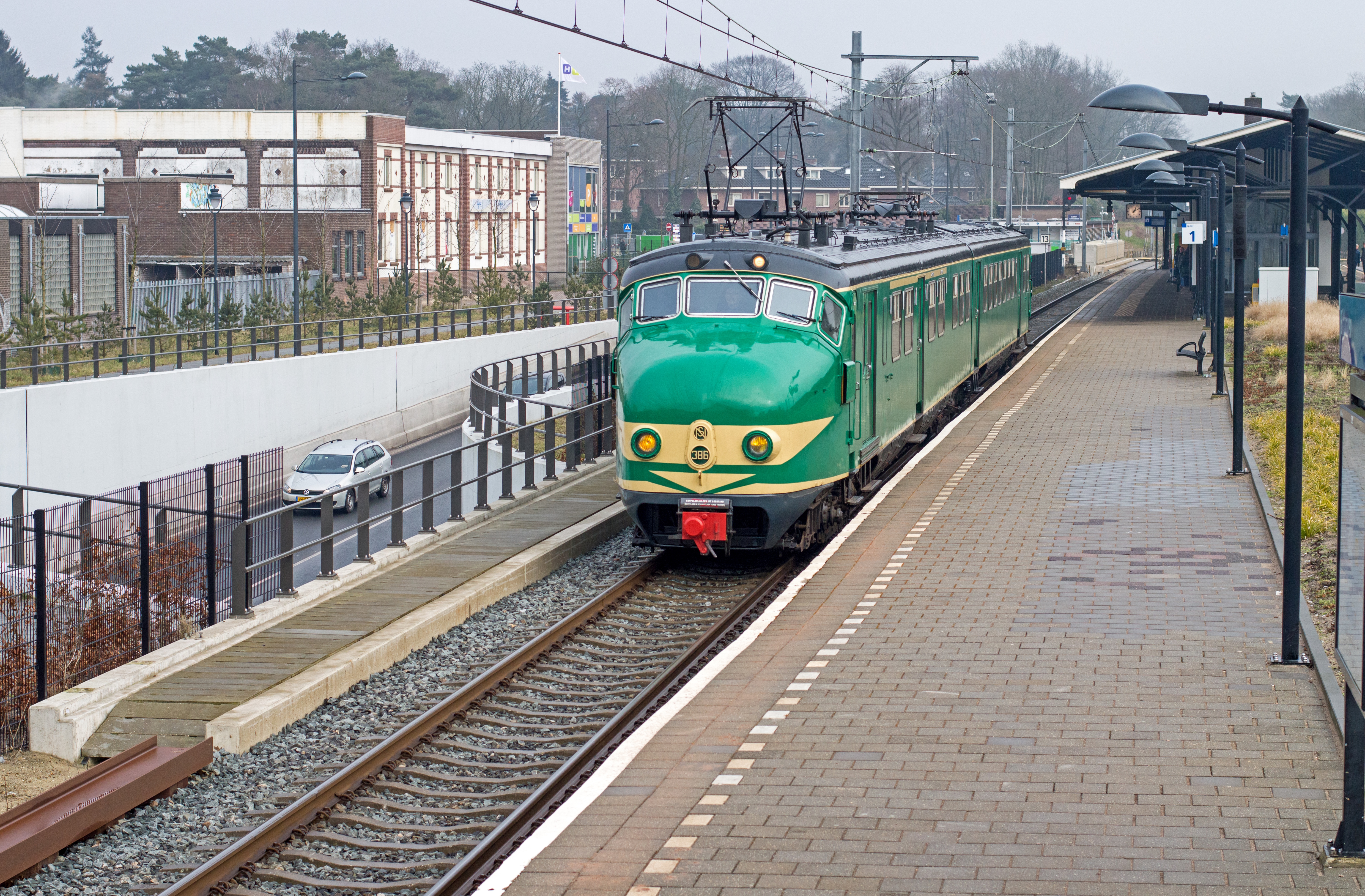
Bilthoven is what happens when a station gets too far ahead of the village it was supposed to serve. The first villas appeared near the platform around 1900, when land prices were low and Utrecht commuters were looking outward. The settlement grew quickly. It was initially called De Bilt-Station, a sensible if uninspired name, but in 1917 the residents tried to rebrand themselves as Biltsche Duinen - the dunes of Bilt. The Dutch Railways objected. There were already too many station names to keep straight. A compromise was reached and the place became Bilthoven, a name that did not exist before the railway invented it. The two towns - the old one and the railway one - have shared a municipality ever since.
Where the Weather Lives
The KNMI moved to De Bilt in 1897, looking for a site away from urban heat distortion but close to the academic resources of Utrecht. The institute is the Dutch national authority on everything that falls from or moves through the sky - wind, rain, temperature, atmospheric pressure, seismic activity. When the Netherlands has its earliest spring, its hottest summer day, its coldest winter night, the official measurement comes from the De Bilt observation field, where instruments have been arranged in roughly the same configuration for over a century. Continuity is the whole point. A temperature record only matters if it can be compared to last year, and the year before, and 1947, and the winter of 1740. De Bilt's value is that it has kept measuring without moving.
The Quiet Edge of Utrecht
Today De Bilt is forty-three thousand people scattered across a handful of villages - De Bilt, Bilthoven, Maartensdijk, Groenekan, Westbroek. The A27 and A28 motorways pass on either side. Sprinter trains stop at the small stations between Utrecht Centraal and Amersfoort, packed twice a day with commuters. There are good schools, good restaurants, and a lot of trees, because the Utrechtse Heuvelrug is one of the most heavily wooded landscapes in this otherwise tabletop country. It is the kind of town that does not need to be exciting because it has settled into being useful - to the people who live here, to the wider country that depends on its forecasts, and to a thousand-year-old conversation about what a Dutch landscape ought to look like when the river behaves.
From the Air
Located at 52.11 degrees N, 5.18 degrees E, just east of Utrecht city. From altitude, look for the wooded ridge of the Utrechtse Heuvelrug rising gently from the flat polder west of the A27. The KNMI campus shows as a distinct cluster of buildings with an open observation field. Best viewing altitude 2,500 to 4,000 feet. Nearest airports: Hilversum (EHHV) about 10 km north, Schiphol (EHAM) about 40 km west, Lelystad (EHLE) to the northeast. The A27 and A28 highways form a visible bracket around the municipality.