De Punt Fire
Anne Kregel, Raymond Soyer, and Egbert Ubels died on the evening of 9 May 2008 because no one in the Dutch fire service had ever properly explained what a sandwich roof panel does in a fire. They were volunteer firefighters from the small Drenthe town of De Punt, called to a blaze at a sloop, a shipyard building, on a quiet evening. They followed procedure. They went in. They were trained well and they did everything right. The polyurethane foam between the steel layers of the roof was, by then, already heated past the point of no return - cooking off ammonia, hydrocyanic acid, and a yellow-brown haze of nitrous gases trapped in a layer beneath the ceiling, invisible from below. When that layer ignited, the explosion killed all three.
The Building
From the outside, the shipyard building on the De Punt waterfront looked unremarkable - the kind of light-industrial shed that lines waterways across the northern Netherlands. The roof was made of sandwich panels: two thin steel sheets, four-tenths of a millimetre thick, with a nine-centimetre layer of polyurethane foam between them, glued and pressed into a single composite. The panels met the building code. They were rated for flammability. They were, in normal use, perfectly safe. What they were not, was understood. When sandwich panels heat past a threshold, the polyurethane begins to off-gas. The fumes seep first from the panel edges, then build inside the panels themselves. The foam, which had served as both insulation and structural glue holding the steel skins together, softens and releases. The roof becomes a reservoir of flammable gas, and the firefighters underneath cannot see it.
The Men
Anne Kregel, Raymond Soyer, and Egbert Ubels were volunteers. In the Netherlands, the great majority of firefighters are - small towns and rural areas depend on people with day jobs who keep gear in the hall and respond when the pager goes off. The three were experienced. They were a crew that had worked together. They wore breathing apparatus and they coordinated with their officer. They entered the building because that was what the procedure said to do: in commercial buildings, the assumption was an offensive interior attack, knock the fire down at its source. When the gas layer ignited, the entire roof became a wave of fire. The blast was severe enough that recovery teams initially could not enter. The Netherlands lost three firefighters in a single moment, in a way that nobody on scene had been trained to anticipate.
The Inquiry
The municipality asked the Vereniging voor Brandweerzorg en Rampenbestrijding - the Dutch association for fire service and disaster response - to convene an independent committee of inquiry. The committee's report, when it came, did not soften its findings. The men had acted correctly. They had followed the procedures they were given. The procedures were wrong. Sandwich-panel construction was widespread across Dutch industry and the danger was, in the committee's words, 'not known throughout the fire service' despite having been demonstrated in earlier fire-hazard testing. Rescue and recovery had been poorly coordinated; there was no effective procedure for missing firefighters and no role of 'technical fire fighting manager' to take charge of the chaos. The committee was explicit: 'This incident was not simply a case of normal professional risk but rather an avoidable incident.'
The New Doctrine
The single most important recommendation was a doctrinal reversal. For industrial buildings with no special fire-safety requirements - the great class of warehouses, workshops, and sheds where firefighters had been trained to enter and engage - the default should now be a defensive attack from the outside. Hoses through the doors, walls cooled from a distance, the building written off if necessary. Only with extra units on scene and clear security could an interior attack be authorized, and even then only in exceptional cases. It was a fundamental change to Dutch fire doctrine, paid for in three lives. Sandwich-panel hazards became standard training across the country. The fire service invested in research, simulation, and modified protocols. None of it brought Kregel, Soyer, or Ubels back, but the next crew called to the next anonymous shed at the next light-industrial waterfront had a chance the De Punt crew did not.
Remembrance
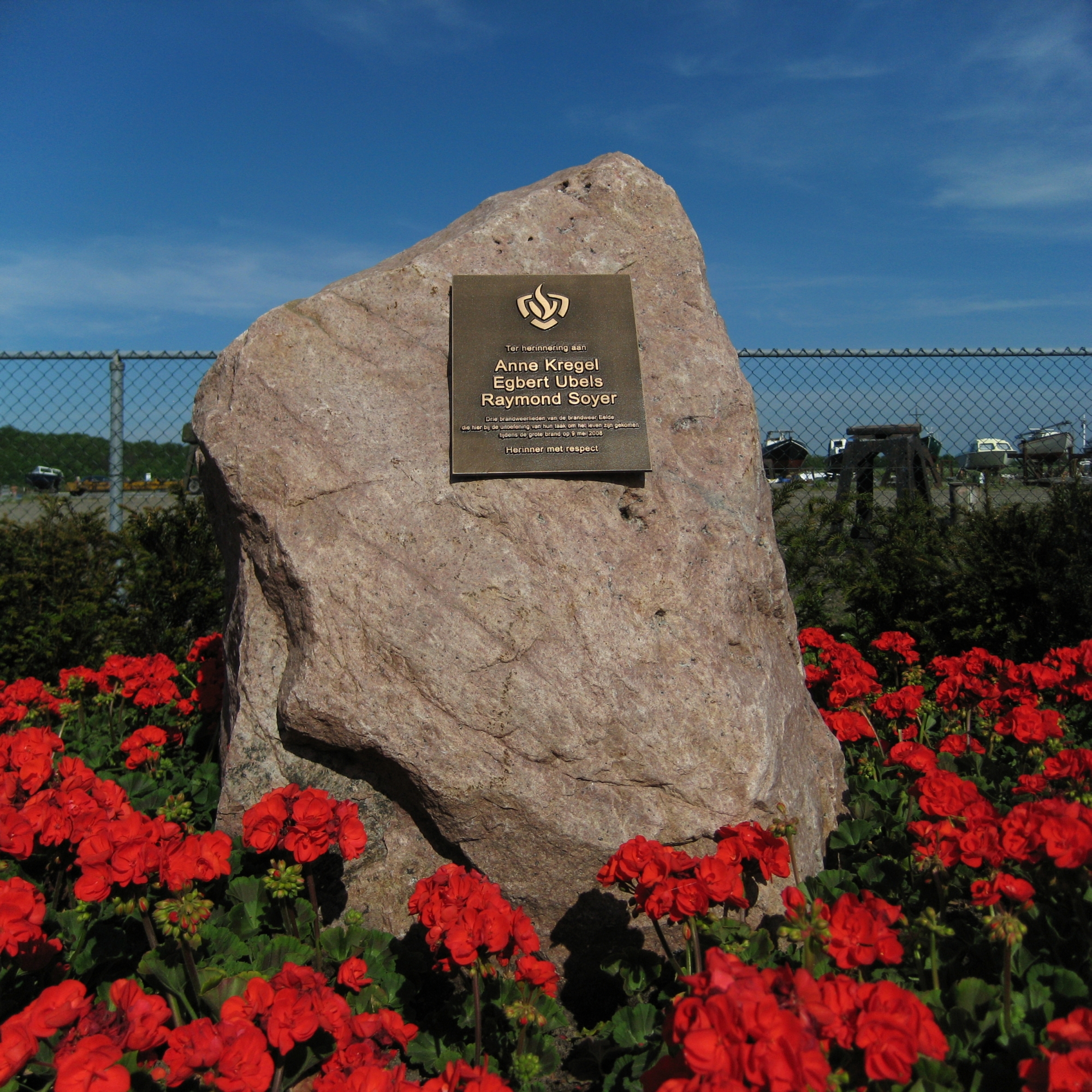
A memorial stands in De Punt to the three firefighters. The Dutch fire service marks the anniversary each year. The village of De Punt is small - it sits in the province of Drenthe, just south of the Groningen border, near where the Drentsche Aa winds through pine forest and pasture - and the loss of three of its volunteers in a single night was the kind of event that does not fade from local memory. Across the country, the De Punt fire became the case study every new recruit learns. The names of the dead are taught alongside the technical lessons. The doctrine changed, the training changed, and the buildings being built today are inspected with that night in mind.
From the Air
De Punt lies at 53.12 N, 6.60 E, at the southern edge of Groningen province along the Drentsche Aa. Groningen Airport Eelde (EHGG) is just 5 km north, and aircraft on approach to runway 23 fly almost directly over the village. From low altitude in clear conditions the small settlement is recognizable as a cluster of buildings on the east bank of the river, with the A28 motorway running just to the east. The site of the 2008 fire was a shipyard building near the waterway.