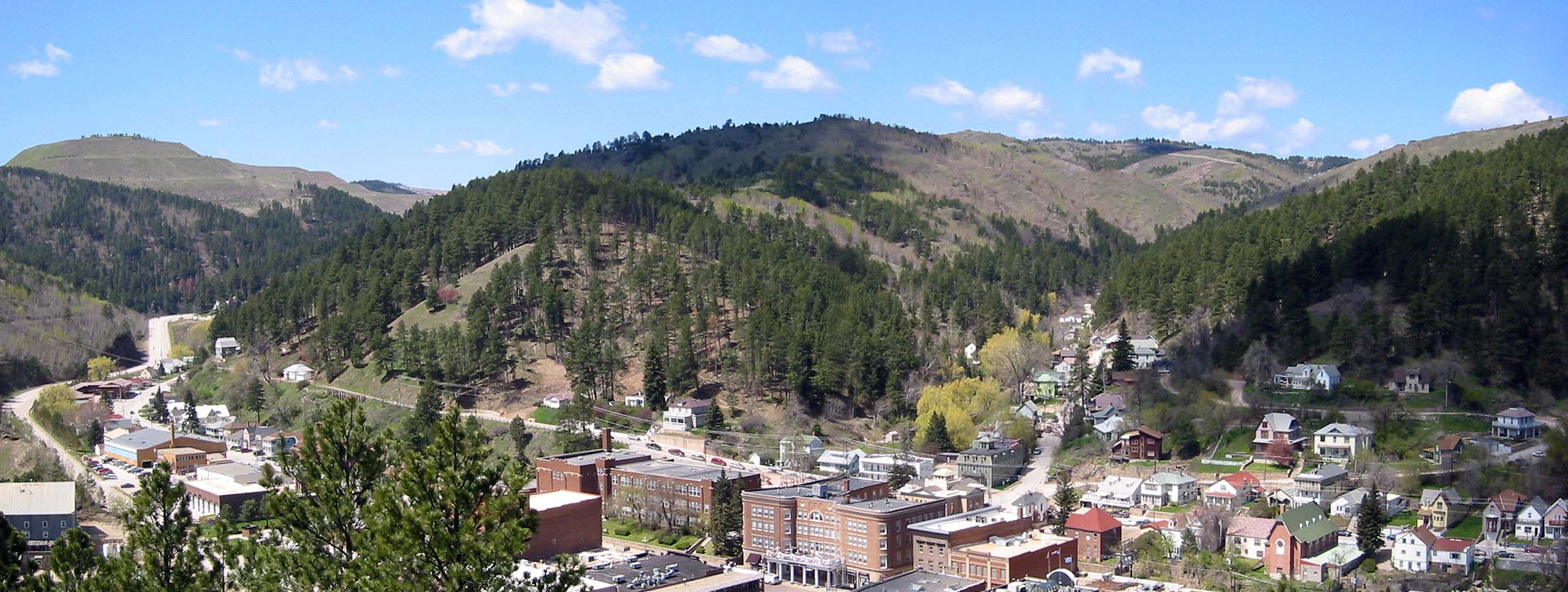
Deadwood: Wild Bill's Town in the Black Hills
Deadwood was illegal from birth. The 1868 Fort Laramie Treaty guaranteed the Black Hills to the Lakota Sioux; George Custer's 1874 expedition found gold anyway; prospectors flooded in despite federal attempts to stop them. The town that grew in Deadwood Gulch was lawless in every sense - no legal government, no legal land claims, no legal anything. Into this chaos came Wild Bill Hickok, already famous as a gunfighter and lawman, seeking gold like everyone else. On August 2, 1876, Jack McCall shot him in the back of the head while Hickok played poker at Nuttal & Mann's Saloon. The cards Hickok held - aces and eights - became known as the 'dead man's hand.' Deadwood had its legend.
Wild Bill and the Dead Man's Hand
James Butler Hickok arrived in Deadwood in July 1876, already famous for his career as a Union scout, lawman in Kansas cattle towns, and Wild West Show performer. He came seeking gold. Three weeks later, he was dead - shot from behind by Jack McCall while playing cards at Nuttal & Mann's Saloon No. 10. McCall claimed Hickok had killed his brother (probably untrue); a miners' court acquitted him, but McCall was later retried in federal court, convicted, and hanged. Hickok was buried in Deadwood's Mount Moriah Cemetery. The cards he reportedly held - pairs of aces and eights - became the 'dead man's hand,' though the fifth card is disputed. The hand is bad luck; no poker player wants it.
Calamity Jane
Martha Jane Cannary, known as Calamity Jane, claimed to have been Hickok's lover, a Pony Express rider, an Army scout, and a participant in every significant event in the frontier West. Most of these claims were false or exaggerated. What's verifiable: she was in Deadwood in 1876, she was rough and hard-drinking, and she became famous for being famous. Her autobiography (1896) invented much of her legend. She returned to Deadwood in her final years, performing in traveling shows that traded on Western nostalgia. She died in 1903 and was buried next to Wild Bill at her own request - despite uncertain evidence they were ever close in life. Deadwood keeps them together in death.
Gold Rush Gulch
The Black Hills gold rush brought 25,000 people to the region by 1877, though the Lakota treaty technically prohibited white settlement. The U.S. Army eventually gave up trying to enforce the treaty; a new agreement (coerced, the Lakota have never accepted it) opened the hills. Deadwood's gold was largely placer deposits - found in streams and gulches, easy to extract. When the placer gold ran out, larger operations took over. The Homestake Mine in nearby Lead (pronounced 'leed') became one of the largest gold mines in North America, operating until 2002. Deadwood itself declined as mining moved elsewhere, its Victorian buildings preserved by poverty and eventually protected by historic designation.
Gambling's Revival
By the 1980s, Deadwood was dying - population under 2,000, buildings crumbling, the gold rush long past. South Dakota voters approved limited-stakes gambling in 1989, allowing casinos in Deadwood to fund historic preservation. The gamble worked. Gaming revenues poured into restoration; Victorian buildings were renovated; tourism returned. The casinos are everywhere now - nearly 80 gaming establishments in a town of 1,300 - and the historic preservation has been genuine. The trade-off is obvious: Deadwood survived by becoming a gambling town that happens to have history, not a historic town that happens to have gambling. The slot machines and blackjack tables saved the Victorian buildings.
Black Hills Base
Rapid City Regional Airport (RAP) is 45 miles east, serving the Black Hills region. Deadwood lies at the northern end of the Black Hills, with Spearfish Canyon to the north and Mount Rushmore 30 miles south. The town is walkable; Main Street runs along the gulch. The Adams Museum provides local history; Mount Moriah Cemetery offers self-guided tours to Wild Bill and Calamity Jane's graves. The Days of '76 rodeo celebrates frontier heritage each July. From altitude, Deadwood appears as a narrow town squeezed into a Black Hills gulch - Victorian buildings lining Main Street, casinos lit at night, the pine-covered hills rising on all sides - Wild Bill's final town, saved by gambling.
From the Air
Located at 44.38°N, 103.73°W in a narrow gulch in the Black Hills of South Dakota. From altitude, Deadwood appears as development squeezed into a steep-sided valley - the town stretching along the gulch, hills rising immediately on both sides, the Black Hills' pine forests covering the surrounding terrain. What appears from the air as a small mountain valley town is Wild Bill Hickok's Deadwood - where the dead man's hand was dealt, where Calamity Jane told her lies, and where gambling saved the Victorian buildings that gold rush money built.