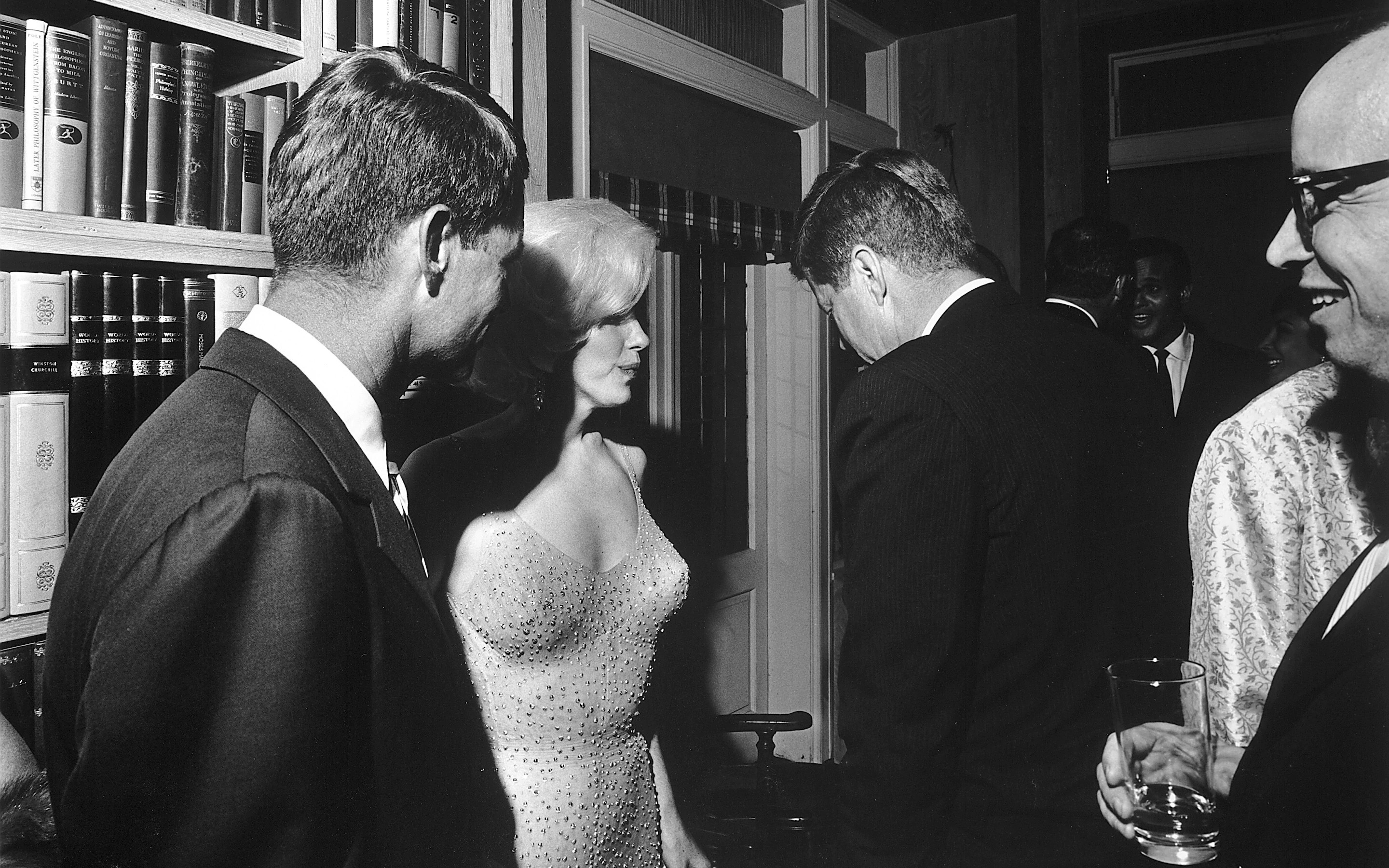
Death of Marilyn Monroe
The housekeeper, Eunice Murray, noticed something wrong around 3 a.m. on August 5, 1962. The light in Marilyn Monroe's bedroom was still on. The door was locked. When Murray looked through the window, Monroe appeared unresponsive. Murray called the psychiatrist Ralph Greenson, who arrived, broke a window to enter the room, and found Monroe dead at 36. The night before had been ordinary in its way — a Sunday at her Brentwood home, with visits from her publicist, her photographer, and her psychiatrist. By Monday morning it was over.
The Weeks Before
Monroe had been in decline for some time. She had not completed a film since The Misfits, released in February 1961, which had performed disappointingly at the box office. In April 1962, she began filming Something's Got to Give for 20th Century Fox, but the studio fired her in early June, publicly blaming her for production delays. Her films had grossed $200 million by the time of her death — the equivalent of $2.1 billion today — but she was out of work and fighting publicly over her professional reputation. In the weeks before her death, she gave several interviews to major publications, trying to repair her image. She had also resumed negotiations with Fox about being rehired. On August 4, she spent the day at her home at 12305 Fifth Helena Drive. Her last known conscious hours were spent with people who were trying to help her.
The Coroner's Finding
The official cause of death, as determined by the Los Angeles County coroner's office, was acute barbiturate poisoning — specifically, a fatal concentration of chloral hydrate and Nembutal in her bloodstream. The ruling was probable suicide, based on Monroe's history of mood swings, suicidal ideation, and dependence on sedatives and alcohol. She had been dependent on amphetamines, barbiturates, and alcohol for years, and had acquired a reputation for being difficult on film sets — though those who knew her attributed much of this to her mental health struggles rather than professional negligence. The FBI had maintained a file on her since 1956.
Alternative Theories
The 'probable' in the coroner's ruling left room, and the room was filled. By the mid-1960s, alternative theories had emerged suggesting murder or accidental overdose. Many of these implicated President John F. Kennedy, his brother Robert F. Kennedy, union leader Jimmy Hoffa, and mob boss Sam Giancana. The theories persisted, appearing and reappearing in books, documentaries, and tabloids across the following decades. In 1982, the Los Angeles County District Attorney's office reviewed the case in response to the continued public pressure. It found no evidence supporting the murder theories and did not disagree with the original investigation's conclusions. The review did concede, however, that 'factual discrepancies' and 'unanswered questions' remained in the record — acknowledgments that have fueled continued speculation ever since.
The House on Fifth Helena Drive
Monroe had purchased the Brentwood house in early 1962 — the only property she ever owned. It was modest by Hollywood standards: a single-story Spanish colonial revival home with a small pool and a garden that she was beginning to furnish. She had been living there for less than a year when she died. The address, 12305 Fifth Helena Drive, became one of the most recognized in Los Angeles — a destination for those making a kind of pilgrimage to the place where something in American culture ended. The house still stands. It has changed hands several times and in 2023 faced proposed demolition by a subsequent owner, generating controversy over whether it should be preserved as a landmark. The question of what to do with a place shaped entirely by loss is one that does not resolve easily.
From the Air
12305 Fifth Helena Drive sits at approximately 34.054°N, 118.478°W in the Brentwood neighborhood of West Los Angeles. The area is residential, bounded to the north by San Vicente Boulevard and to the west by Barrington Avenue. Nearest airports: Santa Monica Airport (SMO) about 2 miles southwest, Van Nuys Airport (VNY) about 12 miles north.