Death Valley: The Hottest Place That Refuses to Be Empty
On July 10, 1913, a thermometer at Furnace Creek registered 134°F - the hottest air temperature reliably recorded anywhere on Earth. Some doubt the measurement; the instrument's accuracy has been questioned. But even conservative estimates make Death Valley the planet's hottest place: summer days routinely exceed 120°F, ground temperatures reach 200°F, and the air feels like opening an oven door. The valley earned its name in 1849 when a party of gold seekers became lost here; one died before they escaped. 'Goodbye, Death Valley,' one survivor reportedly said upon leaving. The name stuck, and so did people. The Timbisha Shoshone have lived here for a thousand years; miners sought borax and gold; tourists now arrive by the millions, drawn by the very extremity that kills the unprepared.
The Geography
Death Valley lies between two mountain ranges - the Amargosa to the east, the Panamints to the west - creating a basin that traps and amplifies heat. At its lowest point, Badwater Basin sits 282 feet below sea level, the lowest elevation in North America. The valley stretches 140 miles long and up to 25 miles wide. The surrounding peaks exceed 11,000 feet; Telescope Peak rises directly from the valley floor to 11,049 feet, an elevation change greater than any in the Lower 48. The heat accumulates because mountains block ocean breezes and rain; the valley receives less than 2 inches of precipitation annually. When rain does fall, flash floods carve the alluvial fans that spread from every canyon mouth.
The Names
Death Valley's features bear names of beautiful menace: Furnace Creek, Dante's View, Devil's Golf Course, Hell's Gate. The salt flats at Badwater glitter with a white crust that crunches underfoot; nothing lives in the brine, hence the name. The Racetrack Playa hosts sailing stones that leave tracks across the dry lake bed - a mystery solved in 2014 when researchers documented thin ice sheets pushing rocks across the mud. Zabriskie Point offers eroded badlands in improbable colors - golds, reds, greens, blacks. Artist's Palette lives up to its name with oxidized minerals painting the hillsides. The naming became marketing; the extremity is the brand.
The Residents
The Timbisha Shoshone lived in Death Valley for centuries before Europeans arrived, moving seasonally between valley floor and mountain meadows, harvesting mesquite beans and pinyon nuts. Their homeland was declared a national monument in 1933, and they were expelled. For decades they fought for recognition; in 2000, the Timbisha Homeland Act returned 7,500 acres to tribal control, making them the only tribe with land within a national park. They remain, population about 50 in the valley, living where survival seems impossible, proving it isn't. The valley that kills the foolish has sustained the wise for a millennium.
The Tourism
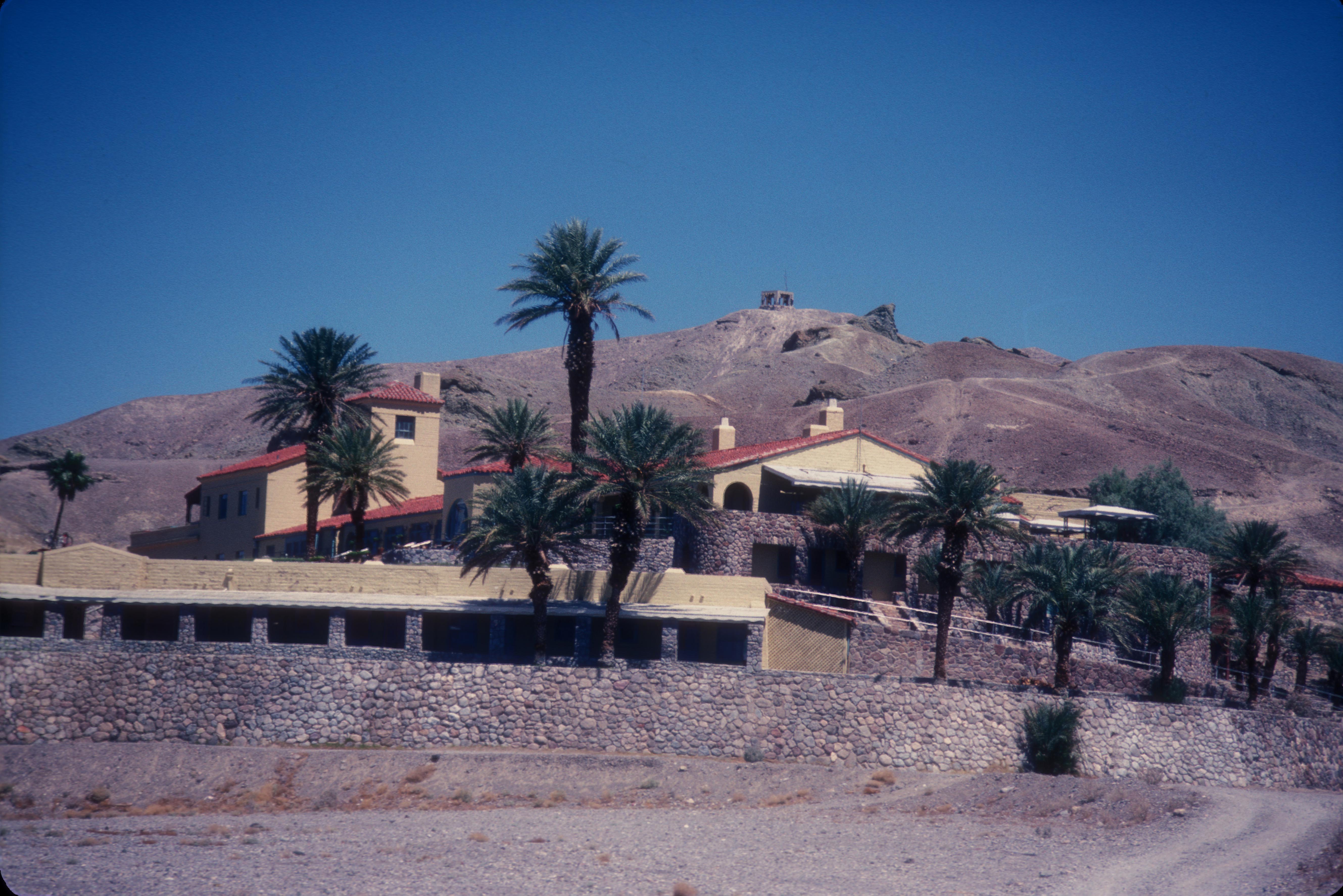
Death Valley became a tourist destination through borax mining. The Twenty-Mule Team that hauled borax to the railroad became marketing icon; the company that later became Pacific Coast Borax built hotels to attract visitors. Furnace Creek Inn opened in 1927, an adobe oasis of palm trees and swimming pools where the temperature outside might kill you. The extremity became attraction: 'I survived Death Valley' postcards, thermometer photos showing impossible numbers, the bragging rights of the hottest place on Earth. Summer visitors - 'heat tourists' - come specifically for the extremes, thrilling at temperatures no human should experience.
Visiting Death Valley
Death Valley National Park is located in southeastern California, extending into Nevada. Las Vegas is the nearest major city (120 miles); Los Angeles is 275 miles. Summer visits require extreme caution: carry at least one gallon of water per person per day, avoid hiking after 10 AM, never rely on air conditioning (cars fail here regularly). Spring wildflower blooms (February-April) and winter months offer better conditions. Furnace Creek provides lodging, fuel, and the park's main visitor center. Badwater Basin, Zabriskie Point, and Dante's View are essential viewpoints. Four-wheel drive opens remote areas including the Racetrack. The experience confronts visitors with limits - the human body's, the car's, the land's capacity to sustain anything at all.
From the Air
Located at 36.46°N, 116.87°W in southeastern California, between the Panamint and Amargosa mountain ranges. From altitude, Death Valley appears as a dramatic trough - a long, narrow basin of tan and white between rugged peaks. The salt flats of Badwater glitter white, the lowest point clearly distinguished from surrounding alluvial fans. Furnace Creek's green oasis marks the main visitor area. The valley floor's coloring shifts from white salt to tan sand to the multi-hued badlands of Zabriskie Point. The mountains that frame the valley show virtually no vegetation. What appears from altitude as a barren, forbidding wasteland is the hottest place on Earth - yet home to Timbisha people for millennia and to millions of visitors who come to experience extremity.