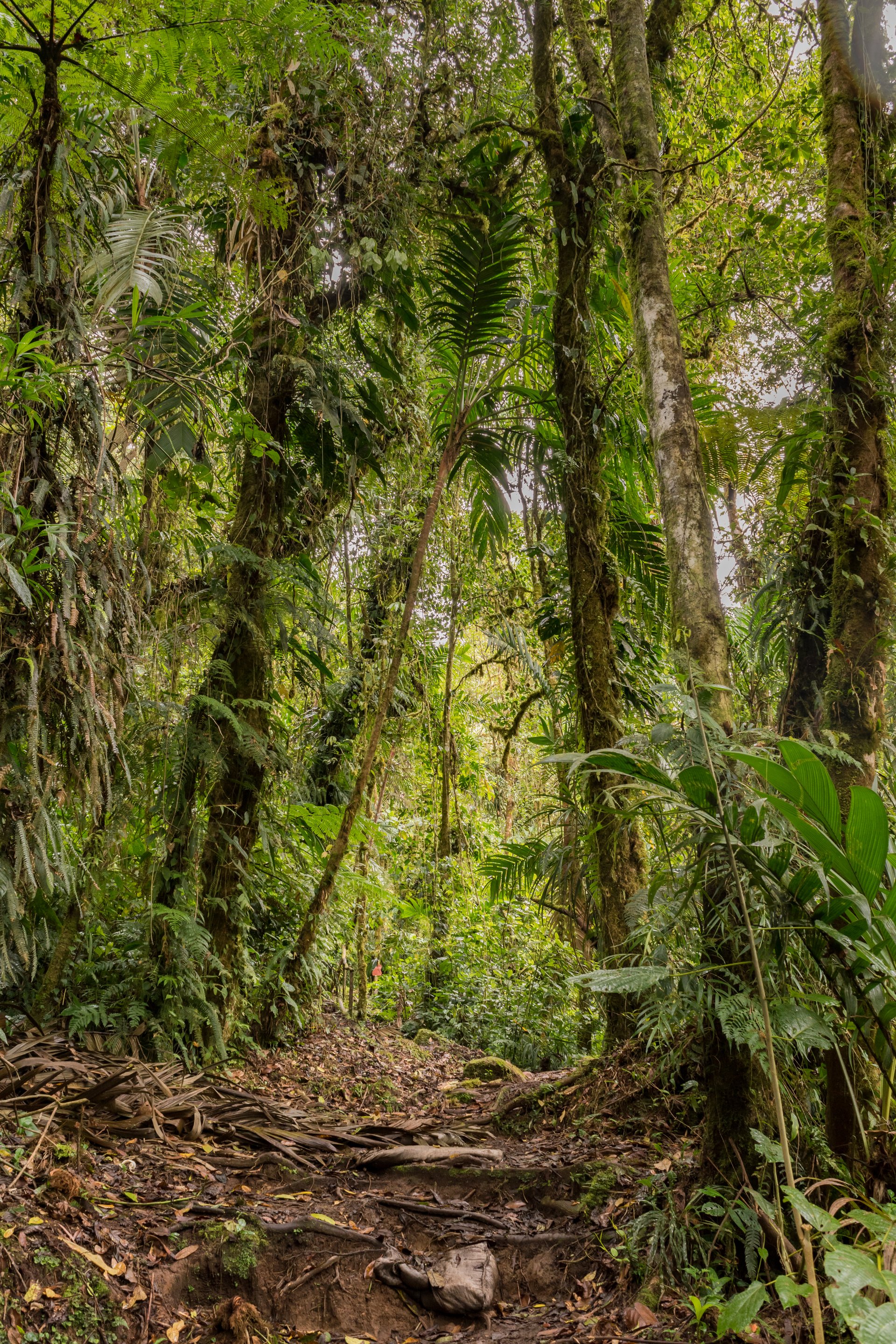
Deaths of Kris Kremers and Lisanne Froon
On the morning of April 1, 2014, Kris Kremers and Lisanne Froon set out on the El Pianista trail near Boquete, Panama. They had arrived in the country two weeks earlier, fresh from university in the Netherlands, planning to volunteer with local children and learn Spanish. Neither woman returned from the hike. What followed -- a frantic search, a backpack discovered ten weeks later on a distant riverbank, and 90 photographs taken in near-total darkness deep in the jungle -- turned a missing-persons case into an enduring mystery that has never been resolved.
Two Friends, One Trip
Kris Kremers was 21, recently finished with her studies in cultural social education at the University of Utrecht. Lisanne Froon, 22, had just graduated in applied psychology from Deventer. Both grew up in Amersfoort, in the Province of Utrecht. In the weeks before departure, Froon moved into Kremers' dorm room, and they worked together at a cafe called In den Kleinen Hap, saving money for the journey. The trip was meant as a graduation present for Froon and a chance for both of them to do meaningful work abroad. They arrived in Panama on March 15 and spent two weeks touring the country before settling in Boquete on March 29, moving in with a local host family.
Into the Cloud Forest
On April 1, around 11 a.m., Kremers and Froon headed toward the cloud forests surrounding Volcan Baru on the El Pianista trail, not far from town. Some accounts say they brought along a dog belonging to the owners of the Il Pianista restaurant. They had posted on Facebook that they intended to walk around Boquete, and witnesses reported seeing them at brunch with two young Dutch men before they set out. By the next morning, they had missed a scheduled appointment with a local guide. Five days later, on April 6, their parents flew from the Netherlands to Panama with police, dog units, and detectives. They offered a $30,000 reward. A ten-day search of the surrounding forests found nothing.
The Backpack and the Photographs
Ten weeks after the disappearance, on June 14, a woman from the village of Alto Romero in Bocas del Toro Province turned in Froon's blue backpack. She had found it by a riverbank. Inside were sunglasses, $88 in cash, Froon's camera, a water bottle, and both women's phones -- still in working condition. The phone data told a grim story. About six hours into the hike, at 4:39 p.m. on April 1, someone used Kremers' iPhone to dial 112, the international emergency number. Twelve minutes later, Froon's Samsung tried 911. Neither call connected -- there was no signal. Over the following days, the phones were turned on repeatedly to search for reception, the last time on April 11. On April 8, Froon's camera captured 90 flash photographs between 7 p.m. and 10 p.m. The images showed jungle in near-complete darkness: rocks, a ravine, a twig with plastic bags placed on a stone, and the back of Kremers' head.
What the River Gave Back
The backpack's discovery prompted searches along the Culubre River. Kremers' denim shorts turned up on a rock across the tributary. Over the following months, at least 33 bones were recovered along the same riverbank, scattered across a wide area. DNA testing confirmed they belonged to both women. Only about 10 percent of Froon's remains and 5 percent of Kremers' were ever found. A Panamanian forensic anthropologist examined the bones and reported finding no marks of any kind -- no scratches from animals, no signs of violence, nothing. Dutch authorities working with forensic specialists initially concluded that the women had most likely fallen from a cliff after becoming lost, but no official cause of death was ever determined. Panamanian authorities drew criticism for what many perceived as mishandling of the investigation.
An Unanswered Question
The case has generated intense speculation. Some point to the emergency calls and the desperate nighttime photos as evidence that the women were alive for days after becoming lost, struggling to signal for help in terrain with no cell coverage. Others have questioned why so few remains were found, and why the bones bore no marks at all. No theory -- accidental fall, foul play, exposure -- has ever been confirmed. The El Pianista trail remains open, winding through the same dense cloud forest above Boquete. Kremers and Froon were two young women at the beginning of their lives, hoping to do something meaningful in a beautiful place. What happened to them after they passed beyond the trail's end may never be known.
From the Air
The El Pianista trail begins near Boquete at approximately 8.78N, 82.44W, climbing into cloud forest on the flanks of Volcan Baru. The nearest airport is Enrique Malek International (MPDA) in David, about 40 km to the south. The remains were found along the Culubre River, which drains northeast into Bocas del Toro Province. From altitude, the area is a continuous canopy of dense tropical forest broken only by river corridors -- terrain that underscores how quickly a hiker can vanish.