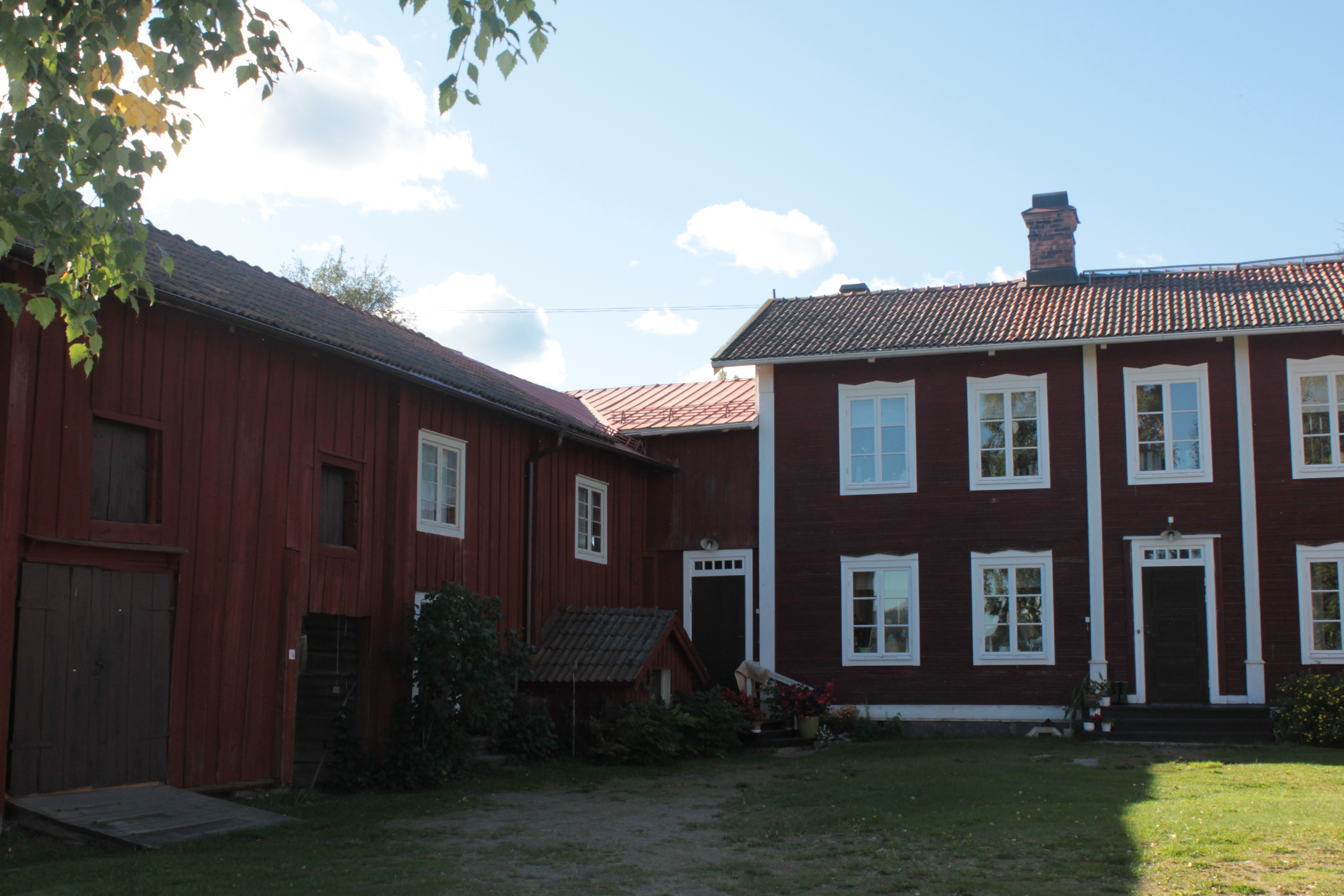
Decorated Farmhouses of Halsingland
Step inside a Halsingland farmhouse and time bends. The wooden walls explode with color - biblical scenes painted by wandering artists from Dalarna, ribbons and oversized flowers cascading across ceilings, cautionary tales illustrated beside depictions of local weddings and celebrations. Expensive imported wallpaper mingles with folk painting on the same surfaces. These are not aristocratic estates but the homes of farmers - timber-wealthy peasants who poured their fortunes into declarations of independence and taste that rivaled any European manor house. On July 1, 2012, UNESCO inscribed seven of these extraordinary buildings as a World Heritage Site, Sweden's fifteenth entry on the list.
Ambition in Timber
The uniqueness of the Halsingegårdar lies in the farmer's ambition to build big. These are not modest homesteads but two- and three-story mansions constructed entirely of wood, reflecting rural building techniques evolved over centuries. Some farms contained multiple dwelling houses serving different purposes: one for daily life, one for sleeping (the so-called 'bed-cottages'), and others reserved solely for festivities and celebrations. Families spanning multiple generations lived under these elaborately decorated roofs. Each parish developed its own construction style, expressed most dramatically in the lavish front porches and elaborate entrances that announced a family's status before visitors crossed the threshold.
Artists on the Road
The interiors of these farmhouses represent something unique in world culture. Wandering painters from Dalarna brought their distinctive decorative style westward - religious motifs, flowing ribbons, and flowers so large they seem to bloom from the walls themselves. Biblical stories were transplanted into Halsingland settings, with familiar Swedish landscapes and faces replacing Middle Eastern scenes. Funny stories and moral warnings mixed freely with devotional imagery. The farmers combined this folk painting with expensive imported wallpaper, stenciled decorations flowing across walls, ceilings, and fireplaces in continuous visual narratives. Nowhere else on Earth has such a concentration of well-preserved painted interiors survived in their original locations.
The Seven Chosen
The path to World Heritage status took two attempts. The initial 1990s nomination proposed fifteen sites, including an entire village - a heterogeneous collection representing agrarian culture across Halsingland. The UNESCO conference in Sevilla rejected this sprawling proposal in 2009, suggesting a more focused selection. The successful second nomination concentrated specifically on the tradition of decoratively painted interiors. Seven farmhouses were ultimately selected across four municipalities: Gastgivars in Vallsta (Bollnas Municipality), Bommars and Bortom åa and Kristofers in Ljusdal Municipality, Jon-Lars and Pallars in Ovanåker Municipality, and Erik-Anders in Soderala (Soderhamn Municipality). Each represents the finest and best-preserved examples of the Halsingland decorative tradition.
A Working Landscape
A Halsingland farm was never just a house. The farmstead functioned as a complete production unit, with outbuildings freely scattered outside the central courtyard: grand barns, log cabins, smithies, breweries, grain storage houses, stables, and liveries. By the late 19th century, many of these separate structures were consolidated into large multifunctional buildings housing everything under one roof. Beyond the immediate farm lay connected infrastructure - mills, waterworks, and summer grazing farms in the highlands. The village structures themselves have roots stretching back to prehistoric times, only partly altered from their medieval layouts. Around a thousand Halsingland farmhouses survive today across the province.
Windows Into Another World
Walking through these farmhouses today means walking through time. The profiled roof-bases, the elegantly carved joinery around windows, the beautifully decorated doorways - all speak to 19th-century craftsmanship at its peak, though some older farms preserve low, unpainted houses arranged in traditional square configurations around central yards. Early 20th-century additions brought the exuberant 'carpenters joy' style with its large porches and decorative woodwork. Coastal parishes, lacking porches, invested instead in costly doors and elaborate fittings. Every element communicated wealth, independence, and the determination of farming families to build monuments worthy of their success in extracting prosperity from the forests and thin soils of northern Sweden.
From the Air
The Decorated Farmhouses of Halsingland are spread across central Sweden's Halsingland province, with the UNESCO-listed sites located near coordinates 61.71N, 16.20E. The seven World Heritage farmhouses span four municipalities: Bollnas, Ljusdal, Ovanåker, and Soderhamn. From the air, the farmhouses appear as timber complexes with red-painted exteriors set among agricultural clearings in the extensive forested landscape. Nearest airports include Hudiksvall (ESNH) and Soderhamn (ESNY). The terrain is rolling forested country descending toward the Gulf of Bothnia. Best viewed at 2,000-4,000 feet to distinguish the farmstead layouts. The surrounding landscape of forests and small agricultural villages reflects the historical context that produced these remarkable buildings.