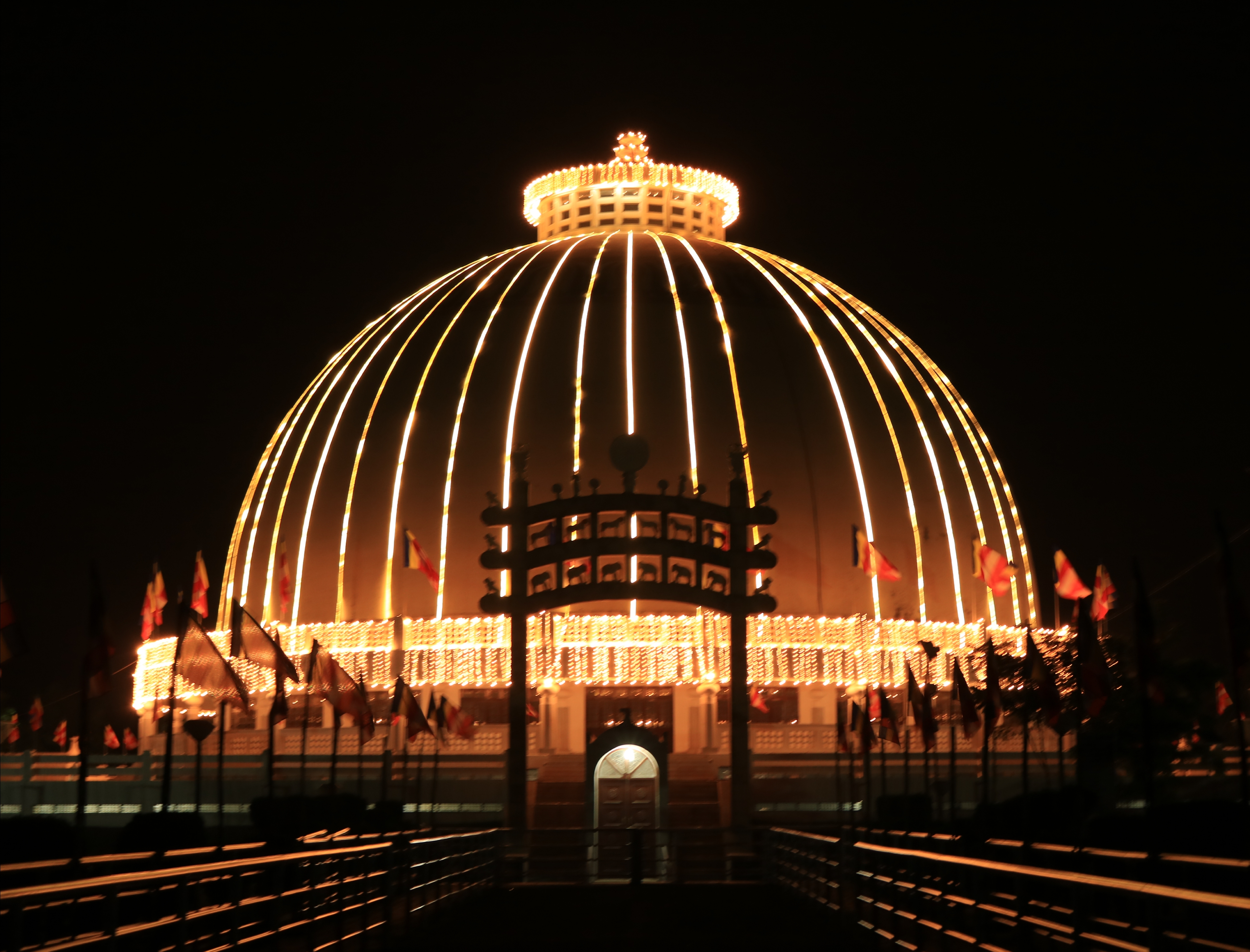
Deekshabhoomi
On October 14, 1956, B. R. Ambedkar stood before hundreds of thousands of followers in Nagpur and took the oath of the Three Jewels and Five Precepts from the Burmese monk Mahasthavir Chandramani. Then he turned and administered the same oath - along with his 22 Vows - to the assembled crowd. In a single ceremony, Ambedkar and his followers, overwhelmingly Dalits, renounced Hinduism and embraced Buddhism. It was the largest mass religious conversion ever held at one location. Ambedkar died seven weeks later. The ground where it happened - Deekshabhoomi, "the land of initiation" - is now home to the largest hollow stupa in the world and draws millions of pilgrims each year.
A Promise Kept After Twenty Years
Ambedkar had declared his intention in 1935: though born a Hindu, he would not die as one. The caste system, he believed, could not be reformed from within. Conversion was the only path to dignity for the millions classified as untouchable. He spent the next two decades studying the doctrines of every major world religion before choosing Buddhism - a faith born in India, rooted in equality, and free of the hierarchies that had defined his people's suffering.
He chose Nagpur deliberately. As he explained in his speech that day, Nagpur was the homeland of the Nag people, who had embraced Buddhism in its early centuries and helped propagate it across the subcontinent. The ceremony ground near the Ramdaspeth area was selected, and on that October morning, Ambedkar set in motion a spiritual revolution that would outlive him. He took his vows from Chandramani of Kushinagar, then passed them to the crowd. Nagpur became the birthplace of the Navayana Buddhist movement.
The Conversion That Continued
Ambedkar died on December 6, 1956, seven weeks after the Deeksha ceremony. But the conversion he initiated did not die with him. By March 1959, between fifteen and twenty million people had followed his example. The movement spread across Maharashtra and into other states, driven by a conviction that spiritual liberation and social justice were inseparable.
After his death, the Dr. Babasaheb Ambedkar Deekshabhoomi Memorial Committee was organized to manage the site. The committee resolved to build a stupa - not as a tomb, but as a monument to the ceremony itself and to the ongoing conversions it inspired. Deekshabhoomi became the first pilgrimage center of Ambedkarite Buddhism in India, paired in significance with Chaitya Bhoomi in Mumbai, where Ambedkar was cremated.
The Hollow Stupa
Construction began modestly in 1968 with residential quarters for monks and a postgraduate college. Work on the stupa itself started in July 1978, but progress was slow. It took more than two decades to complete. On December 18, 2001, President K. R. Narayanan inaugurated the finished structure. Unlike the ancient stupa at Sanchi, Deekshabhoomi's stupa is completely hollow inside - the largest of its kind among all Buddhist stupas in the world. The site covers four acres of central Nagpur, and statues of Ambedkar and images of Gautama Buddha stand before the stupa's entrance.
The architecture is meant to be experienced, not merely observed. The hollow interior creates a meditative space that connects the Buddhist tradition of stupa worship with the specific history of what happened on this ground. It is simultaneously ancient in form and modern in purpose.
The Bodhi Tree and the Vihara
To the right of the stupa stands a Buddha Vihara housing a bronze image of the Buddha. Beside it grows a Bodhi Tree - a sacred fig planted from three branches of the ancient Bodhi Tree at Anuradhapura in Sri Lanka. Bhadant Anand Kausalyayan brought the cuttings as a living memorial to the Buddha's enlightenment, connecting Deekshabhoomi to the oldest continuous Buddhist traditions in Asia.
The tree has grown in Nagpur's soil for decades now, rooted in a city that Ambedkar chose for its ancient Buddhist connections. The symbolism is layered: a tree descended from the tree under which Siddhartha Gautama attained enlightenment, growing at the site where millions of people sought their own form of liberation from a system that had denied them full humanity for centuries.
Pilgrimage and Memory
Every year on October 14 - Dhamma Chakra Pravartan Din - millions gather at Deekshabhoomi to commemorate the original conversion. The Government of Maharashtra has graded it an A-class tourism and pilgrimage site. On that single anniversary day, books worth crores of rupees are sold in multiple languages, and thousands of recordings of Ambedkar's speeches and Buddhist songs change hands. Foreign visitors arrive primarily from Japan and Thailand.
Deekshabhoomi is not a quiet monument. It is an active site of devotion, education, and political identity. What Ambedkar began here was not merely a change of faith but a declaration that the caste system's grip could be broken. The stupa marks the spot. The pilgrims who return each year are the living proof.
From the Air
Deekshabhoomi is located at 21.13N, 79.07E in central Nagpur, Maharashtra. The large white stupa is visible from the air as a distinctive dome in the urban landscape, covering four acres near the Ramdaspeth area. Dr. Babasaheb Ambedkar International Airport (VANP/NAG) is the nearest major airport, approximately 8 km southwest of the site. Nagpur sits at the geographic center of India, making it a natural hub. The terrain is flat Deccan Plateau. Best viewed at 1,500-3,000 feet in clear conditions; the white stupa contrasts sharply with the surrounding urban development.