Deepwater Horizon Explosion
Two hours before the Deepwater Horizon exploded, BP Vice President of Drilling Patrick O'Bryan stood on its deck celebrating. The occasion was seven years without a lost-time incident. The rig's safety record was, by one measure, exemplary. By another measure, it was a dangerous illusion. Workers had been entering fake safety data into the system. A confidential Transocean survey, conducted just weeks earlier, found that crew members feared reprisals for reporting problems. The blowout preventer had been damaged in an unreported accident in late March. And on that very evening, a BP official on board ordered the crew to replace heavy drilling mud with lighter seawater, over the chief driller's protests, even as equipment readings showed gas bubbling into the well.
The Rig That Drilled the Deepest
Deepwater Horizon was a fifth-generation, ultra-deepwater, dynamically positioned, semi-submersible drilling rig, built by Hyundai Heavy Industries in South Korea and completed in 2001. It was owned by Transocean, operated under the Marshallese flag of convenience, and leased to BP until September 2013. The rig had set records, including drilling the deepest underwater oil and gas well in history. In February 2010, it began work on an exploratory well at the Macondo Prospect in the Gulf of Mexico, Mississippi Canyon Block 252, roughly 40 miles off the Louisiana coast. The well was over budget. BP Gulf of Mexico Exploration Manager David Rainey was pressuring engineers to finish and move on. Technical staff wanted to re-squeeze the well's cement job. Rainey refused. No cement bond log was run. The well that Deepwater Horizon was drilling was supposed to be plugged and suspended for later completion. It would never be completed.
A Cascade of Warnings Ignored
The trail of red flags stretched back years. The US Coast Guard had issued pollution citations for Deepwater Horizon 18 times between 2000 and 2010 and investigated 16 fires and other incidents. In 2008, 77 people had been evacuated from the platform when it tilted and began to sink after pipe was incorrectly removed from the ballast system. Internal BP documents from 2009 showed engineers worried that the metal casing might collapse under high pressure. The American Bureau of Shipping had last inspected the rig's blowout preventer in 2005. Between 2008 and February 2010, Transocean owned 42 percent of active Gulf rigs but was responsible for 73 percent of incidents triggering federal investigation. The Department of the Interior had exempted BP's Gulf drilling from a detailed environmental impact study, concluding a massive spill was unlikely. Following loosened regulations in 2008, BP was not even required to file a blowout plan.
Nine Minutes That Changed Everything
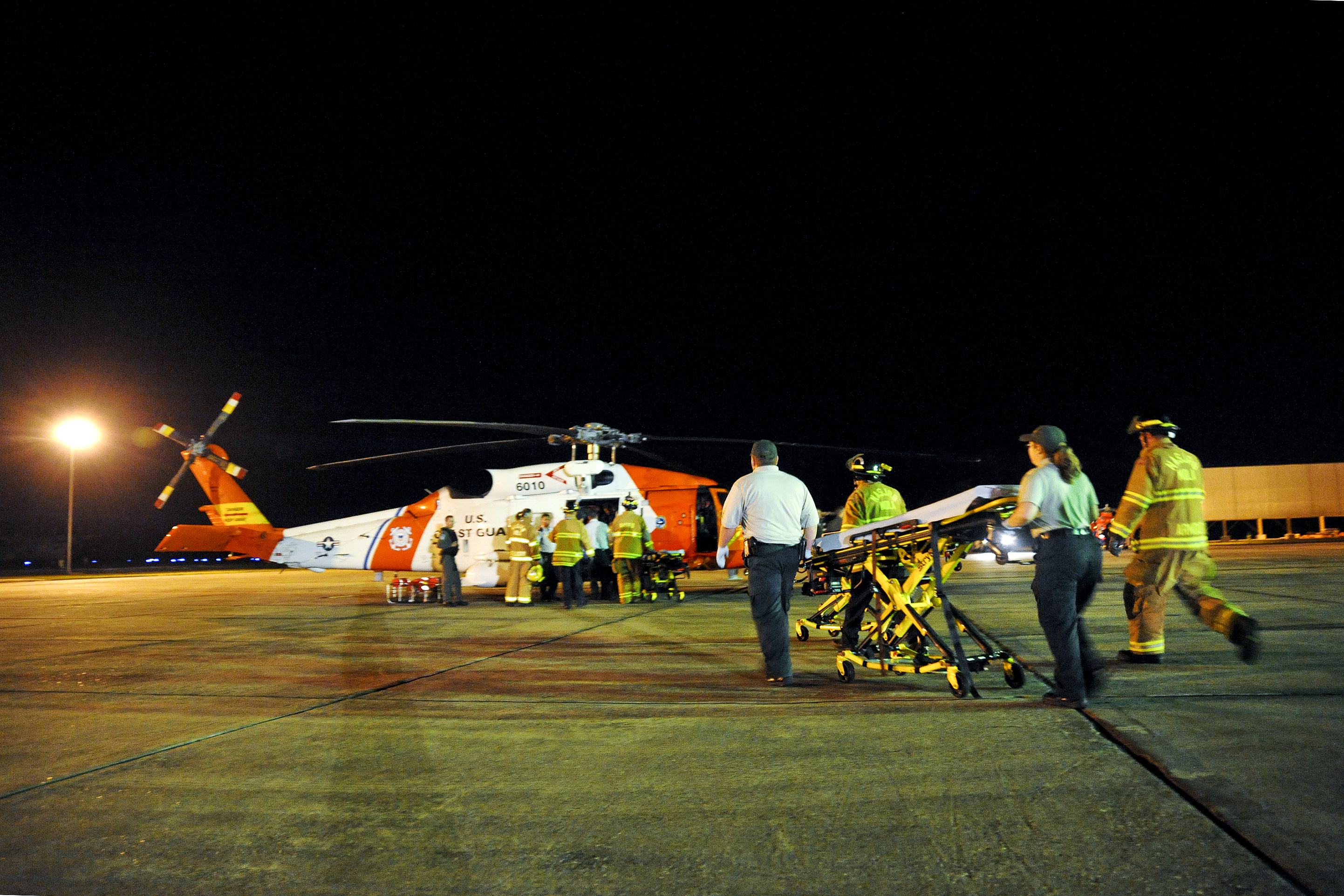
The fire reportedly started at 9:49 PM Central Daylight Time on April 20, 2010. Abnormal pressure had accumulated inside the marine riser. As the gas came up, it expanded rapidly and ignited. The explosion was followed by a fire that engulfed the entire platform. Of the 127 people on board, 79 were Transocean employees, seven from BP, and 40 contracted workers. Lifeboats carried 94 workers to the supply boat Damon Bankston. Seventeen were evacuated by helicopter to trauma centers in Mobile, Alabama, and Marrero, Louisiana. Eleven workers were never found. They were almost certainly near the blast, unable to escape the sudden explosion. Jason Anderson, 35. Donald Clark, 49. Stephen Ray Curtis, 40. Aaron Dale Burkeen, 37. Gordon Jones, 28. Roy Wyatt Kemp, 27. Karl Kleppinger Jr., 38. Keith Blair Manuel, 56. Dewey Revette, 48. Shane Roshto, 22. Adam Weise, 24. After burning for more than a day, the Deepwater Horizon sank on April 22.
The Reckoning
BP's own investigation identified eight failures that led to the disaster: a misinterpreted pressure test, a leak spotted too late, a failed blowout preventer valve, an overwhelmed mud-gas separator, a failed gas alarm system, and a flat battery with a defective switch inside the blowout preventer itself. The well had needed 21 centralizers; only 6 were installed. A cement bond log that would have cost $128,000 and taken 12 hours was never performed. In September 2014, US District Judge Carl Barbier ruled BP guilty of gross negligence and willful misconduct, apportioning 67 percent of blame to BP, 30 percent to Transocean, and 3 percent to Halliburton. He described BP's actions as reckless. By July 2015, BP reached an $18.7 billion settlement with the US government and five Gulf states. A 2018 analysis published in the Journal of Corporate Accounting and Finance estimated the ultimate cost of the spill at $145.93 billion.
Open Water, Empty Horizon
There is nothing to see at 28.74 degrees north, 88.39 degrees west. The Gulf of Mexico stretches flat and featureless in every direction. No wreckage marks the spot where Deepwater Horizon once operated. The rig lies on the seafloor, roughly 5,000 feet below the surface. But the consequences of what happened here radiate outward across the entire Gulf Coast. The spill contaminated coastlines from Louisiana to Florida. It killed an estimated one million seabirds. Dolphins continued dying at six times the normal rate three years later. Infant dolphins washed ashore with underdeveloped lungs. Oil embedded itself in the seafloor and entered the food chain through zooplankton. The eleven names from the memorial service echo across an empty sea. What happened here was not just an industrial accident. It was the collision of corporate pressure, regulatory failure, and engineering hubris at the edge of what technology could do.
From the Air
Located at 28.74N, 88.39W in the open Gulf of Mexico, approximately 40 nautical miles southeast of the Louisiana coast. There are no visual landmarks at the site; the location is open water. The nearest landfall is the Mississippi River delta complex to the northwest. Nearest airports include Venice Heliport (LA34) for helicopter operations, and New Orleans Lakefront (KNEW) or Louis Armstrong International (KMSY) approximately 100 nm to the northwest. The area falls within the Gulf of Mexico Special Use Airspace. Expect offshore weather patterns including sea fog and cumulus buildup. Best viewed at 1,000-3,000 feet AGL, though there is nothing visible on the surface today.