Delft Island
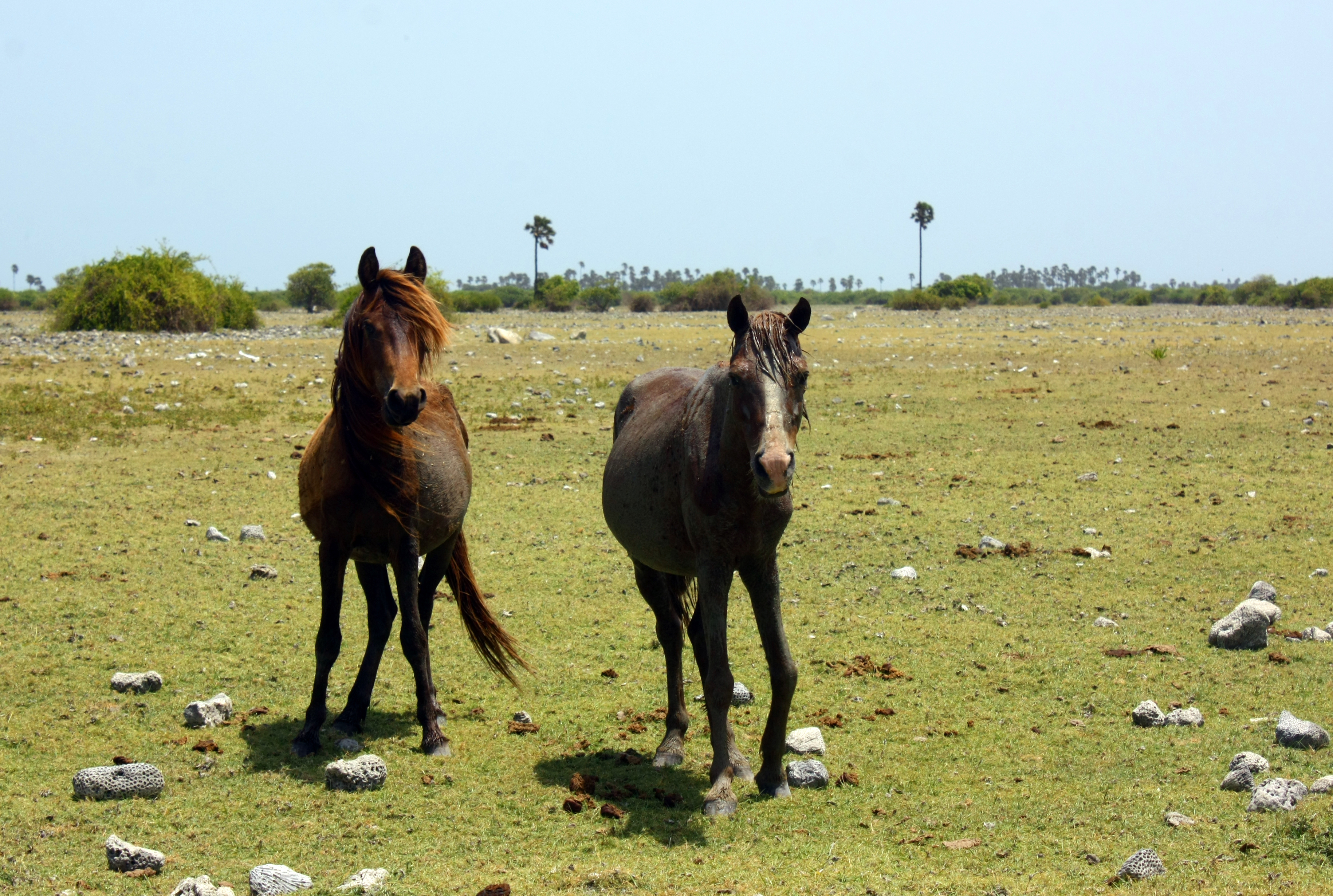
The ponies notice you before you notice them. They stand among the scrub and broken coral walls of Delft Island's southern half, watching with the mild suspicion of animals whose ancestors arrived on Portuguese ships four centuries ago and who have long since stopped expecting anything useful from human beings. The island has two names that matter - Delft, given by a Dutch governor who renamed everything he touched, and Neduntivu, the Tamil name meaning 'long island,' which is what the people who actually live here call it. At 62 square kilometers, roughly the size of San Marino, it sits at the far edge of Sri Lanka's northern archipelago, a place where every colonial power left its fingerprints and where the sea has been slowly rubbing them away ever since.
Everyone Left Something Behind
The Portuguese came first and brought horses, building a coral-stone fort to guard the sea lanes. The Dutch arrived in the mid-seventeenth century, and under their rule most islanders converted to Catholicism. Many local families still carry Dutch surnames. The British turned the island into a resource extraction operation - flax for the navy, horses for the army. But it was Edward Nolan, an Irish-born army lieutenant who administered Delft from 1811 to 1824, who left the most visible and the most personal mark. He built the low drystone coral walls that still crisscross the island, constructed in the style of his native Ireland. He also left behind a generation of grey-eyed children - the product of what colonial records delicately termed 'dalliances' with local women. Nolan was tried for abuse of power in 1819. He was found not guilty. The grey eyes persisted.
An Island of Palms and Ponies
Nearly all of Delft's 4,800 residents live in the northern half, clustered around two small settlements connected by a single paved road. The southern half belongs to scrub, Palmyrah palms, and aloe vera - land too poor for farming, too flat for shelter, too dry for much of anything. The feral ponies roam this territory freely. Descended from horses the Portuguese and Dutch bred for the India trade, they are small, tough, and accustomed to scarcity. An enormous baobab tree - a species native to sub-Saharan Africa, likely brought by Arab traders - rises improbably from the flat landscape, one of only three large baobabs in Sri Lanka. There are no cars on the island. Visitors get around by bicycle or tuktuk, and the occasional tractor-trailer willing to take on a passenger.
The Crossing
Reaching Neduntivu requires commitment. From Jaffna, a bus runs to the Kurikadduwan jetty, an hour's ride through the northern lowlands. From there, ferries cross to the island - four per day on weekdays, two on Sundays. Local residents board first, and during busy periods tourists may wait for the next boat or be turned away entirely. The free ferry is, by most accounts, a miserable experience - a covered vessel packed with seasick passengers on a notoriously choppy crossing. The better option, if the weather cooperates, is the small wooden cargo boat, open-air and gentler on the stomach, for about 200 rupees. Prices on the island run higher than mainland Sri Lanka, because everything - food, fuel, building materials - arrives on these same small boats.
Scars That Haven't Healed
The Sri Lankan civil war hit Delft hard. Around 1990, many residents were displaced from their homes, and organized economic activity beyond subsistence farming and fishing collapsed. Some families returned after the war ended in 2009, but many did not. Abandoned houses stand throughout the island, slowly being reclaimed by scrub and weather. Youth unemployment remains high, driving emigration to the mainland. In December 2007, a naval battle erupted in the waters off the island when the Sri Lanka Navy intercepted a cluster of boats. The island's clinic is understaffed, the nearest hospital is on Kayts, and medical evacuation depends on the navy. For all its beauty and deep history, Neduntivu carries the weight of decades of conflict that displaced communities and dismantled livelihoods across Sri Lanka's Tamil north.
The End of the Road
Delft is, quite literally, the end of Sri Lanka. There is no onward passage - no ferry to India, no connection further west. You come here, and then you go back the way you came, through Kurikadduwan to Jaffna. The island's beaches are empty, the sand soft near the main settlement and giving way to broken coral elsewhere. All mobile networks reach the island, but the infrastructure is thin. The provincial government has discussed developing Delft for tourism, and as of recent years the island remains wonderfully, stubbornly rustic. It is a place where the pace of life is set by ferry schedules and the availability of palm toddy at the single bar. For those willing to make the crossing, Neduntivu offers something increasingly rare: a place where the rest of the world feels genuinely far away.
From the Air
Located at 9.48N, 79.72E in the Palk Strait, northwest of the Jaffna Peninsula. The island is flat and roughly 62 square kilometers, easily visible from altitude as a low-lying landmass surrounded by shallow turquoise waters. Look for the distinctive pattern of coral walls dividing the landscape. The nearest airport is Jaffna International Airport (VCCJ), approximately 50 km to the east. Palaly Air Force Base is also nearby. Best viewed at 3,000-5,000 feet for the full island shape. The Palk Strait between Sri Lanka and India stretches to the northwest. The ferry route from Kurikadduwan jetty is visible as a line of small vessels crossing the channel.