Dendermonde Nursery Attack
Leon Garcia-Mannaert was eight months old. Corneel Vermeir was nine months old. Marita Blindeman was fifty-four, a childcare worker who reached for the wall phone in the kitchen of Het Fabeltjesland and tried to call the police while a young man in face makeup walked toward her with a kitchen knife. None of them came home from work that day. Their names belong at the top of any honest telling of what happened in Sint-Gillis-bij-Dendermonde on 23 January 2009, because everything else about that morning - the manhunt, the trial, the diagnoses, the talk-show fascination with a 20-year-old who quoted Batman villains - has a way of crowding them out.
The Babies Who Were There
Het Fabeltjesland sat on a quiet street in the village of Sint-Gillis-bij-Dendermonde, a few minutes' drive from Dendermonde itself. On the morning of the attack, eighteen infants and toddlers were inside, with six adults looking after them. Leon Garcia-Mannaert was playing on the floor near a small wooden castle in the playroom. Corneel Vermeir was there with the other babies. Both were under a year old, the age when a child has only just learned to laugh out loud and reach for a familiar face. Two more infants survived the attack with terrible injuries; six children between one and three years old were seriously hurt; four more had lighter wounds; nine somehow escaped untouched. Every parent in the country, that afternoon, did the math on their own children and felt sick.
Marita at the Kitchen Phone
Marita Blindeman, fifty-four, was a childcare worker at Het Fabeltjesland. When the attacker forced his way past a colleague named Rita Van Geyte and into the daycare's kitchen, Marita was the one who reached for the phone on the wall. She was dialing for help when she was killed. There is a particular kind of bravery that is recorded only by what someone was doing with their hands when they died, and Marita's last act - trying to summon the police while a stranger came for her - is the kind of bravery that does not make speeches. It is the daily, ordinary courage of someone who chose to work in a building full of babies.
A Country That Did Not Look Away
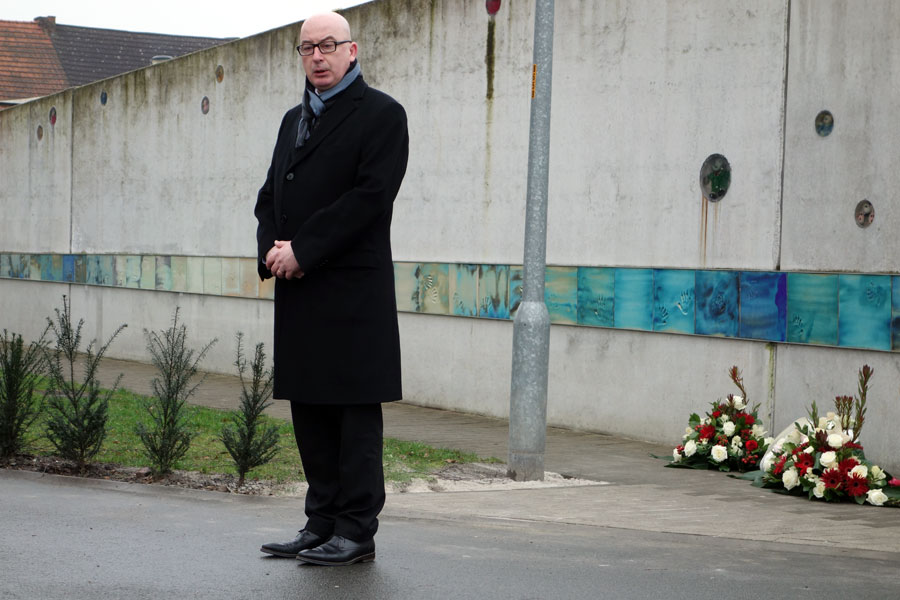
Two days after the attack, around 6,000 people walked through Dendermonde in silence. They left flowers and stuffed animals outside Het Fabeltjesland - small bears and rabbits piled at a door that would never reopen. Mayor Piet Buyse announced that the daycare would close for good. In Italy, the songwriter Luciano Ligabue wrote 'Quando mi vieni a prendere? (Dendermonde 23/01/09)' for the album Arrivederci, mostro! - a lullaby addressed, in effect, to a child who would not be picked up. Belgium is a small country. Two babies and a childcare worker, on a Friday morning, in a village most foreigners had never heard of, became a wound that the whole place had to carry.
The Trial, and the Things It Refused to Excuse
The attacker was Kim De Gelder, a twenty-year-old from nearby Sinaai. He had killed an elderly woman, Elza Van Raemdonck, in Beveren only seven days earlier - on January 16 - posing as a water inspector to talk his way into her house. When police caught him an hour after the daycare attack, he was carrying a list of nurseries and riding toward another one in Dendermonde. His lawyers argued schizophrenia; psychiatrists countered that he was faking psychosis and diagnosed schizotypal personality disorder with psychopathic and narcissistic traits. In March 2013, after a long trial, a jury found him sane, fully accountable, and guilty of four counts of murder. He was sentenced to life imprisonment. The early tabloid framing - the Joker, the Batman quotes, the face paint - was largely dismantled in court, where the prosecution and even his own attorney pushed back on the comic-book costume narrative. What remained was bleaker and more honest: a young man who had chosen, and planned for months, to hurt the most defenseless people he could find.
What Dendermonde Carries
Visit Dendermonde today and you find a working Flemish city of about 46,000 - the belfry on the Grote Markt, the béguinage tucked behind its quiet walls, both UNESCO sites; the Onze-Lieve-Vrouwekerk with its Van Dycks; the river Dender sliding into the Scheldt. Every ten years the Ros Beiaard procession fills the streets, four brothers riding a wooden horse through a crowd that hands the tradition forward like an heirloom. Sint-Gillis is one of the villages folded into the municipality, the kind of place where everyone is one degree of separation from everyone else. The Fabeltjesland building does not exist as a daycare anymore. Leon. Corneel. Marita. The country remembers, and the city, when asked, remembers very precisely: not the man, but the names.
From the Air
Coordinates 51.019°N, 4.111°E, on the Flemish plain east of Ghent and west of Antwerp. Sint-Gillis-bij-Dendermonde sits just south of central Dendermonde, where the river Dender meets the Scheldt. Best viewed at 3,000-5,000 ft. Nearest airports: Antwerp International (EBAW) to the northeast, Brussels (EBBR) to the south.