Deoksugung
Walk through the Daehanmun gate on a busy Seoul afternoon and you enter a palace that looks like no other in Korea. To your left, traditional wooden halls with curved tile roofs sit on granite platforms. To your right, Seokjojeon -- a neoclassical stone building that would not look out of place in London -- stares back across a Western-style garden with a fountain. Deoksugung is the architectural evidence of a nation trying to reinvent itself at the turn of the twentieth century, and of what happened when that effort failed.
A Palace Born From Crisis
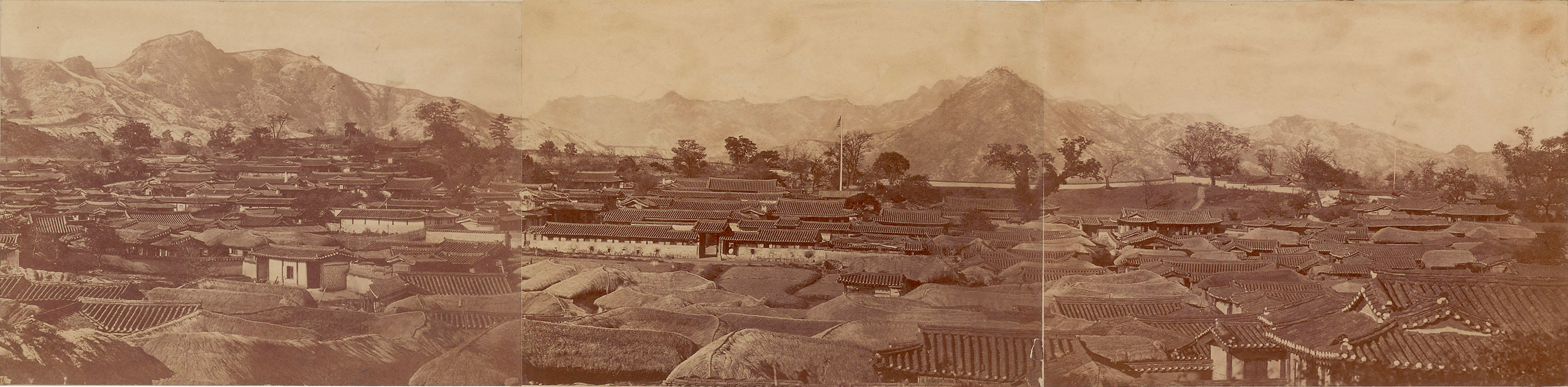
Deoksugung was never meant to be a primary royal residence. When the Japanese invasions of the 1590s destroyed every palace in Seoul, King Seonjo took shelter in a cluster of aristocratic homes on this site and called it a temporary palace. It was formalized under the name Gyeongungung in 1611, then largely forgotten for nearly three centuries as the royal court preferred Changdeokgung and, later, a rebuilt Gyeongbokgung. Everything changed on October 8, 1895, when Japanese agents murdered Queen Min inside Gyeongbokgung. A terrified King Gojong fled to the Russian legation for protection. When he finally emerged in February 1897, he chose not to return to the palace where his wife had been killed. Instead, he moved into Gyeongungung -- close to the foreign legations whose proximity he hoped would deter further Japanese aggression -- and declared the founding of the Korean Empire.
An Emperor's Ambition in Stone
Gojong threw himself into transforming the modest compound into a palace worthy of an empire. He acquired land from neighboring properties, expanding the grounds in three directions. He ordered roads around the palace reconstructed and imposed height restrictions on surrounding buildings to prevent them from overlooking the royal quarters. What made Deoksugung distinctive was the architecture Gojong commissioned. Alongside traditional Korean halls like Junghwajeon, the throne hall completed in 1906, he built Jeonggwanheon -- a brick pavilion with Romanesque columns and a Korean-style roof -- and began construction of Seokjojeon, a neoclassical stone building designed and furnished by British architects. Seokjojeon was completed in 1910, just months before Japan formally annexed Korea. The building Gojong intended as a symbol of Korean modernity became instead a monument to a sovereignty that vanished almost the moment the mortar dried.
Dismantled by Degrees
After Gojong's death in 1919, the colonial government wasted no time reducing the palace. The ancestral worship hall Seonwonjeon and its grounds were sold off first; two schools replaced it by 1923. By 1930, only eighteen original buildings remained. In 1933, the authorities converted part of the palace into a public park they named Central Park, removing ten more structures. Colonial planners proposed building a swimming pool and winter skating rink where the audience hall Dondeokjeon once stood -- a plan scrapped only because it was deemed too offensive to the palace's legacy. The gardens were replanted with peonies that became a popular colonial-era attraction. In 1985, decades after liberation, the peonies were torn out and replaced with pine trees and azaleas once someone realized the flower beds were themselves a product of the occupation. Today, scholars estimate Deoksugung occupies roughly one-third of its peak area.
Restoration as Reckoning
The palace survived the Korean War largely intact, though Seokjojeon's interior was gutted by fire. After liberation, the U.S. military government seized the building for joint commission meetings on Korean reunification, and the Korean Provisional Government used it for sessions as well. Meaningful restoration began in the 1980s and accelerated with a comprehensive plan adopted in 2004. Jungmyeongjeon, the hall where Korea's sovereignty was signed away in the 1905 protectorate treaty, was restored in 2009. Seokjojeon was meticulously returned to its early-twentieth-century appearance and reopened in 2014 as the Daehan Empire History Museum. In 2018, the gate Gwangmyeongmun was moved back to its original position after being displaced for eighty years. Each act of restoration is both architectural repair and national statement -- an insistence that what the colonial period took can, stone by stone, be put back.
Between Two Worlds
What makes Deoksugung unlike any other palace in Seoul is that the collision of styles was intentional. Gojong was not confused; he was making a deliberate argument. The traditional halls declared continuity with a five-hundred-year dynasty. The Western buildings declared that Korea could engage with the modern world on its own terms. The Changing of the Guard ceremony at Daehanmun, performed daily, draws crowds much as the ceremony at Gyeongbokgung does. But the mood inside is different -- smaller, more intimate, haunted by the knowledge that this palace was the last bastion of a king running out of options. The famous Deoksugung Stonewall Walkway traces the old palace wall along a tree-lined path popular with couples, though a persistent urban legend claims that couples who walk it together are destined to break up -- a superstition some trace to the nearby family court where divorce proceedings are held.
From the Air
Located at 37.566N, 126.975E in the Jung District of central Seoul, adjacent to Seoul City Hall. The mix of traditional Korean and Western-style buildings is visible at 2,000-3,000 ft AGL. The neoclassical Seokjojeon stands out among the traditional rooflines. Nearby airport: Gimpo International (RKSS), approximately 12 nm west.