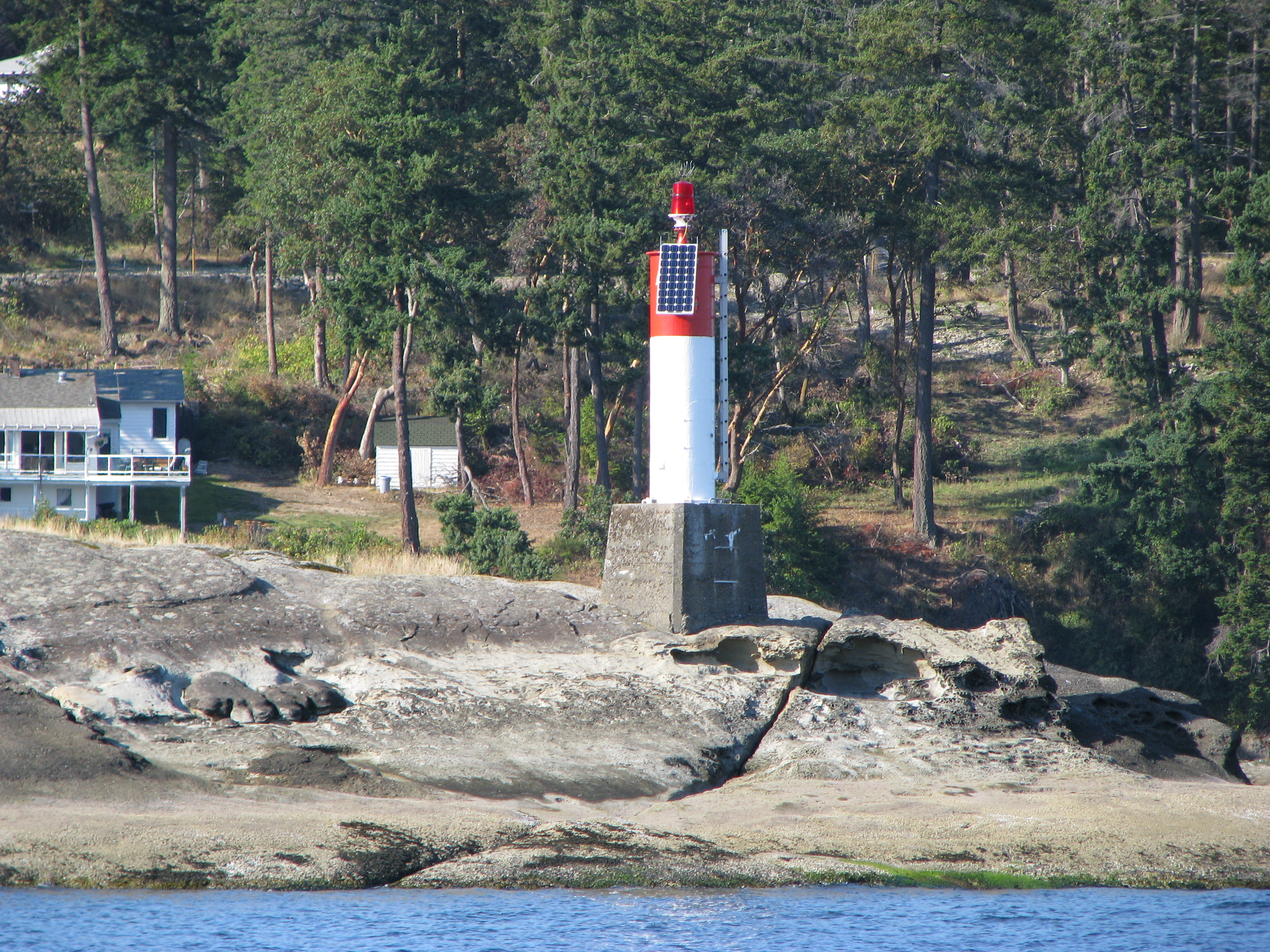
Departure Bay
On January 15, 1913, the SS Oscar was loaded with dynamite, black powder, and coal when Captain Alexander McDonald realized two things at once: the weather was too bad to proceed past Entrance Island, and there was a fire near the ship's boilers. He turned the vessel around, ran it aground at Execution Point near Protection Island, and led his crew down a ladder and into an abandoned mineshaft. The resulting explosion destroyed the mine's above-ground workings, fractured the rock down to where miners were working underground, shattered windows across Nanaimo, and stopped the post office clock at 1:55. Departure Bay, the Nanaimo neighbourhood where the explosives had been manufactured, had just demonstrated -- in the most literal way possible -- why it needed to stop making dynamite.
Bocas de Winthuysen
Long before explosives, there was coal, and before coal, there were the Snuneymuxw, who had inhabited the area for at least 2,000 years. They called this place Stil'ilup. Spanish naval officer Francisco de Eliza named the broader area -- including the bay, Nanaimo Harbour, and Northumberland Channel -- Bocas de Winthuysen in 1791. Representatives of the Hudson's Bay Company arrived around 1852 and renamed it Departure Harbour, a name that appeared as Departure Bay on maps by 1855. The first European settlers -- William Joseph Hughes, Samuel Harris, and John and Barbara Christie -- arrived around 1861, claiming land through pre-emption, a method the Crown used to quickly sell unsurveyed territory. When coal was discovered in nearby Wellington in the late 1860s, Departure Bay became the rail terminus for shipping it out, and a boomtown grew around the wharves.
Black Powder Road
The bay's most volatile chapter began when the Hamilton Powder Company built an explosives manufacturing plant on 100 acres of shoreline in 1892, producing nitroglycerin, black powder, dynamite, and stumping powder. The road connecting this plant to another facility in Northfield was called Black Powder Road, and dangerous goods were transported by wagon along it with a regularity that made catastrophe a matter of when, not if. In 1896, a wagon carrying nitroglycerin blew up, killing the driver and his horses. Accidents and death became commonplace. In 1910, the Hamilton Powder Company merged with six others to form Canadian Explosives Limited, but consolidation did not bring safety -- three years later, the SS Oscar disaster proved that spectacularly. Citizens demanded an inquiry, and CXL purchased James Island in Haro Strait to relocate operations. World War I delayed the move, and it took until May 1919 to decommission the Departure Bay facility. British Columbia's first telephone had been strung between a coal wharf in this bay and the Wellington mines; by the time the explosives left, the bay had earned a quieter reputation.
Islands, Science, and Salteries
Departure Bay is framed to the southeast by Saysutshun, formerly Newcastle Island, a provincial marine park with a layered history of mining, quarrying, herring salteries, and tourism. Jesse Island and the smaller Brandon Islands sit near the northern shore, both named in 1853 after sailors on HMS Virago. Brandon Island carries its own history of Japanese fish canneries and salteries. On the bay's north shore, the Pacific Biological Station has operated since 1908, when the Reverend George William Taylor became its first director and sole employee. It is the oldest fisheries research centre on the Pacific coast, and its scientists have spent more than a century studying the waters that flow past the ferry terminal on the bay's southern shore.
The Ferry That Changed Everything
Departure Bay's modern identity is inseparable from the BC Ferries terminal on its southern shore. The Trans-Canada Highway on Vancouver Island terminates here, and ferries connect it to Horseshoe Bay on the Lower Mainland, making Departure Bay the most heavily used island terminal north of Swartz Bay. The ferry connection has a lineage stretching back to the Canadian Pacific Navigation Company's route between 1893 and 1901, through the Black Ball Ferries era of the 1950s, to Premier W.A.C. Bennett's establishment of the government ferry system during a period of labour unrest. Between 1974 and 1975, the community of Departure Bay was amalgamated into Nanaimo by a vote that 61 percent of Departure Bay residents opposed -- overruled by the larger Nanaimo electorate, which stood to benefit from lower taxes. The once-independent settlement that had boomed with coal, manufactured dynamite, and hosted the province's first telephone call became a neighbourhood, defined now by the ferries that carry thousands across the strait that the Snuneymuxw had navigated for millennia.
From the Air
Located at 49.20N, 123.96W on the east coast of Vancouver Island in central Nanaimo. The bay is clearly visible from altitude, framed by Vancouver Island to the west and Saysutshun (Newcastle Island) to the southeast. The BC Ferries terminal is prominent on the southern shore. Jesse Island and Brandon Islands are visible in the bay. Entrance Island lighthouse sits just outside the bay mouth. Nearest airports: CYCD (Nanaimo Airport, ~15 km S). Best viewed at 3,000-5,000 ft AGL for the full bay and island context.