Derby Lane: America's Oldest Greyhound Track and the End of the Dogs
The neon sign above the mutuel windows spelled it out in glowing letters: DERBY LANE. A greyhound mid-stride ran beside it, frozen in electric light, chasing nothing forever. For 95 years, the real dogs chased a mechanical lure called 'Hareson Hare' around a white sand oval in St. Petersburg, Florida, making Derby Lane the oldest continuously operating greyhound track in the United States. Then Florida's voters ended it. On December 27, 2020, a matinee card of races closed out nearly a century of greyhound racing at the track that had outlasted every competitor in the country.
A Lumber Man's Accidental Legacy
Derby Lane exists because of a debt. T.L. Weaver, a lumber entrepreneur, sold a tract of his St. Petersburg land to a group of local businessmen who built a greyhound track and held the grand inaugural race on January 3, 1925. The venture failed almost immediately. The investors couldn't keep up payments, and the property reverted to Weaver's lumber company. Rather than resell it, Weaver decided to run the track himself. It was a spur-of-the-moment business decision that stuck for a century. The Weaver family owned and operated Derby Lane for 100 years, until 2025, when the facility was sold to a development firm. What began as a defaulted land deal became the longest family-run greyhound operation in American history.
White Sand and the Million-Dollar Hare
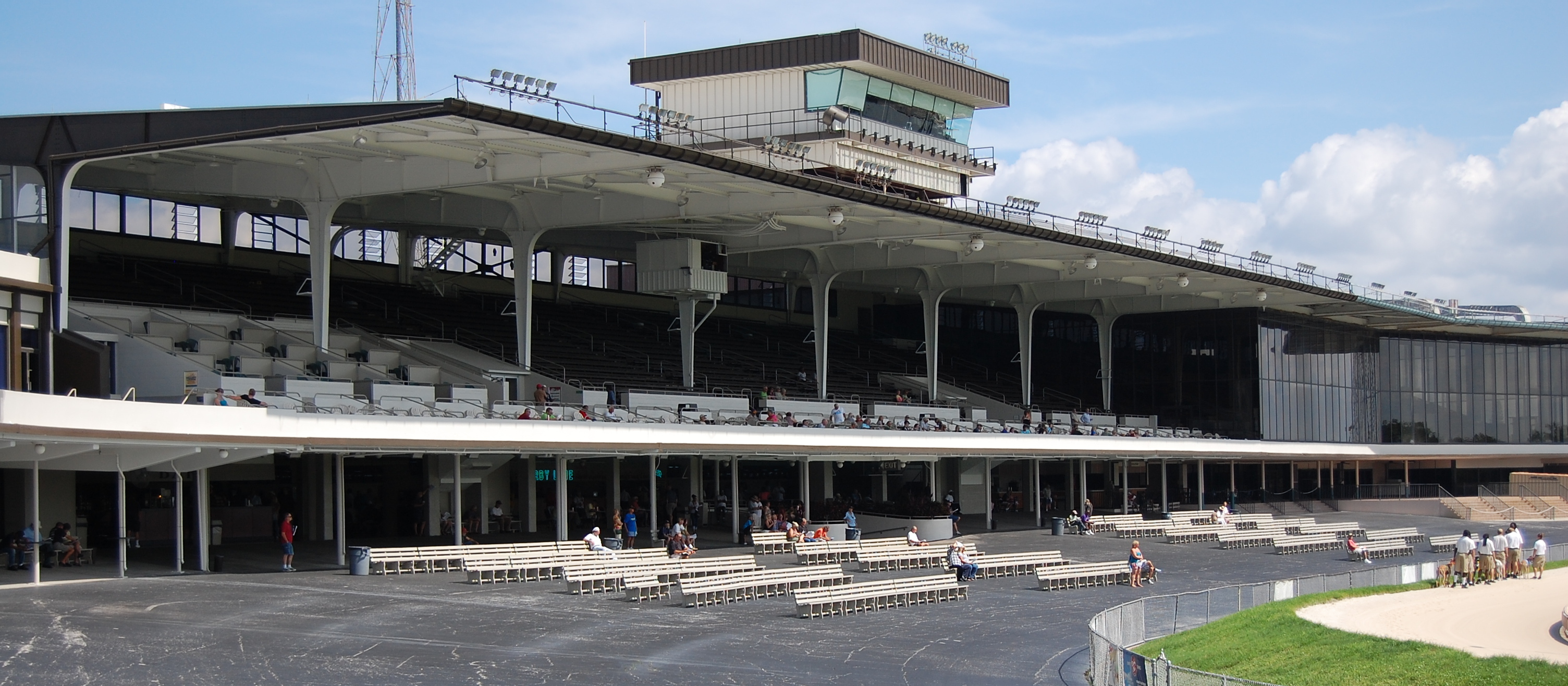
The track itself was purpose-built for speed: 21 feet wide, a 243-foot straightaway, a 458-foot stretch, all surfaced in regulated white sand that the crews groomed between races. Dogs ran two distances - 550 yards and 660 yards - chasing an inside-rail Alldritt lure, an electrical mechanical hare invented by Roy H. Alldritt that revolutionized oval track greyhound racing when it debuted in 1937. The original model was called the Wonder Lure, and it worked because it was reliable and kept the dogs engaged. In 2006 and 2007, Derby Lane hosted the richest greyhound race in history: the Derby Lane Million. The 2006 race was won by Grey's Calibrator, the only female in the field, who took home $500,000. Flying Stanley won the following year. A manmade lake and fountain sat in the infield, with five palm trees on a small sand island connected by a narrow bridge - the backdrop for winner's circle photographs in major stakes races.
Three Levels of Wagering and Neon
The grandstand rose three levels above the white sand oval. Every level offered concessions; the upper two had dine-in restaurants. A poker room operated on one floor. Tote boards displayed weights, post positions, results, and replays. The most distinctive feature was the ground-level tote area, where the DERBY LANE neon sign glowed above the mutuel windows with that frozen greyhound in perpetual stride. Jim Peake called races from 1995 until the track closed for live racing, his voice carrying through evening performances held every day except Sunday, with matinee-and-evening doubleheaders on Wednesdays and Saturdays. The paddock, visible by a short walk from the finish line, was used strictly for dressing and weighing the dogs - a working area, not a show.
The Long Decline and Amendment 13
Derby Lane was among the few Florida greyhound tracks still turning a profit, but the industry was shrinking around it. Casino boats, full casinos, and horse tracks siphoned off bettors through the 2000s. Cost-cutting measures accumulated: the gift shop closed in 2009, the bar in 2008. When the nearby Tampa Bay Greyhound Track shut down, Derby Lane absorbed some of its audience, but the trend was unmistakable. Then came Florida Amendment 13, passed by voters in 2018, which banned commercial greyhound racing statewide by the end of 2020. After 95 years, Derby Lane held its final live race card on December 27, 2020 - a series of matinee races, the last dogs crossing the finish line of America's oldest track.
What Remains at the Oval
Derby Lane still operates as a racino, though the dogs no longer run. The facility offers simulcast wagering on dog and horse races from other venues, and the poker room continues to deal cards. No slot machines or Vegas-style gaming have been approved for the location. The track itself - that white sand oval with its infield lake and palm island - sits quiet. In 2025, the Weaver family sold the property to a development firm, ending a century of family ownership. What comes next for the site is uncertain, but the era it represents is closed. Greyhound racing in Florida is finished, and Derby Lane, the track that outlasted them all, was the last to prove it.
From the Air
Located at 27.87N, 82.63W in St. Petersburg, Florida, on the Pinellas Peninsula between Tampa Bay and the Gulf of Mexico. The oval track and grandstand complex are visible from low altitude as a distinctive racetrack shape amid suburban development. The white sand surface may still be visible depending on maintenance. Nearest airports: St. Pete-Clearwater International (KPIE, 5nm north), Albert Whitted Airport (KSPG, 4nm southeast on the downtown St. Petersburg waterfront), Tampa International (KTPA, 15nm northeast). Best viewed at 1,500-2,500 feet AGL, where the oval geometry of the track stands out clearly from surrounding residential blocks.