Des Moines: The Iowa Capital Where Presidential Campaigns Begin
Des Moines is the most important political city you forget about between elections. Every four years, presidential candidates converge on Iowa for the caucuses, the first-in-the-nation contest that makes or breaks campaigns. Candidates eat at local diners, speak at county fairs, shake hands in living rooms, trying to win the retail politics that Iowa demands. Then the caucuses happen, the winners claim momentum, the losers drop out, and Des Moines returns to what it usually is: a pleasant, prosperous insurance city of 215,000, the Iowa capital, the heart of corn and soybean country. The quadrennial attention is both privilege and burden; Des Moines is important, then ignored, then important again.
The Caucuses
The Iowa caucuses are first because they've always been first - tradition rather than logic gave a small, homogeneous state outsized influence on who becomes president. The caucuses aren't primaries; they're meetings where voters publicly declare preferences, a process that favors organization and enthusiasm over broad appeal. Jimmy Carter's 1976 surprise showed what Iowa could do for an unknown; the campaigns that followed learned to treat Iowa as essential. The system's defenders say it forces candidates to engage with real voters; critics say Iowa is too white, too rural, too unrepresentative. The debates continue; the caucuses persist.
The Insurance
Des Moines is America's second-largest insurance hub after Hartford, home to Principal Financial, Wellmark Blue Cross Blue Shield, and dozens of other companies. The industry concentrated here for unglamorous reasons: central location for national operations, reasonable costs, educated workforce, stable politics. The insurance employment provides prosperity that other Midwest cities lost - jobs that don't require factories, that survived deindustrialization, that keep Des Moines growing while similar-sized cities decline. Insurance isn't exciting, but it pays well and doesn't relocate to Mexico. The industry is Des Moines' economic foundation.
The Downtown
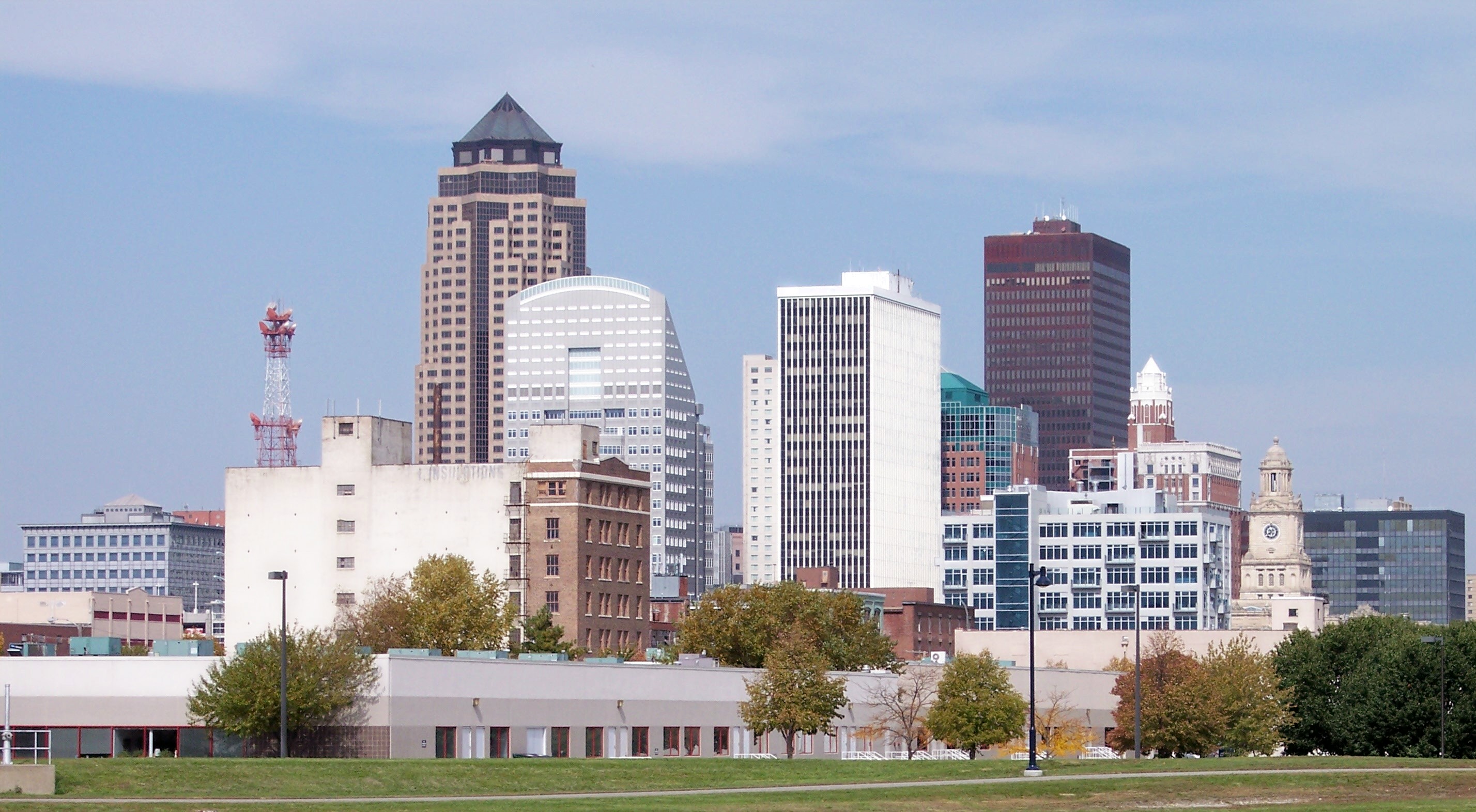
Des Moines' downtown has revived more successfully than most mid-sized Midwestern cities - the skywalk system connecting buildings, the sculpture garden in the Western Gateway Park, the restaurants and apartments that attracted young professionals. The capital complex, the Pappajohn Sculpture Park, the renovated Court Avenue district - the investments show a city determined not to hollow out. The success is relative (Des Moines isn't Austin) but real (Des Moines isn't Dayton). The downtown demonstrates what a prosperous insurance economy can build when the leadership decides that downtown matters.
The Fair
The Iowa State Fair, held each August, is among America's largest - 11 days of livestock judging, carnival rides, butter sculptures, and foods on sticks. The fair is where presidential candidates must appear, eating corn dogs and pork chops while cameras capture the spectacle. The political theater aside, the fair is genuine agricultural celebration, the recognition that Iowa's economy begins with what grows in the fields. The butter cow sculpture is absurd and beloved; the animal barns show agricultural heritage; the midway is standard American carnival. The fair is Iowa being Iowa, the culture distilled into 11 days.
Visiting Des Moines
Des Moines is served by Des Moines International Airport (DSM). The Pappajohn Sculpture Park is free and excellent. The Iowa State Capitol offers tours of the gold-domed building. The Des Moines Art Center holds a strong collection in buildings by three famous architects. The Court Avenue district provides restaurants and entertainment. For political pilgrimage, drive past the building where the Register runs the Iowa Poll. The State Fair runs 11 days ending in late August. The weather is extreme: humid summers, cold winters, tornado season in spring. Des Moines rewards visitors who appreciate Midwestern pleasantness without expecting excitement.
From the Air
Located at 41.59°N, 93.62°W at the confluence of the Des Moines and Raccoon rivers in central Iowa. From altitude, Des Moines appears as urban development amid agricultural land - the capitol dome visible, the rivers converging, the farmland extending in all directions. What appears from altitude as Iowa's largest city is where presidential campaigns begin - where the caucuses give outsized influence, where insurance companies cluster, and where every four years the candidates descend before moving on.