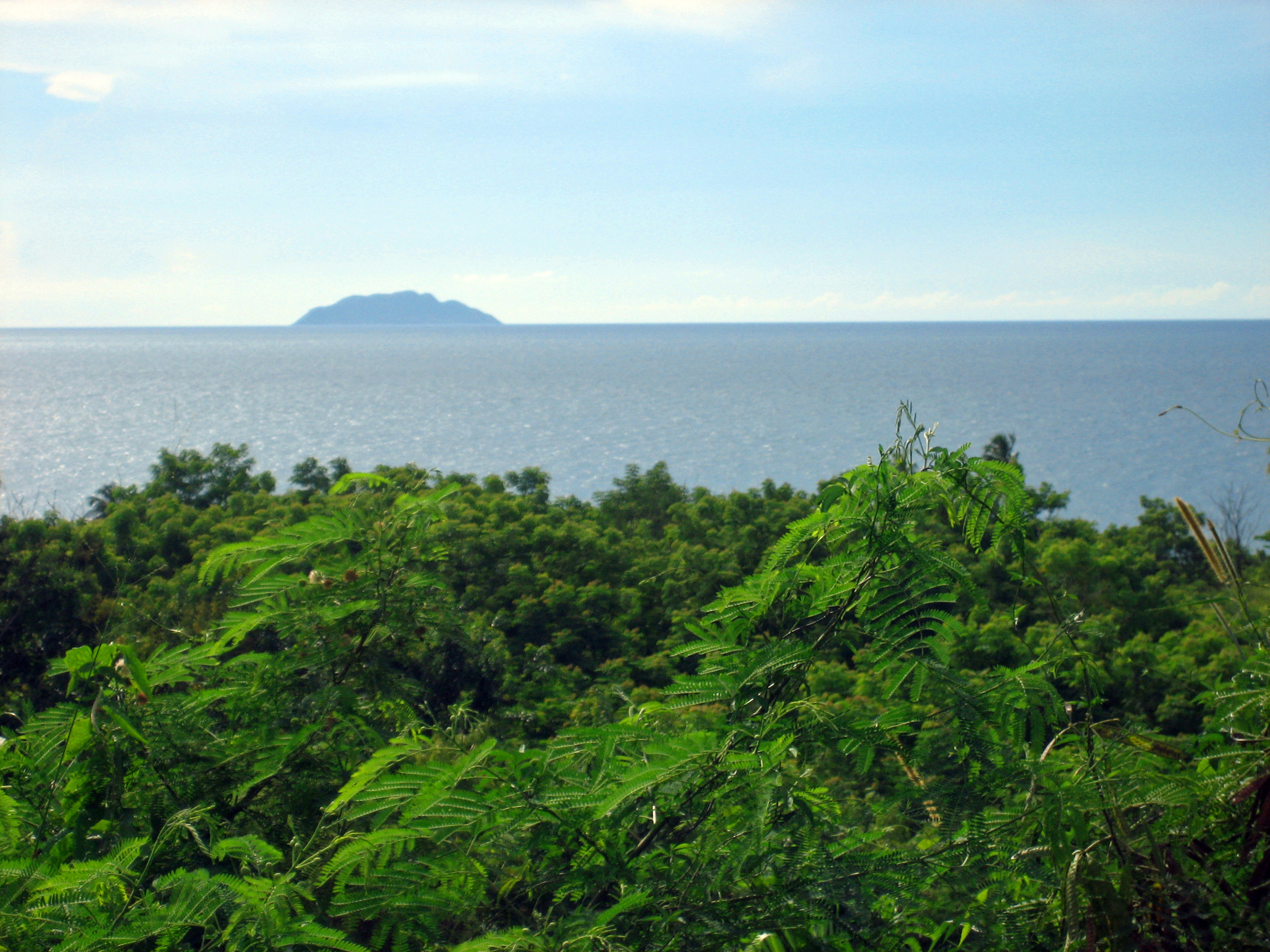
Desecheo Island
You cannot set foot on Desecheo Island. Federal law enforcement officers will arrest you if you try. The reason is unexploded military ordnance buried across the island from its years as a U.S. bombing range -- but the prohibition has had an unintended benefit. Left alone since 2017, when the last invasive rats and rhesus monkeys were removed, this small uninhabited speck in the Mona Passage has begun to heal itself. Endangered cacti are flowering for the first time in decades. Seabirds are returning to nest. And the waters surrounding the island offer some of the clearest diving visibility in the Caribbean, a reef system thriving in the shadow of an island that humans nearly destroyed.
Pirates, Bombs, and Monkeys
Desecheo's history reads like a list of bad ideas. Christopher Columbus spotted the island on his second voyage, but no one bothered to name it until 1517, when Spanish explorer Nunez Alvarez de Aragon got around to it. No evidence of pre-Columbian settlement has ever been found -- the island has no surface water, which tends to discourage permanent habitation. During the 18th century, smugglers, pirates, and bandits used it as a base for hunting feral goats. Then the U.S. military arrived. From World War II through 1952, Desecheo served as a bombing range. The Air Force followed with survival training exercises until 1964. In 1967, researchers introduced rhesus monkeys from Cayo Santiago for an adaptation study. The monkeys thrived, the native wildlife did not. Before the monkeys arrived, Desecheo hosted the largest brown booby nesting colony in the region -- some 15,000 birds. Within years, the colony was gone.
Three Lizards and a Cactus
Despite the abuse, Desecheo harbors species found nowhere else on Earth. Three endemic lizard species evolved here in isolation: Pholidoscelis desechensis, Anolis desechensis, and Sphaerodactylus levinsi. The island has been geologically isolated since at least the Pliocene epoch -- millions of years of separation from Puerto Rico, though both are connected by the Rio Culebrinas formation deep underground. The arid landscape, limited to thorny shrubs, small trees, and cacti by the absence of freshwater, supports the endangered higo chumbo cactus (Harrisia portoricensis), a federally protected species. Rising to a maximum elevation of 715 feet with about 40 inches of annual rainfall, Desecheo is a harsh place that rewards only the most tenacious life forms. That the island still has endemic species at all, after decades of bombing, goats, rats, and monkeys, speaks to the stubbornness of evolution in isolated places.
The Restoration
In 2016, the U.S. Fish and Wildlife Service, Island Conservation, and the USDA launched a coordinated effort to remove every invasive black rat and rhesus macaque from Desecheo. One year later, the island was declared free of invasive mammals for the first time in nearly a century. The results came quickly. Bridled terns built new nests. Sargasso shearwaters -- never before recorded on Desecheo -- were sighted on the island. Seventy-two higo chumbo cacti were found and measured, and by 2017 they were producing flowers and large yellow fruits, a sign of recovering reproductive health. Since 2018, wildlife managers have installed social attraction equipment -- decoys and recorded calls -- to lure bridled terns and brown noddies back to their ancestral nesting grounds. In the early 1900s, Desecheo supported roughly 15,000 brown boobies, 2,000 red-footed boobies, 2,000 brown noddies, and 1,500 bridled terns, plus hundreds of frigatebirds, laughing gulls, and sooty terns. The island is working its way back.
The Reef and the Radio Waves
Beneath the surface, Desecheo's waters are spectacular. Visibility commonly ranges from 100 feet and beyond, drawing diving enthusiasts to the healthy reef system surrounding the island. Diving is permitted in the waters around Desecheo even though the island itself remains closed. The marine reserve designation, granted in 2000, allows fishing within a half-mile radius. Above the waterline, Desecheo has an unlikely following among amateur radio operators. Because the island is administered separately from Puerto Rico by the U.S. Fish and Wildlife Service, it counts as a distinct "entity" for the DX Century Club award -- one of ham radio's most coveted achievements. The island carries the ITU prefix KP5, though no permanent callsign has been issued since there is no mailing address. The first approved DXpedition in fifteen years reached the island in February 2009, logging 115,787 contacts in two weeks. Desecheo's isolation, the very quality that makes it ecologically valuable, is what makes it irresistible to radio operators seeking rare contacts across the electromagnetic spectrum.
From the Air
Desecheo Island (18.384N, 67.481W) sits in the Mona Passage off Puerto Rico's west coast, clearly visible from the air as a small, steep-sided island. At 715 feet elevation, it rises sharply from the water. From 3,000-5,000 feet AGL, the island's lack of development and vegetated hillsides are evident. The Mona Passage separates it from the larger Mona Island to the southwest. Nearest airport: Rafael Hernandez Airport (TJBQ/BQN) in Aguadilla, approximately 25 miles to the northeast. Rincon, on Puerto Rico's western tip, provides the closest mainland vantage point. The surrounding reef system is visible as lighter-colored water in clear conditions.