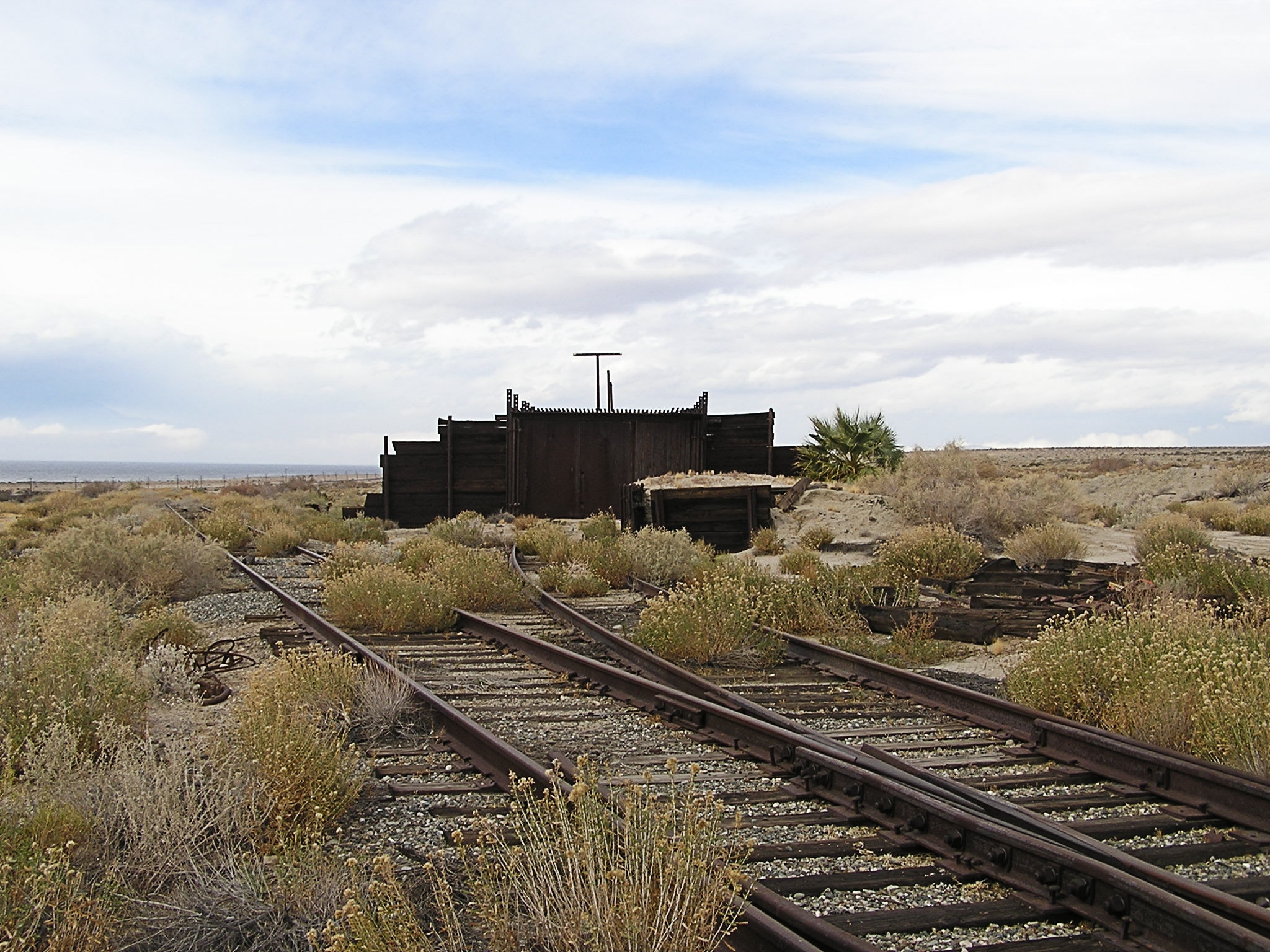
Desert Center, California
Desert Center is easy to miss. The small community sits along Interstate 10 in the desert flatlands of Riverside County, about halfway between Indio and Blythe, surrounded by the Chuckwalla Mountains to the south and the Pinto Mountains to the north. The 2010 census counted approximately 256 residents, with a median age of 52 and a median household income of $27,031. None of these numbers suggest that anything of consequence has ever happened here. They would be wrong. Desert Center is where American medicine's most influential experiment began, where General Patton's soldiers trained for desert warfare, and where Hollywood has found a convincingly apocalyptic landscape at least three times.
The Hospital at the Edge of the Desert
In 1933, a young doctor named Sidney Garfield opened a six-bed hospital near Desert Center to serve the workers building the Colorado River Aqueduct — a massive infrastructure project that was bringing water from the Colorado River to Los Angeles. Garfield had borrowed money to build the hospital. The nearest competing medical facility was too far for injured workers to reach quickly, and the desert conditions — heat, physical labor, heavy machinery — generated injuries at a reliable rate. His problem was financial rather than medical: workers would come in for treatment, but fee-for-service medicine in the desert meant he spent as much time chasing payment as treating patients. The solution he devised changed American healthcare permanently.
A Nickel a Day
Garfield arranged with the Industrial Indemnity Exchange, the workers' compensation insurer for the aqueduct project, to receive prepayment for medical services — a fixed amount per worker per day in exchange for comprehensive care. Industrial Indemnity would pay for accident care; workers would pay a nickel a day for everything else. Ninety-five percent of the workers signed up. The financial model that had threatened to close Garfield's hospital became instead the foundation of the country's largest nonprofit health maintenance organization. When Henry Kaiser encountered the model during later California construction projects and then expanded it to his World War II shipyard workers, the prepaid group practice became Kaiser Permanente — which by 1990 was serving millions of members across multiple states. The entire system traces back to a six-bed hospital in the desert near Desert Center.
Cinema in the Desert
The landscape around Desert Center has attracted filmmakers looking for a convincingly harsh and empty setting. Terminator 2: Judgment Day used the desert roads and industrial infrastructure near Desert Center for sequences in the 1991 film that required a wasteland aesthetic. Tough Guys, released in 1986, was the final film collaboration between Burt Lancaster and Kirk Douglas — two giants of Hollywood's golden age ending their partnership in the California desert east of the Salton Sea. H.G. Wells' War of the Worlds, a 2005 adaptation, used the flat desert near Desert Center as alien-invasion territory. The community's remoteness and the strangeness of its desert surroundings have made it useful for stories that require the world to look uninhabited.
The Long Road
Desert Center was established in 1921, which means it predates the Interstate highway, Patton's training center, Garfield's hospital, and all of the films shot nearby. The original settlement existed because desert travelers needed fuel, water, and a place to stop — the same logic that has sustained crossroads communities throughout the American West. The community's median age of 52 reflects a demographic pattern common to isolated rural places: the young leave for urban opportunities, and the residents who remain tend toward middle age and beyond. The desert does not make the departure easy, but it does not make the staying impossible. Desert Center persists, which may be the most significant thing that can be said about a place that the highway now routes people through at 75 miles per hour.
From the Air
Desert Center lies at approximately 33.713°N, 115.401°W along Interstate 10 in Riverside County, about 30 miles east of Indio and 45 miles west of Blythe. The community is visible from altitude as a small cluster of buildings at a highway interchange, with the flat desert extending in all directions. The Chuckwalla Mountains are visible to the south. Desert Center Airport (L65) is approximately 8 miles east. Thermal Airport (TRM) is the nearest facility with regular services, roughly 35 miles to the west.