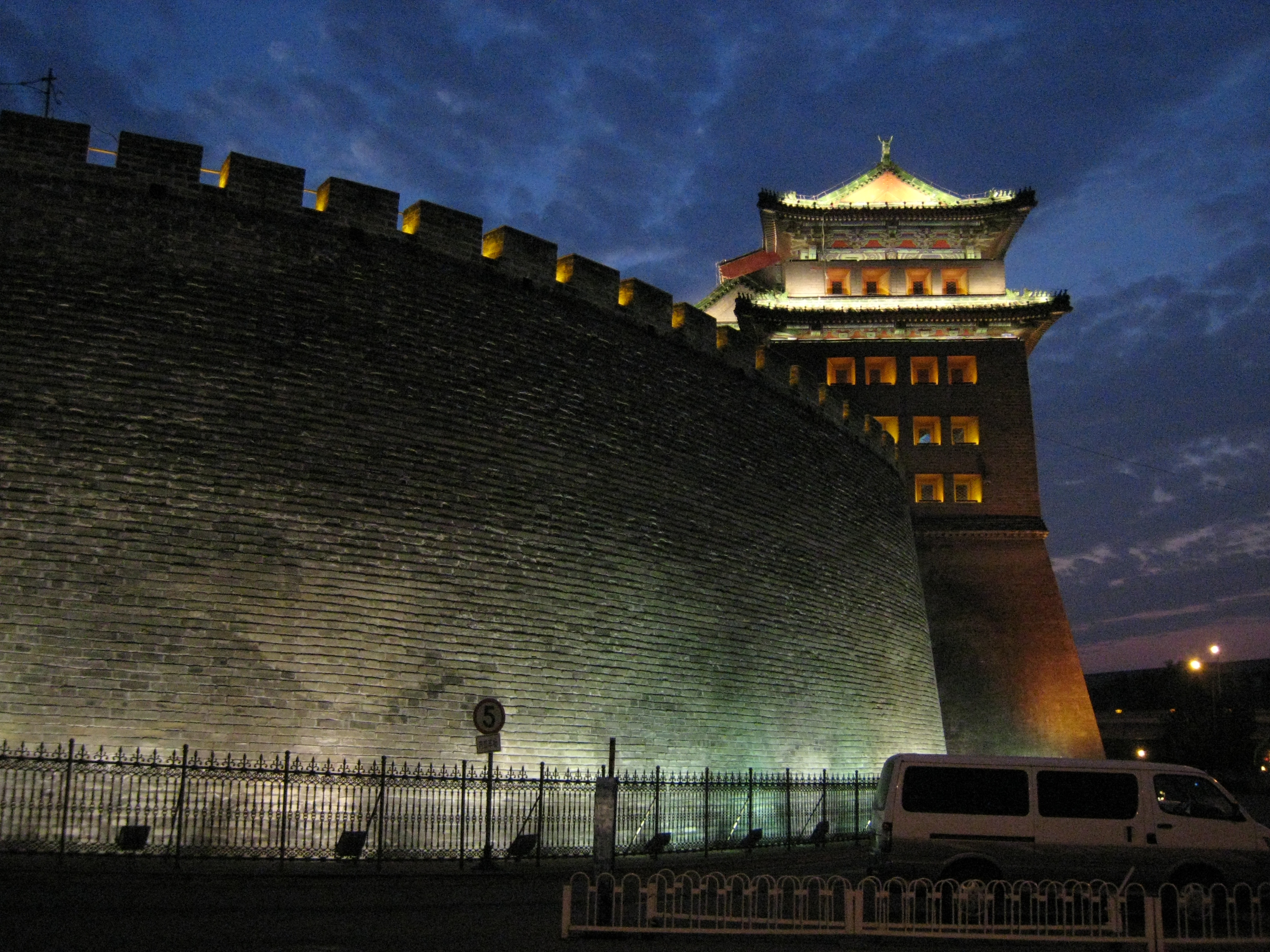
Deshengmen
The name means Gate of Virtuous Triumph, and in the days of imperial Beijing, it was the last gate soldiers passed through on their way to war. When they returned victorious, they entered the city through Andingmen, the Gate of Peace and Stability, on the opposite side of the northern wall. Deshengmen was built in 1437 as part of Beijing's northern fortifications, a complex of three structures -- gatehouse, archery tower, and barbican -- designed to defend the capital's most vulnerable approach. Nearly six centuries later, two of those structures survive, surrounded by the Deshengmen bridge, a rotary overpass that channels traffic between the 2nd Ring Road and the Badaling Expressway.
What Survives and What Was Lost
Of the original three-part gate complex, the gatehouse proper was demolished in 1921, and the city wall itself was torn down in 1969 during a period when Beijing's ancient fortifications were systematically dismantled to make way for modern infrastructure. What remains is the archery tower and the barbican, structures built for military function but now serving an unexpected purpose. They overlook the northern city moat and house an exhibition of ancient coins inside their thick walls. The archery tower, with its rows of arrow slits that once covered the approach to the gate, stands as one of Beijing's few preserved city gates, a tangible fragment of the fortified capital that existed before the ring roads.
The Gate as Transportation Node
Where imperial armies once marched, commuters now navigate a complex interchange. The Deshengmen bridge is a rotary overpass that connects the northern 2nd Ring Road to the Badaling Expressway, the main route to the Great Wall at Badaling. The streets that once passed through the gate still carry its name: Deshengmen Inner Street runs south into the old city, while Deshengmen Outer Street extends north. Line 2 of the Beijing Subway stops nearby at Jishuitan Station, and Deshengmen serves as the terminus for many Beijing Bus routes, including a tourist bus to the Great Wall. The gate has become what it always was -- a threshold between the city and what lies beyond -- though the journey has changed from a military campaign to a weekend excursion.
Echoes of a Walled City
Deshengmen is one of only a handful of surviving gates from Beijing's massive fortification system. The city walls once stretched for over forty kilometers, enclosing both the Inner City and the Outer City in a double embrace of stone and rammed earth. Most of this system was demolished in the 1950s and 1960s, the materials repurposed for subway tunnels and other construction projects. The gates that survive -- Deshengmen among them -- exist as isolated monuments, severed from the walls that once gave them context. Standing at the base of the archery tower, with the moat below and the overpass above, you can sense both the military logic of the original placement and the transportation logic that preserved it. The gate endures because it occupies a position that matters, at a point where roads converge and travelers must choose their direction.
From the Air
Located at 39.95N, 116.37E on Beijing's northern 2nd Ring Road. The surviving archery tower and barbican are visible near the Deshengmen bridge interchange. Nearest airport is Beijing Capital International Airport (ZBAA), approximately 28 km northeast. The Badaling Expressway to the Great Wall begins nearby.