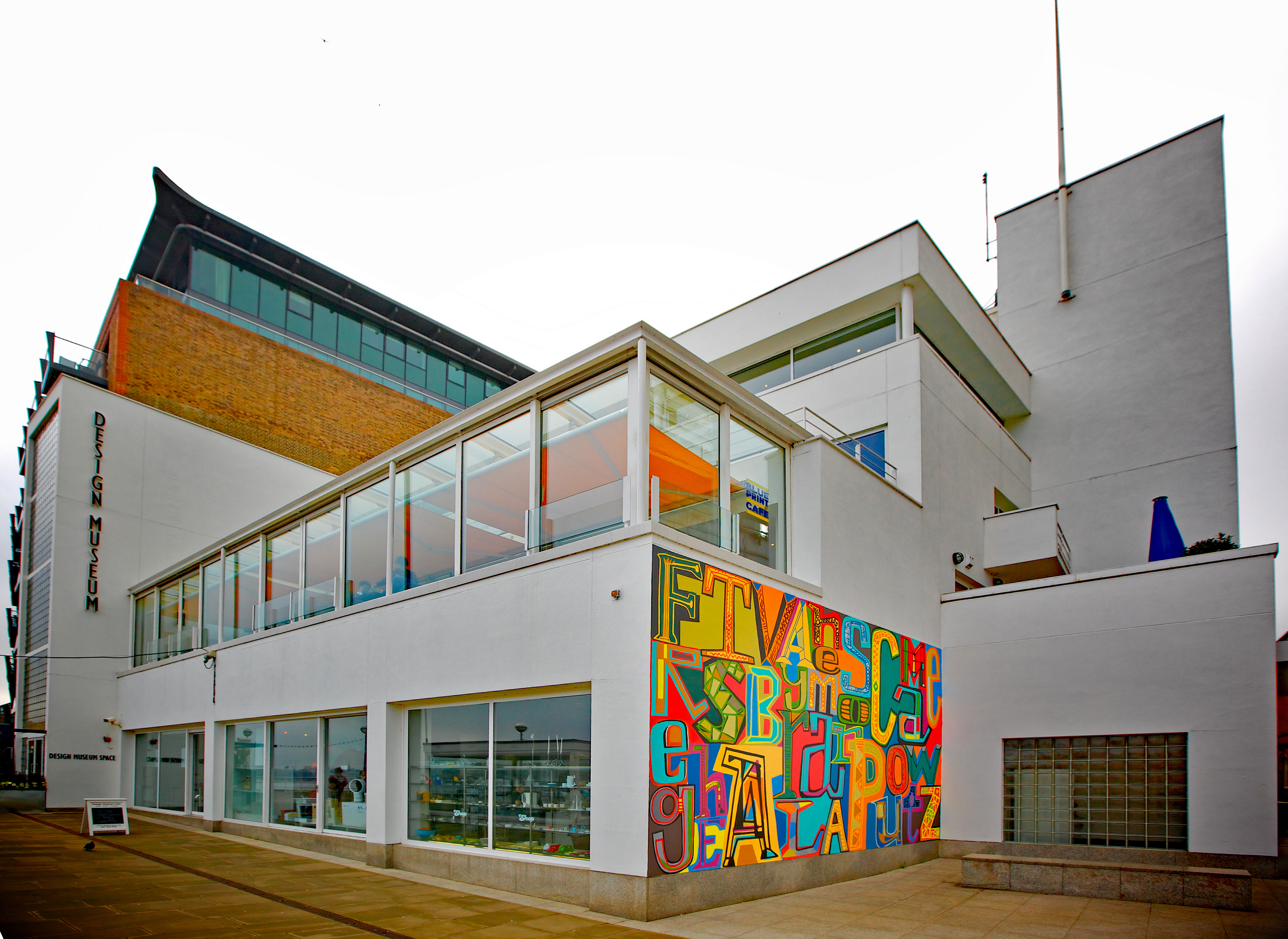
The Design Museum: From Banana Warehouse to Design Cathedral
The building that houses the Design Museum was, for over a decade, an embarrassment. The former Commonwealth Institute in Kensington -- a Grade II* listed landmark from the 1960s with a distinctive hyperbolic paraboloid roof -- had stood vacant and deteriorating since the late 1990s. When the Design Museum moved in after a transformation by John Pawson in 2016, it gave the building a second life and tripled the museum's own exhibition space. The move also completed a journey that began in 1989 in an unlikely location: a 1940s banana warehouse on the south bank of the Thames.
The Boilerhouse Origins
The Design Museum owes its existence to Sir Terence Conran, the designer and entrepreneur who had already transformed British retail and restaurant culture. In the early 1980s, Conran and Stephen Bayley created 'The Boilerhouse' -- a wildly popular exhibition space inside the Victoria and Albert Museum that showcased industrial and product design. The Boilerhouse proved that design could draw crowds, but Conran wanted a dedicated institution. In 1989 he founded the Design Museum in a converted warehouse at Shad Thames, near Tower Bridge. The conversion was radical: the 1940s warehouse was altered beyond recognition to resemble a crisp International Modernist building from the 1930s. A large sculpture by Sir Eduardo Paolozzi, The Head of Invention, stood between the museum and the river.
The Kensington Transformation
In 2011, Conran donated seventeen and a half million pounds to enable the museum's move to Kensington. The former Commonwealth Institute, designed by Robert Matthew, Johnson-Marshall and Partners, had been built in 1962 but had stood empty for years. John Pawson's redesign preserved the building's dramatic roofline while creating a luminous interior organized around a central atrium. The museum opened at its new location on 24 November 2016, bringing it into Kensington's cultural quarter alongside the Royal College of Art, the V&A, the Science Museum, the Natural History Museum, and the Serpentine Gallery. In 2018, the museum won the European Museum of the Year Award.
Design of the Year
The Design Museum's annual Design of the Year award has become one of the most closely watched prizes in the design world, notable for its breadth. Past winners include the Barack Obama 'Hope' poster by Shepard Fairey, the GOV.UK government website, Zaha Hadid's Heydar Aliyev Center in Baku, and a seesaw installed across the US-Mexico border wall. The museum's permanent collection, housed in the top-floor gallery under the hyperbolic paraboloid roof, is free to visit. Its first Designer of the Year award, in 2003, went to Jony Ive, whose work at Apple would come to define the look of twenty-first-century consumer technology.
A Museum That Practices What It Preaches
The Design Museum operates as a registered charity, with all ticket revenue supporting new exhibitions. Its ground-floor gallery hosts temporary shows that range across architecture, fashion, furniture, product design, and graphics. A 202-seat auditorium hosts talks and debates. The Swarovski Foundation Centre for Learning provides studio and workshop spaces for students and educators. The building itself is perhaps the museum's finest exhibit: the tension between Pawson's minimalist interiors and the exuberant 1960s roof structure creates spaces that feel simultaneously calm and dramatic. From the atrium, a main staircase offers views to the upper floors and to that remarkable roof -- a curve of copper and glass that has anchored this corner of Kensington for over sixty years, serving purposes its original architects never imagined.
From the Air
The Design Museum (51.50N, 0.20W) is in Kensington, west London, near Holland Park. The distinctive curved roof of the former Commonwealth Institute building is identifiable from altitude. Adjacent to Holland Park and near the Royal Albert Hall complex. Nearby airports: London Heathrow (EGLL) 10nm west, Northolt (EGWU) 9nm northwest. Best viewed from 2,000ft.