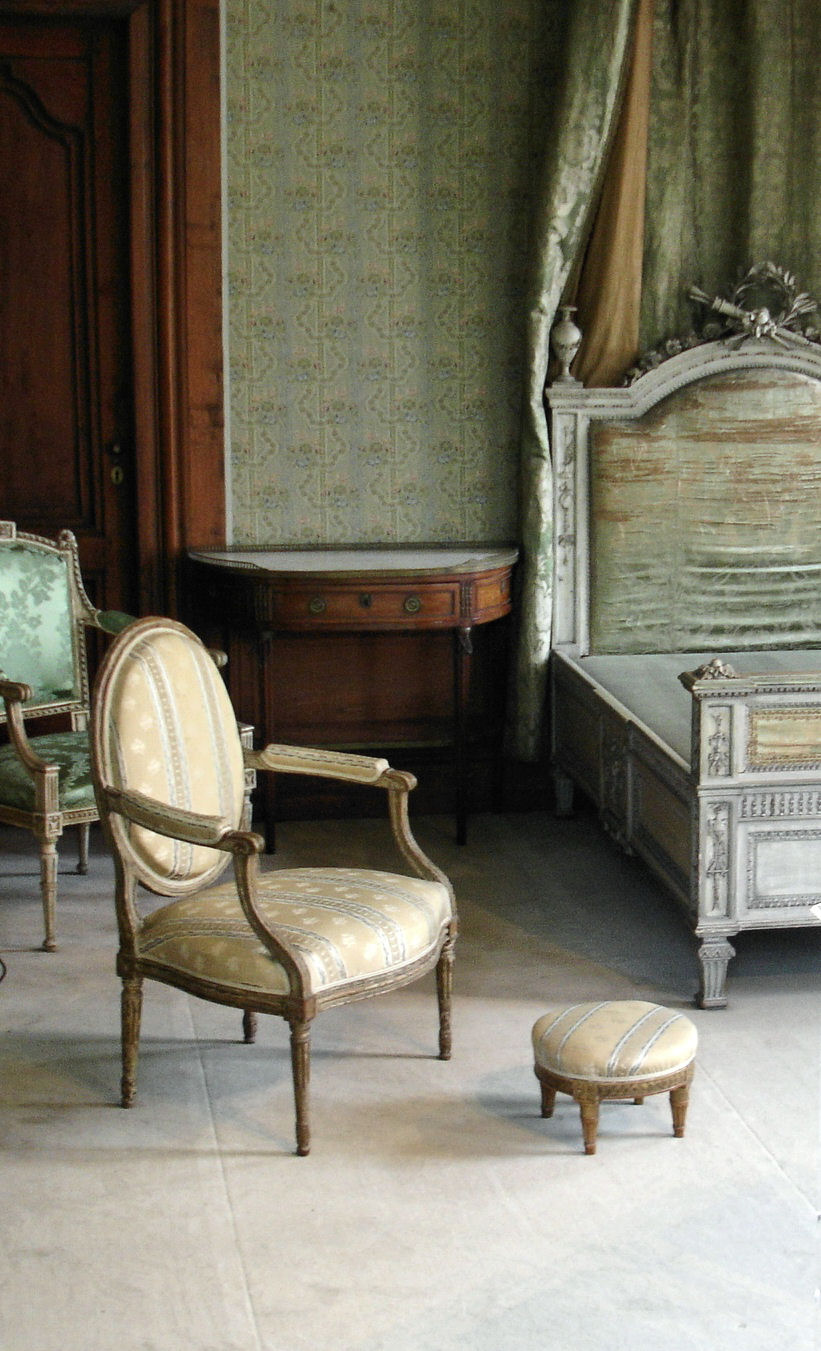
Design Museum Gent
Start with the 'Gioconda' service. It was designed by Philippe Wolfers in 1925 for the great Paris exhibition that gave Art Deco its name, and it is one object in a museum that owns almost twenty-two thousand of them. The Design Museum Gent is built around the Hotel de Coninck, an 18th-century mansion on the Jan Breydelstraat in the tourist heart of Ghent, with a contemporary wing grafted onto the back. It is a museum about furniture, glass, silver, ceramic, and the long argument over what design is for. The argument is the point.
How a Collection Becomes a Museum
The collection was not founded by a city. It was founded in 1903 by a group of industrial design and art lovers who called themselves the Union des Arts Industriels et Decoratifs and assembled what they named a Musee des Modeles - a museum of models. The first hundred or so pieces of furniture lived in the Ghent municipal academy on the Sint-Margrietstraat. The 1913 Ghent World Exhibition gave the collection enough new objects that the union had to find more space, and in 1922 the city moved everything into the Hotel de Coninck, which it had recently bought. The museum opened, then closed, then reopened. From 1958 to 1973 the doors were shut entirely. It was the second life of the museum, beginning under Lieven Daenens in the late 1970s, that made the collection internationally serious.
The Belgian Art Nouveau Heart
The reason design pilgrims come to Ghent is the Belgian Art Nouveau collection. From 1977 onward, Daenens systematically acquired ensembles by Henry van de Velde, Victor Horta, Paul Hankar, Philippe Wolfers, Gustave Serrurier-Bovy, and Alfred William Finch - the names that put Brussels at the center of the movement that briefly redefined European interiors. Belgian Art Nouveau is less famous abroad than its French and Austrian cousins, but the museum's holdings argue that it was the more rigorous of the three. The Belgians thought about how the whole room worked together; they cared about hinges and door handles and the curve of a stair rail with the same seriousness they brought to facades. Foreign masters fill the spaces between them: Emile Galle, Rene Lalique, Daum, Josef Hoffmann, Otto Wagner, Georg Jensen. It is one of the most coherent Art Nouveau collections in Europe.
Memphis, Modernism, and Tupperware
Beyond Art Nouveau, the collection becomes more catholic, which is partly the point. The modernist galleries hold work by Le Corbusier, Alvar Aalto, Marcel Breuer, Mies van der Rohe, and Lilly Reich from the Knoll collection. The mid-century rooms run through Charles and Ray Eames, Florence Knoll, Arne Jacobsen, Hans Wegner, Verner Panton, Joe Colombo. The Italian Anti-Design rooms hold the Memphis Group at full saturation - Sottsass, Mendini, Branzi, Michele de Lucchi, Matteo Thun, Nathalie Du Pasquier - alongside Studio Alchimia. And then, with a kind of curatorial wink, there is the Tupperware. Tupperware Europe was headquartered in Belgium, and the museum holds work by its chief designers Bob Daenen and Vic Cautereels: the lid you grew up with, the bowl your grandmother stacked, treated as serious design objects. Which they are.
What's New, What's Belgian
Under director Katrien Laporte, in office since 2013, the museum has tilted its focus toward Belgian design from 1970 onward. The contemporary galleries feature Maarten Van Severen, whose minimalist .03 chair has become a kind of national signature. Xavier Lust, Pol Quadens, Dirk Wynants, Fabiaan Van Severen, Quinze & Milan, Lachaert & d'Hanis. The ceramics rooms hold Piet Stockmans, Tjok Dessauvage, Ann Van Hoey. The silverware is by Nedda El-Asmar, David Huycke, Siegfried De Buck. Recent acquisitions look toward the next generation: Muller Van Severen, Maarten De Ceulaer, Ben Storms. The collection also incorporates the Alonso international glass collection - about three hundred works in glass gathered by the Spanish diplomat Antonio Alonso Madero, including pieces by Tapio Wirkkala, Leon Ledru, Auguste Jean, Galle and Hoffmann again. The museum thinks of itself as a continuous conversation between historic and contemporary design, with the older furniture as 'historic basis' rather than terminus.
Finding the Building in Ghent
The Hotel de Coninck stands on the Jan Breydelstraat, in the tangle of medieval streets just off the Korenlei, with the modern extension reaching back behind it. From the river you can pick out the older wing by its tall windows. From the air, the museum is invisible inside the dense fabric of Ghent's old center, but the city itself is unmistakable: the three medieval towers of Saint Bavo's Cathedral, the Belfry of Ghent, and Saint Nicholas's Church line up in a row along a single axis - the most famous urban silhouette in Flanders.
From the Air
Design Museum Gent is at 51.06°N, 3.72°E in central Ghent on the Jan Breydelstraat, immediately adjacent to the Korenlei quay and the city's three-towers axis (Saint Nicholas's Church, Belfry of Ghent, Saint Bavo's Cathedral). Ghent has no major commercial airport; the nearest international fields are Brussels (EBBR, 55 km east-southeast) and Ostend-Bruges (EBOS, 50 km west). Lille-Lesquin (LFQQ) is 70 km south-southwest. The historic center is best appreciated from low altitudes; weather in autumn and winter often brings stratus and reduced visibility along the Leie and Scheldt valleys.