Devil's Golf Course: Where Salt Grows in Silence
Stand still on Devil's Golf Course and listen. In the silence of Death Valley's salt flats, you can hear the landscape growing. The salt crackles and pops - thermal expansion fracturing crystals, groundwater evaporating and adding microscopic layers, a million tiny sounds that accumulate into something almost like breathing. The 1934 handbook for Death Valley National Monument gave this place its name: 'Only the devil could play golf on its surface.' The description stuck. The salt formations rise in jagged pinnacles, knife-sharp edges, and impossible textures that look designed by a sculptor with a grudge. It's one of the harshest surfaces on Earth, beautiful in a way that hurts to look at, alive in a way that has nothing to do with living things.
The Formation
Devil's Golf Course sits on the floor of Death Valley, 282 feet below sea level, in a basin that has no outlet to the sea. When ancient Lake Manly filled the valley during ice ages, it left salt behind as it evaporated. That salt layer - hundreds of feet thick in places - underlies the entire valley floor. At Devil's Golf Course, groundwater carries dissolved salt to the surface, where it evaporates and crystallizes. Wind and rain erode the crystals into jagged forms. The process continues: new salt growing, old salt eroding, the surface constantly changing while looking eternally static.
The Texture
The salt formations at Devil's Golf Course are brutally sharp. The crystals grow in jagged points and edges that can cut through boots and skin with equal ease. Walking across the surface is slow, painful work - each step requires placement on the least hostile point. The formations range from basketball-sized to washing-machine-sized, creating a chaotic surface with no flat ground. The color varies from white to brown depending on mud content. Up close, individual crystals show geometric faces; from a distance, the field looks like frozen turbulence.
The Sound
Death Valley is one of the quietest places on Earth - no traffic, no planes, no people most days. At Devil's Golf Course, that silence reveals sounds normally masked: the salt talking. As temperatures rise, crystals expand and fracture with audible pops. As water evaporates from the surface, salt crystals grow with faint crackling sounds. The accumulation of these tiny noises creates an ambient soundscape unlike anywhere else - the earth's chemistry made audible. Visit at dawn when thermal expansion accelerates, or at dusk when cooling contracts the crystals.
The View
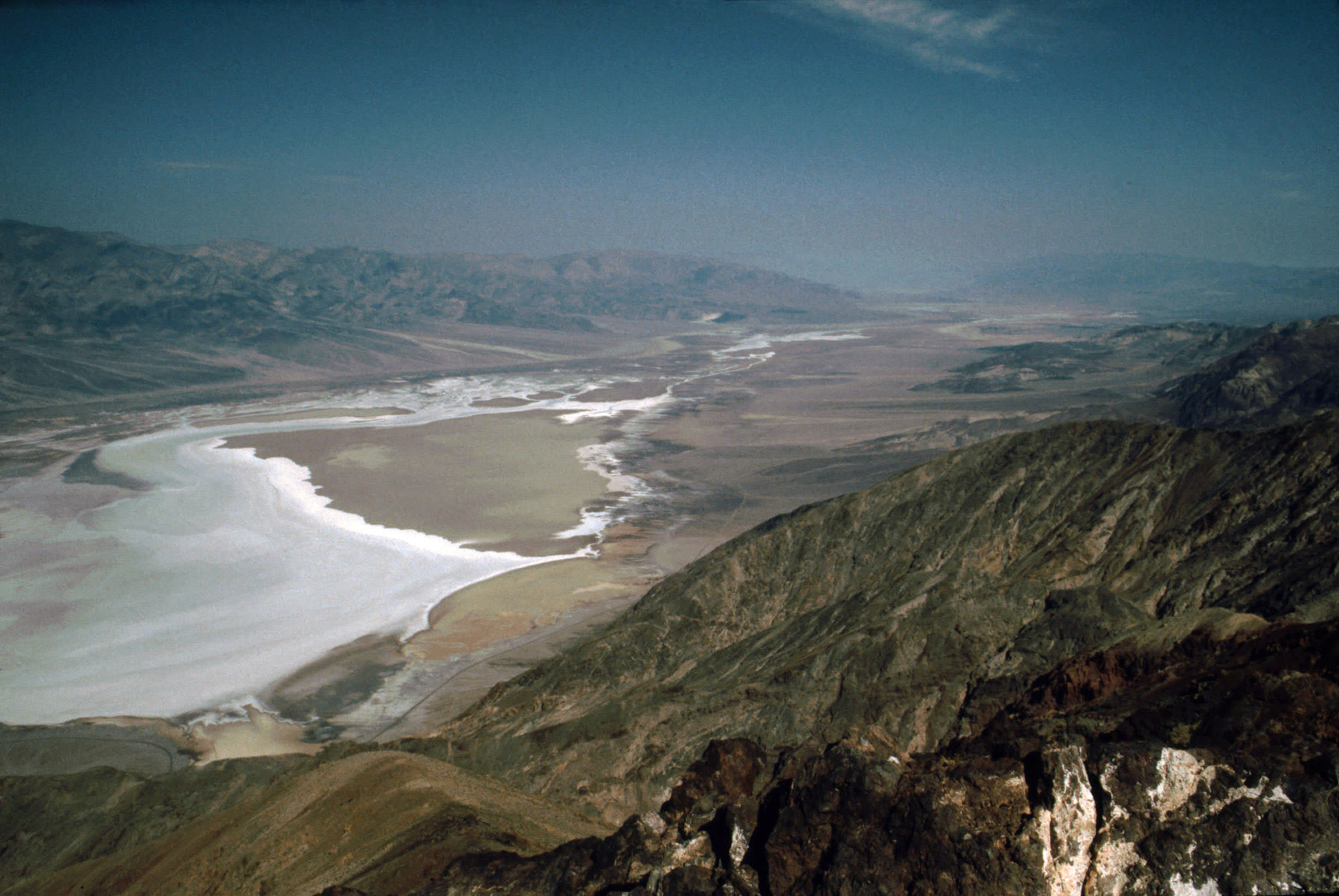
The salt flat extends for miles across the Death Valley floor, but Devil's Golf Course is the most dramatic portion - where erosion has created the most jagged formations. The surrounding mountains rise in colored bands: the Panamint Range to the west, the Black Mountains to the east. At Badwater Basin nearby, the lowest point in North America, the salt is flat and walkable. Here it's three-dimensional, a sculpture garden of crystallized minerals. The view is best at low sun angles when shadows define the textures; midday flattens everything into white glare.
Visiting Devil's Golf Course
Devil's Golf Course is located in central Death Valley National Park, accessible via a short dirt road off Badwater Road. The road is usually passable by regular vehicles but can be rough. There are no facilities at the site - bring water, even for short visits. Walking on the salt formations is permitted but uncomfortable; wear sturdy shoes and watch every step. The formations are fragile despite their harshness - avoid breaking crystals. Summer temperatures exceed 120°F and visits should be limited to early morning. Winter and spring are ideal. Furnace Creek has visitor services, lodging, and fuel. Photography is best at sunrise or sunset. Park entrance fee applies.
From the Air
Located at 36.28°N, 116.82°W on the floor of Death Valley, California. From altitude, Devil's Golf Course appears as a textured white expanse in the valley's center - distinguishable from the smoother salt flats at Badwater Basin by its rougher surface. The Panamint Mountains rise to the west; the Black and Funeral Mountains bound the east. Furnace Creek is visible as a green oasis to the north. The valley floor shows various salt formations and alluvial fans. At lower altitude, the jagged texture becomes apparent - a surface that looks hostile from any height because it is.